

By 2026, 39% of U.S. merchants have integrated cryptocurrency payments into their daily operations, yet many still struggle to explain the underlying technology to their stakeholders. It’s natural to feel concerned about market volatility or the apparent complexity of syncing blockchain data with retail hardware. You’ve likely spent years dealing with the high fees and slow settlement times of traditional credit card processors, searching for a more efficient alternative that doesn’t compromise security.
This guide explains exactly how do crypto pos systems work to bridge the gap between disruptive innovation and institutional reliability. You’ll discover how modern terminals facilitate instant fiat settlement, ensuring your revenue remains stable regardless of market swings. Beyond simple payments, we’ll preview how this infrastructure serves as a professional gateway to broader financial opportunities. By mastering these tools, you position yourself to leverage retail income into transformative markets like gold and USD CFD trading. We’ll walk through the transaction flow, security protocols, and the strategic shift toward a more empowered financial life through sophisticated trading environments.
Key Takeaways
- Learn how do crypto pos systems work by utilizing real-time exchange rates and secure gateways to convert digital assets into stable fiat currency instantly.
- Understand how retail revenue can be strategically transitioned into gold (XAU/USD) and CFD trading to hedge against inflation and drive financial growth.
- Identify the essential hardware features, including 4G connectivity and long battery life, needed to maintain a high-performance digital payment infrastructure.
- Gain confidence in MSB-regulated systems that offer instant fiat settlement across 180+ countries, ensuring institutional-grade security for every transaction.
- Discover how an integrated ecosystem transforms a standard checkout terminal into a sophisticated bridge for global financial trading and personal wealth management.
Understanding the Crypto Point of Sale: More Than Just a Terminal
A crypto POS is a hardware or software solution that allows merchants to accept digital assets at the checkout, effectively bridging the gap between traditional retail and the digital economy. Unlike a standard Point of sale (POS), these systems interface directly with blockchain networks to verify and process payments. They transform complex cryptographic transfers into standard, effortless business operations. Understanding how do crypto pos systems work requires looking at the synergy between the terminal and the payment gateway, which acts as the invisible intermediary. This gateway manages real-time exchange rates and ensures that the merchant receives the correct value without needing to handle the underlying blockchain mechanics directly.
It’s vital to distinguish between retail hardware and “Proof of Stake” (PoS). While PoS is a consensus mechanism used by blockchains like Ethereum to validate transactions, a crypto POS is the physical or digital interface used by a merchant. One is a backend protocol; the other is your frontend revenue driver. In 2026, this distinction is clearer than ever as merchant adoption in the U.S. has reached 39%. This growth is driven by a desire to escape traditional banking friction, high fees, and the risk of fraudulent chargebacks. Businesses are no longer looking for alternatives; they are seeking professional upgrades to their financial infrastructure.
Hardware vs. Software POS Solutions
Businesses can select the infrastructure that best fits their specific operational flow. Dedicated physical terminals are engineered for high-traffic retail store environments, featuring integrated scanners and printers for rapid customer turnover. Conversely, mobile app solutions turn any smartphone into a global receiver, providing flexibility for service providers on the move. E-commerce entities often rely on web-based interfaces and payment APIs to manage remote invoicing and digital storefronts with institutional-grade reliability.
The Role of Stablecoins in Retail
Asset volatility is a common concern for merchants, yet stablecoins like USDT and USDC mitigate this risk entirely. These assets are pegged to fiat currencies, ensuring that the value entered at the terminal remains consistent through the settlement process. Stablecoins provide the price certainty of fiat with the speed of blockchain. This stability allows business owners to build a secure financial foundation. For many, this retail revenue serves as a strategic entry point into broader markets. By utilizing an efficient off-ramp, merchants can transition their earnings into gold and USD CFD trading. This shift from simple commerce to sophisticated forex trading offers the transformative potential to reshape an individual’s financial life through professional market engagement.
Behind the Transaction: How Crypto POS Systems Process Payments
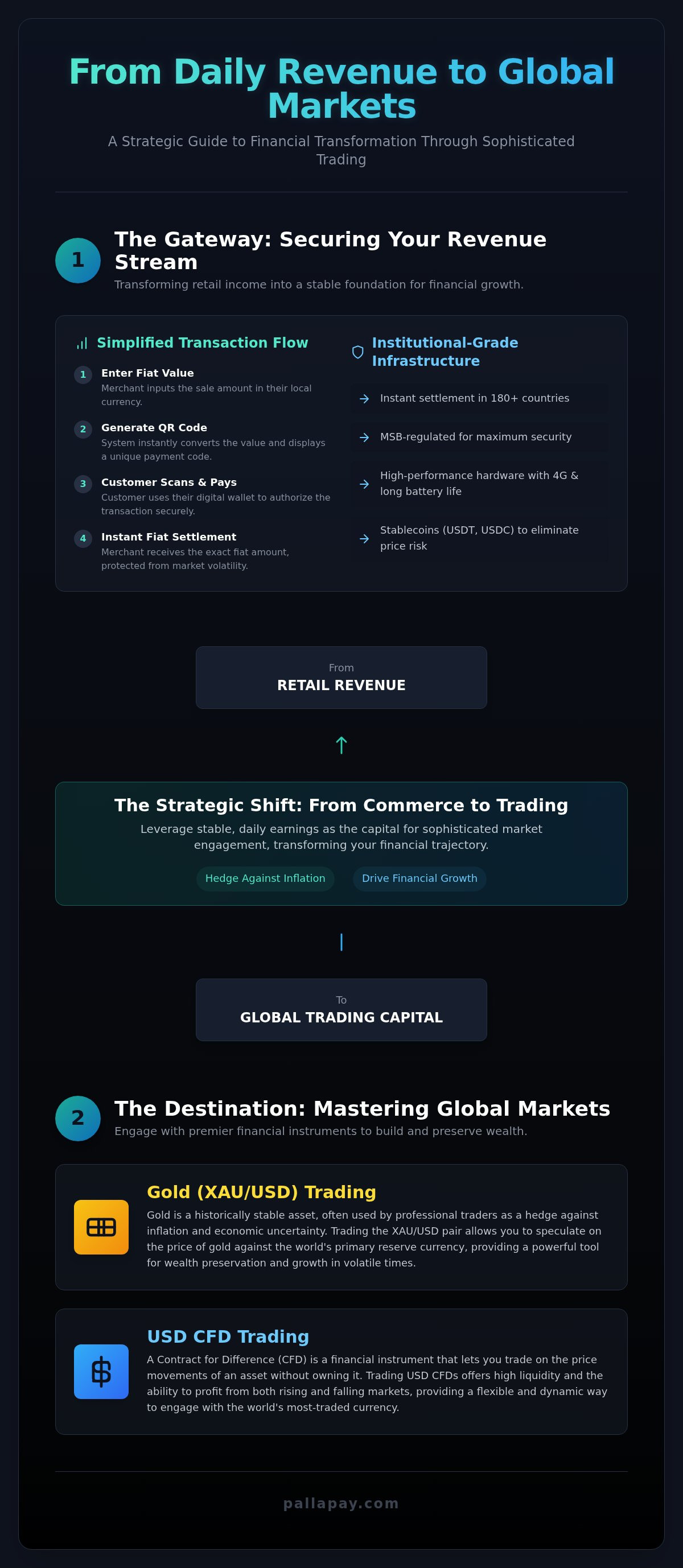
The transaction sequence begins when the merchant enters the transaction value in fiat on the terminal interface. This input triggers a series of background calculations that happen in milliseconds. The terminal communicates with a payment gateway to retrieve the current market price of the chosen digital asset. Once the rate is confirmed, the system generates a unique QR code on the screen, representing the exact amount of crypto required to satisfy the fiat price. The customer simply scans this code using their digital wallet and authorizes the transfer from their device. This process eliminates the manual entry of long wallet addresses, significantly reducing the risk of user error at the point of sale.
A deeper analysis of how do crypto pos systems work reveals that the payment gateway serves as the technical engine. After the customer authorizes the payment, the transaction is broadcast to the blockchain. Verification occurs rapidly, often within seconds for modern networks and Layer 2 solutions. The terminal receives a digital handshake from the network, signaling a successful transfer. The merchant sees an instant confirmation on their screen and can provide a receipt, completing the cycle with the same speed as a traditional credit card swipe. By utilizing professional fiat settlement services, you can ensure your capital is ready for the next market opportunity.
The Instant Conversion Engine
Price stability is maintained through a sophisticated liquidity management system. To prevent slippage, the gateway locks in the exchange rate the moment the QR code is generated. This ensures that the merchant receives the exact fiat value regardless of minor market fluctuations during the few seconds it takes to scan. This stability is a core reason why merchants ask how do crypto pos systems work before integrating them into their storefronts. Liquidity providers facilitate an immediate swap from crypto to fiat, allowing business owners to avoid holding volatile assets. This efficient conversion turns retail revenue into liquid capital, which can then be transitioned into high-potential markets like gold and USD CFD trading to enhance an individual’s financial trajectory.
Security Protocols and Fraud Prevention
Traditional retail faces constant threats from chargeback fraud, but blockchain technology provides a definitive solution. Because crypto transactions are recorded on a ledger and are irreversible, the risk of fraudulent reversals is eliminated. All data transmitted between the terminal and the gateway is protected by advanced encryption standards for both NFC and QR-based payments. Utilizing Pallapay’s secure infrastructure ensures that your business assets are shielded from external threats. This institutional-grade security is essential for merchants who plan to leverage their retail income for more advanced financial activities, such as gold trading or managing a diverse forex account.
From Retail to Global Markets: The Strategic Advantage of Crypto Payments
Adopting digital payment infrastructure is often viewed through the lens of operational efficiency, yet the true value lies in its role as a bridge to global financial markets. While previous sections detailed how do crypto pos systems work from a technical perspective, the strategic advantage is found in what happens after the transaction. By integrating these systems, you’re no longer just managing a retail storefront; you’re establishing a high-speed conduit for capital. This infrastructure allows you to move seamlessly from the cash register to the global Forex market, bypassing the delays and high friction costs associated with traditional banking. It’s a fundamental shift from standard commerce to active wealth generation.
The efficiency of an integrated ecosystem means that retail revenue is no longer stagnant. When you use a professional off-ramp to convert sales into liquid capital, you gain the ability to react to market trends in real time. This agility is essential for merchants who want to protect their purchasing power and grow their assets in a fluctuating global economy. By leveraging digital assets as an entry point, you can access sophisticated trading environments that were once reserved for institutional players.
Leveraging Revenue for Gold and USD CFD Trading
Digital assets allow merchants to enter commodity markets with unprecedented speed. Instead of waiting days for bank transfers to clear, the instant nature of crypto-to-fiat settlement provides the immediate liquidity required for active trading. This is particularly transformative when engaging with gold (XAU/USD) and other currency-based contracts. CFD trading allows merchants to profit from price movements in gold without the logistical burdens of physical storage or security. By trading USD-based CFDs, you can hedge your retail earnings against inflation, ensuring that your business capital remains resilient even during periods of local currency devaluation.
Financial Transformation: Changing Your Life Through Trading
The transition from a merchant mindset to an investor mindset is the ultimate goal of digital retail evolution. When you understand how do crypto pos systems work as facilitators of liquidity, you can begin to use your daily revenue as a tool for strategic market participation. This shift has the potential to change an individual’s financial life by creating multiple streams of growth. A diversified portfolio that includes both retail income and active commodity trading provides a level of security that traditional business models simply cannot match. The long-term impact of this strategy is a more stable, empowered financial future where your business serves as the engine for broader global investment opportunities. You can manage these assets through a secure wallet, maintaining full control over your financial destiny.
Choosing and Setting Up Your Crypto POS Infrastructure
Evaluating the physical and digital components of your infrastructure is a critical step in scaling your business operations. Reliability begins with hardware. A professional terminal must offer robust battery life and dual connectivity options, such as 4G and Wi-Fi, to ensure uninterrupted service in high-traffic environments. Beyond the physical device, your software must integrate seamlessly with existing accounting and inventory tools. This technical synergy allows you to monitor revenue in real time, providing a clear picture of the capital available for further investment. When you analyze how do crypto pos systems work during a live deployment, the efficiency of the transaction flow becomes immediately apparent.
Understanding how do crypto pos systems work in a practical setting involves a straightforward setup process. Most merchants begin with account verification, followed by terminal configuration and a test transaction. This systematic approach ensures that every component is functioning correctly before you accept live payments from global customers. By selecting a system designed for institutional financial reliability, you ensure that your retail frontend is a stable foundation for your broader financial goals.
Compliance and Regulatory Standards
Institutional financial reliability is built on a foundation of strict compliance. Choosing a provider with MSB registrations in the US and Canada is essential for maintaining global trust and operational longevity. These registrations signify that the infrastructure meets rigorous anti-money laundering standards. Merchants must also complete KYC (Know Your Customer) and KYB (Know Your Business) requirements during the onboarding phase. This process protects your business by ensuring all participants in the ecosystem are verified, allowing you to operate a borderless business with total confidence.
Settlement Options: Fiat vs. Crypto
Flexibility in settlement is a primary advantage of modern digital payments. You can configure your terminal for direct fiat settlement, which eliminates exposure to market volatility by converting digital assets into your local currency instantly. Alternatively, using an off-ramp service provides the instant liquidity necessary for active market participation. This rapid access to funds is transformative for those looking to grow their wealth through gold and USD CFD trading. By managing your business wallet effectively, you can allocate a portion of your retail revenue as trading capital, using price movements in the global commodity markets to enhance your financial life. You can get started with a professional crypto POS solution today to bridge the gap between commerce and global trading.
The Pallapay Ecosystem: Bridging Payments and Financial Evolution
Pallapay stands as the definitive destination for businesses seeking to merge retail commerce with institutional financial services. While many ask how do crypto pos systems work in isolation, the true power is realized when the terminal is part of a unified ecosystem. This platform functions as a professional bridge, connecting your daily sales directly to an off-ramp and global trading desks. By consolidating payments, exchange, and market access, you eliminate the fragmentation that often slows down business growth. This integrated approach allows you to reach customers in 180+ countries while maintaining the stability of instant fiat settlement. It is not merely about accepting a payment; it’s about building a gateway to global liquidity. Growth requires stability.
Advanced Tools for the Modern Merchant
Custom retail integrations are made possible through the sophisticated Payment API, allowing you to tailor the payment experience to your specific brand needs. A centralized dashboard provides a real-time overview of your sales and trading capital, ensuring you’re never overwhelmed by the underlying mechanics. For high-volume conversions into gold or fiat, merchants can access professional OTC desks. These tools ensure that your capital is always working for you, transitioning effortlessly from the Crypto POS Machine to active market positions. This level of technical integration turns every transaction into a strategic advantage, providing the speed and safety required for institutional-grade finance.
Your Future in the Global Economy
The evolution from a standard merchant to a sophisticated market participant is the ultimate outcome of adopting these tools. Understanding how do crypto pos systems work as part of a larger strategy enables you to focus on growth while the infrastructure handles complex background processes. This shift has the potential to fundamentally change your financial life by providing direct access to the world’s most liquid markets. By leveraging retail revenue into gold and USD CFD trading, you create a resilient path toward wealth generation and inflation protection. Adopting the tools of tomorrow ensures you aren’t just keeping pace with global evolution but leading it. You can secure your financial future by integrating with a partner that prioritizes speed, safety, and institutional reliability. This isn’t just a technological upgrade; it’s a strategic partnership designed to empower your long-term success in the global economy.
Evolving Your Business into a Global Financial Engine
We’ve explored the technical journey from the initial QR scan to secure blockchain verification. Understanding how do crypto pos systems work reveals that these tools are no longer just payment alternatives; they’re professional gateways to institutional liquidity. By integrating these systems, you shift from simple transaction management to active participation in the global economy. This transition allows you to leverage daily revenue into transformative opportunities like gold and USD CFD trading, moving beyond the traditional constraints of retail commerce.
Pallapay provides the secure, MSB-regulated infrastructure needed to facilitate this evolution in the US and Canada. You can enjoy instant conversion and fiat settlement across 180+ countries, ensuring your capital is always ready for strategic market moves. Whether you’re hedging against inflation with gold or exploring the potential of forex markets, a unified platform handles the complexity so you can focus on growth. Empower your business with Pallapay Crypto POS solutions today. Your journey toward a more sophisticated financial life begins with the right technological partner. It’s time to embrace a future where your business serves as a bridge to global wealth.
Frequently Asked Questions
Is a crypto POS system better than a traditional credit card terminal?
A crypto POS system offers superior benefits compared to traditional terminals, including the total elimination of chargeback fraud and lower operational costs. While legacy systems involve complex merchant agreements and delayed funding, digital terminals provide instant confirmation and global reach. Understanding how do crypto pos systems work helps merchants see that these tools are professional upgrades. They provide immediate liquidity that can be leveraged into advanced financial markets like gold and USD CFD trading.
How fast does the money reach my bank account after a crypto sale?
Settlement speed depends on your chosen configuration, but professional gateways facilitate instant crypto-to-fiat conversion. Through the Pallapay ecosystem, merchants can receive funds in their accounts with institutional-grade efficiency across 180+ countries. This rapid access to capital is a primary reason why businesses adopt these tools. It allows you to transition retail revenue into active wealth generation strategies, such as USD CFD trading, without the multi-day delays typical of legacy banking.
Do I need a special bank account to accept cryptocurrency payments?
You don’t need a specialized crypto bank account to accept these payments because the system handles the conversion on your behalf. Most merchants configure their terminals for direct fiat settlement, meaning the digital assets are converted into local currency before reaching your existing business bank account. This setup maintains your current accounting workflow while adding the flexibility of digital payments. It ensures your revenue is ready for strategic allocation into commodity markets like gold.
What are the transaction fees for a crypto POS system in 2026?
What are the transaction fees for a crypto POS system in 2026?
Yes, a single professional terminal can support multiple digital assets, including Bitcoin, Ethereum, and stablecoins like USDT. This multi-currency capability ensures you never miss a sale regardless of your customer’s preferred wallet. The gateway manages the exchange rates for each asset in real time, providing a seamless experience for both the merchant and the buyer. This versatility is a core component of how do crypto pos systems work to simplify global retail operations.
Is it possible to use crypto revenue for gold or Forex trading directly?
Direct integration between payment gateways and trading platforms makes it possible to use your revenue for gold or Forex trading. By utilizing an efficient off-ramp, you can move your settled capital into a trading account to engage with XAU/USD or other currency pairs. This capability transforms your storefront from a simple point of sale into a launchpad for sophisticated financial strategies, allowing you to profit from global price movements and hedge against inflation.
What happens if the price of the cryptocurrency drops during the transaction?
Merchants are protected from market volatility because the exchange rate is locked the moment the QR code is generated. The instant conversion engine ensures that the fiat value you entered at the start of the transaction is the exact amount you receive during settlement. This mechanism removes the risk of slippage, allowing you to accept digital assets with the same price certainty as traditional cash or card payments while enjoying faster global processing.
Is a crypto POS terminal legal for a small retail business?
Operating a crypto POS terminal is legal for retail businesses when using a provider that maintains proper regulatory registrations. Pallapay is an officially registered MSB in both the United States and Canada, ensuring that your payment infrastructure meets all national compliance and anti-money laundering standards. This institutional reliability provides small business owners with the peace of mind needed to expand their operations into the digital economy and explore advanced wealth generation through CFD trading.
Disclaimer
The information provided on this website and blog is for general informational and educational purposes only and does not constitute financial, investment, legal, tax, or other professional advice.
Cryptocurrency and digital asset services may be subject to regulatory restrictions in certain jurisdictions. Users are solely responsible for ensuring compliance with applicable local laws and regulations before using any products or services mentioned on this website.
PallaPay does not guarantee the accuracy, completeness, or timeliness of any information published and accepts no liability for any loss or damages arising from reliance on the content. Any opinions expressed are those of the respective authors and may change without notice.
Certain services, features, or products referenced may be provided through third-party partners, licensed entities, or affiliated service providers subject to separate terms and regulatory approvals. Availability of services may vary by country or region.
This website may contain references to digital assets, virtual currencies, or blockchain-related services that are not available to residents of certain jurisdictions, including where prohibited by law. Nothing on this website constitutes an offer, solicitation, or recommendation to buy or sell any financial instrument or virtual asset.
Leave a Reply