Tag: Crypto POS

  • Crypto POS Machine Dubai: The Complete 2026 Merchant Implementation Guide

    Crypto POS Machine Dubai: The Complete 2026 Merchant Implementation Guide

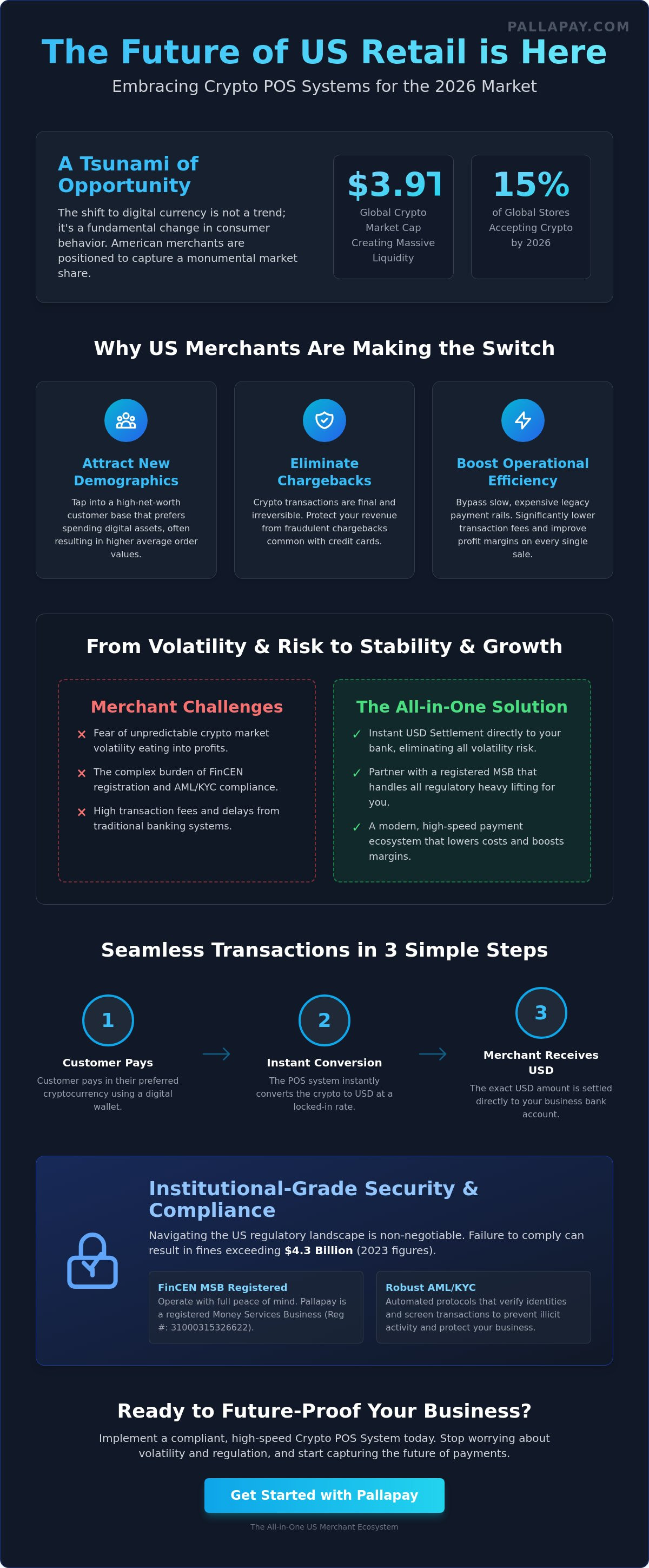
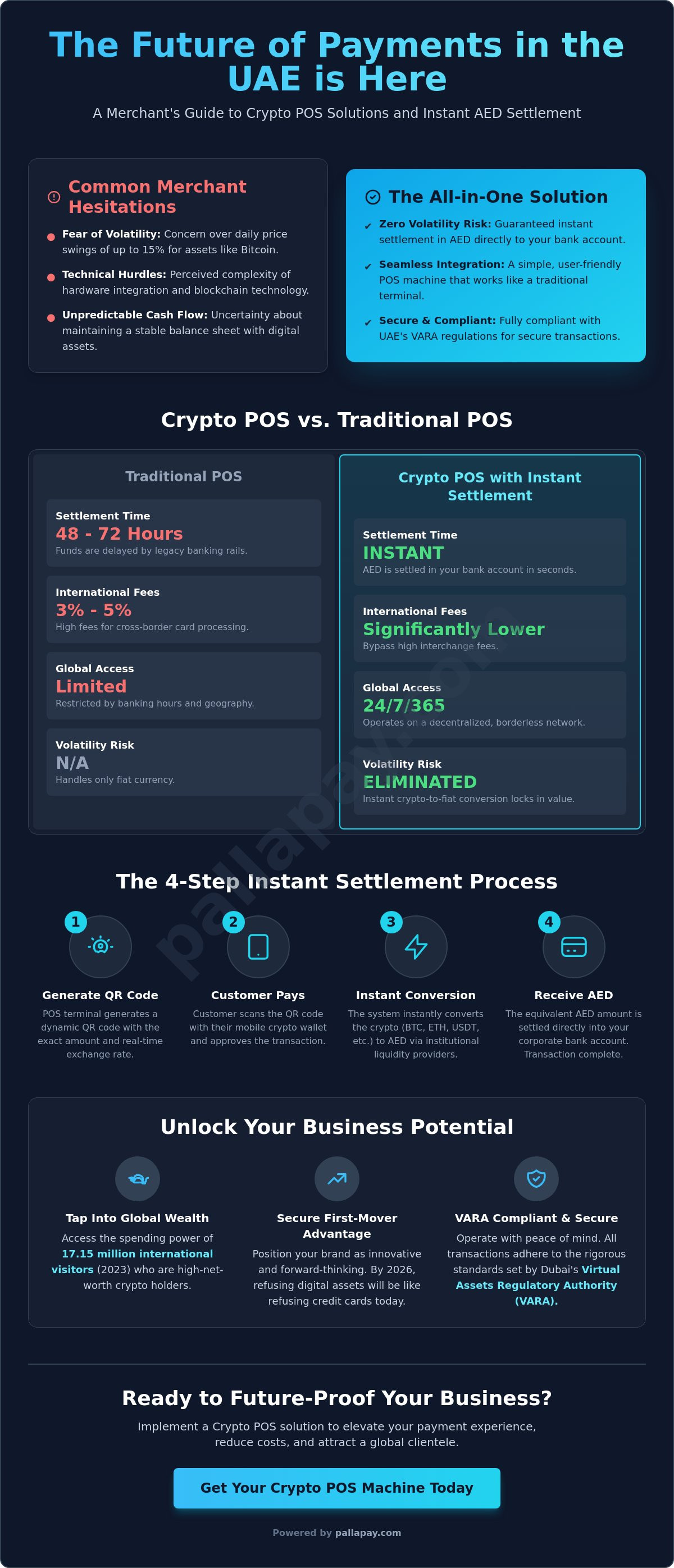
    By 2026, refusing a digital asset payment in the UAE will be as restrictive to growth as refusing credit cards was a decade ago. While the local retail sector is rapidly evolving, many merchants still hesitate because they fear the 15% daily price swings of Bitcoin or the perceived technical hurdles of hardware integration. You’ve likely spent time wondering if a crypto pos machine dubai solution can actually provide the stability your balance sheet requires. We understand that your priority is maintaining a secure, predictable cash flow without getting bogged down in the intricacies of blockchain liquidity.

    This guide provides the definitive roadmap to mastering the transition to digital asset payments within the UAE’s unique regulatory framework. You’ll learn how to deploy a fully compliant infrastructure that guarantees instant AED settlement directly into your bank account, effectively eliminating volatility risks. We’ll walk through the hardware setup, the integration of professional payment gateways, and the steps to ensuring a seamless checkout experience for your global clientele. This is the future of payments, simplified for the modern enterprise.

    Key Takeaways

    • Understand the mechanics of instant AED settlement to ensure seamless liquidity during every digital asset transaction.
    • Navigate the VARA regulatory framework to establish a compliant and secure foundation for your virtual asset operations.
    • Implement a crypto pos machine dubai to elevate the payment experience within high-value sectors like luxury retail and real estate.
    • Discover the strategic advantage of an all-in-one ecosystem that bridges the gap between blockchain innovation and institutional reliability.

    Understanding Crypto POS Machines in the Dubai Retail Landscape

    Dubai’s retail sector is undergoing a profound transformation. A crypto POS terminal serves as the vital hardware bridge between a customer’s digital wallet and a merchant’s institutional banking framework. While a traditional Point of Sale (POS) system focuses on card swipes and cash, a crypto pos machine dubai solution enables the real-time processing and settlement of digital assets. The evolution of Dubai’s economy has been swift. It transitioned from a cash-heavy society in the early 2000s to a global leader in contactless card payments by 2015. Now, the city is embracing the blockchain era. This shift isn’t just about new currency; it’s about a fundamental upgrade to the financial plumbing of the city.

    The core difference between a standard terminal and a dedicated crypto solution is the settlement layer. Standard machines rely on legacy banking rails that often take 48 to 72 hours to clear funds. A dedicated crypto terminal provides instant verification. It allows merchants to accept Bitcoin, Ethereum, or USDT while receiving the equivalent in local currency immediately. This eliminates the volatility risks that once made merchants hesitant. Standard POS systems are restricted by geographical boundaries and centralized banking hours. In contrast, a crypto terminal operates on a 24/7 decentralized network. It provides a level of liquidity and global reach that traditional systems cannot match. For a business in the Dubai Mall or DIFC, this means never turning away a customer because of banking holidays or cross-border payment failures.

    The Shift Toward Digital Asset Payments in the UAE

    Dubai residents and visitors represent a unique demographic of early adopters. The UAE ranked among the top countries for crypto readiness in 2023, driven largely by the government’s proactive regulatory stance. The Dubai Blockchain Strategy, initiated in 2016, continues to influence how retail infrastructure is built today. A Crypto POS is a hardware solution for real-time digital asset processing. This technology ensures that transactions are as fast as a traditional tap-and-pay interaction. The 2026 outlook suggests that digital asset integration will be a prerequisite for any luxury retailer in the UAE. As the city moves toward its goal of becoming a global Web3 hub, the demand for seamless crypto-to-fiat conversion tools will only intensify.

    Key Benefits for Dubai-Based Merchants

    Adopting a crypto pos machine dubai offers immediate financial advantages. Dubai welcomed 17.15 million international visitors in 2023, many of whom are high-net-worth investors seeking to spend their digital portfolios. By accepting crypto, merchants bypass the high 3% to 5% fees typically charged for international credit card processing. It’s a strategic move that markets a business as an innovative, forward-thinking brand. This positioning is essential in a competitive market where tech-savvy shoppers demand the Future of Payments today. Merchants who implement these systems now are securing a first-mover advantage in a market that rewards technological agility.

    Technical Mechanics: How a Crypto POS Ensures Instant AED Settlement

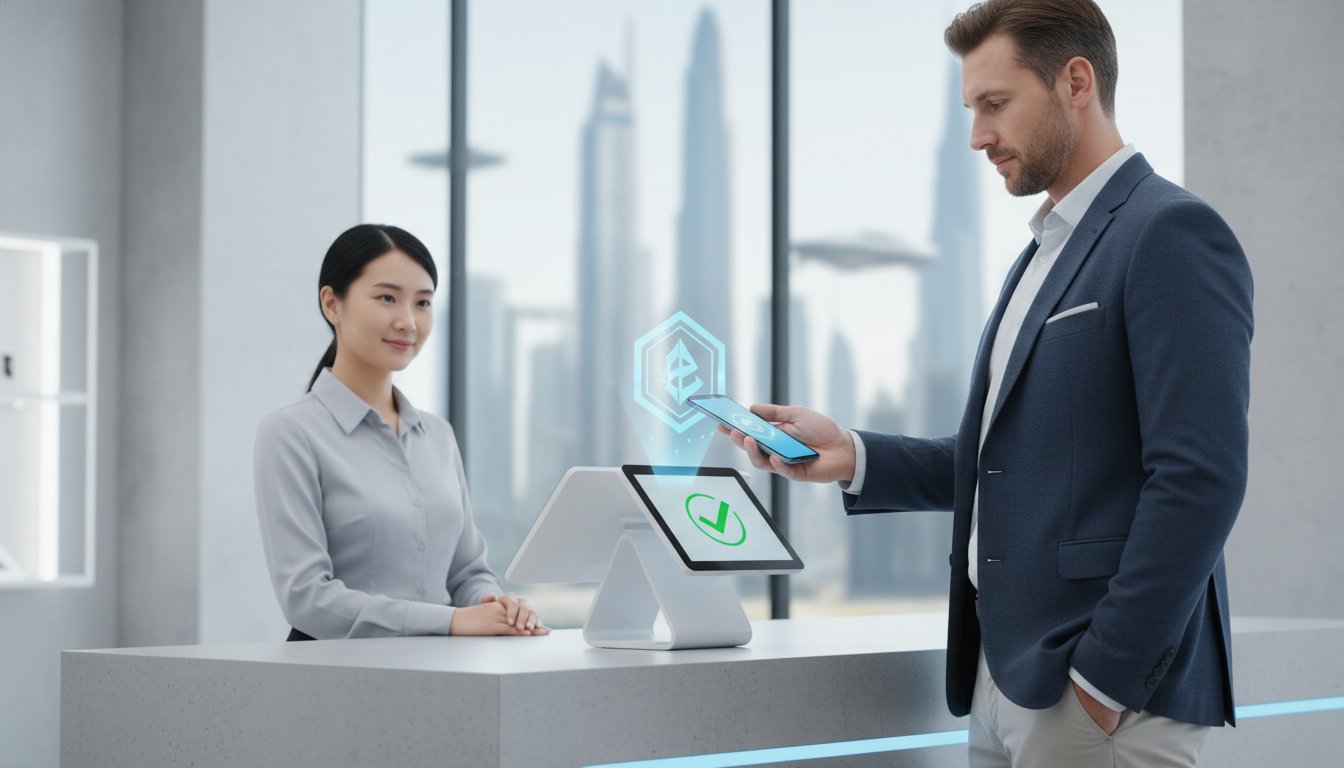
    Modern commerce demands speed, and the 2026 payment ecosystem delivers it through high-performance infrastructure. Deploying a crypto pos machine dubai allows businesses to capture global liquidity without the complexity of managing digital wallets or private keys. The transaction flow is engineered for efficiency. When a customer initiates a payment, the terminal generates a dynamic QR code containing the precise transaction details and the real-time exchange rate. Once the customer scans and approves the transfer from their mobile wallet, the system triggers an automated off-ramp process.

    This backend sequence relies on a network of institutional liquidity providers that execute trades in milliseconds. These providers ensure that the exchange rates remain competitive, even during periods of high market activity. By the time the customer sees a “Success” message on their screen, the crypto has been converted into fiat. This process matches the sub-second speed of traditional NFC card payments, ensuring that retail queues keep moving. All operations within this framework adhere to the rigorous standards set by the Virtual Assets Regulatory Authority (VARA), providing a secure environment for both the merchant and the consumer.

    Eliminating Volatility Risk for Business

    Price fluctuations are a primary concern for traditional retailers, yet modern technology has effectively neutralized this hurdle. The terminal locks in the exchange rate at the exact moment the QR code is generated. If a luxury watch is priced at 50,000 AED, the merchant receives exactly 50,000 AED, regardless of market movements during or after the sale. Businesses don’t need to hold digital assets on their balance sheets or worry about capital gains tracking. For a deeper look at how these funds reach your corporate account, explore Pallapay’s fiat settlement solutions. This bridge between digital assets and local currency makes crypto as stable as any bank-issued tender.

    Hardware Features of Modern Crypto Terminals

    The 2026 generation of hardware is designed for the rugged reality of retail environments. These terminals aren’t just software interfaces; they’re comprehensive financial hubs. Most units feature high-resolution touchscreens and ergonomic designs that fit seamlessly into any checkout counter.

    • NFC and 2D Scanners: These units support “Tap-to-Pay” crypto cards and high-speed QR scanning even in low-light conditions.
    • Reliable Connectivity: Integrated 5G and Wi-Fi 6 modules ensure that the crypto pos machine dubai stays online during peak hours.
    • Physical Proof: Built-in thermal printers provide instant paper receipts, satisfying traditional accounting needs alongside digital logs.

    The user interface is built for simplicity. Retail staff don’t require specialized technical training because the terminal mirrors the workflow of a standard credit card machine. It’s an intuitive experience that allows you to upgrade your payment infrastructure without disrupting daily operations.

    Compliance and Security: Navigating VARA and UAE Regulations

    Dubai established the Virtual Assets Regulatory Authority (VARA) in March 2022 to provide a clear legal framework for the digital economy. For any business integrating a crypto pos machine dubai, compliance isn’t optional; it’s the foundation of institutional trust. Merchants must align with providers that hold the necessary authorizations to process virtual assets. This ensures that every transaction meets the stringent Anti-Money Laundering (AML) and Know Your Customer (KYC) standards required by UAE law. Pallapay integrates these protocols directly into the hardware, performing real-time checks that prevent illicit actors from interacting with your business.

    Operating Legally in Dubai’s Crypto Ecosystem

    Pallapay functions as a regulated financial technology provider, handling the complex regulatory requirements so merchants don’t have to. It’s vital to distinguish between accepting crypto as payment and actively trading it. When a customer pays at your storefront, the system facilitates instant fiat settlement to ensure your books remain clear and tax-compliant. VARA-compliant terminals protect merchants from legal liability by ensuring all processed funds originate from verified sources. This professional bridge allows traditional retail operations to tap into digital liquidity without the typical overhead of a compliance department. By 2026, the UAE aims to have 100% of its virtual asset service providers fully licensed, making early adoption with a regulated partner a strategic necessity.

    Zero Chargeback Guarantee

    Credit card fraud costs global merchants billions annually, often through the “friendly fraud” of disputed charges. Blockchain technology eliminates this risk entirely because transactions are final and immutable. Once a customer authorizes a payment through a crypto pos machine dubai, the data is etched into the ledger and cannot be reversed by the user. This creates a secure environment for high-value retailers in sectors like luxury real estate or automotive sales.

    The administrative burden of proving a sale to a bank months after the product has left your floor is gone. Fraud prevention is built into the technology itself. Because the ledger is transparent and permanent, the revenue is secured instantly, backed by mathematical certainty. This system offers several key advantages for modern commerce:

    • Protection against unauthorized reversals: No more lost revenue from customer-initiated chargebacks.
    • Elimination of dispute fees: Merchants save on the heavy administrative costs associated with banking mediation.
    • Instant verification: Real-time confirmation of funds before any goods or services are delivered.
    • Data Integrity: Secure encryption and hardware modules guard sensitive merchant data against external breaches.

    The future of payments is defined by this lack of friction, where security doesn’t come at the cost of speed. By utilizing a system that prioritizes both regulatory alignment and technological finality, businesses can operate with absolute confidence in their revenue streams.

    Strategic Implementation: Integrating Crypto into High-Value Dubai Industries

    Dubai’s economy thrives on high-velocity commerce and the rapid movement of capital. Deploying a crypto pos machine dubai isn’t just about adding a modern payment method; it’s about aligning your business with the spending habits of a global, tech-savvy elite. From the luxury corridors of the Dubai Mall to the high-stakes world of real estate, digital asset integration has become a hallmark of institutional financial reliability.

    Luxury Retail and Hospitality Use Cases

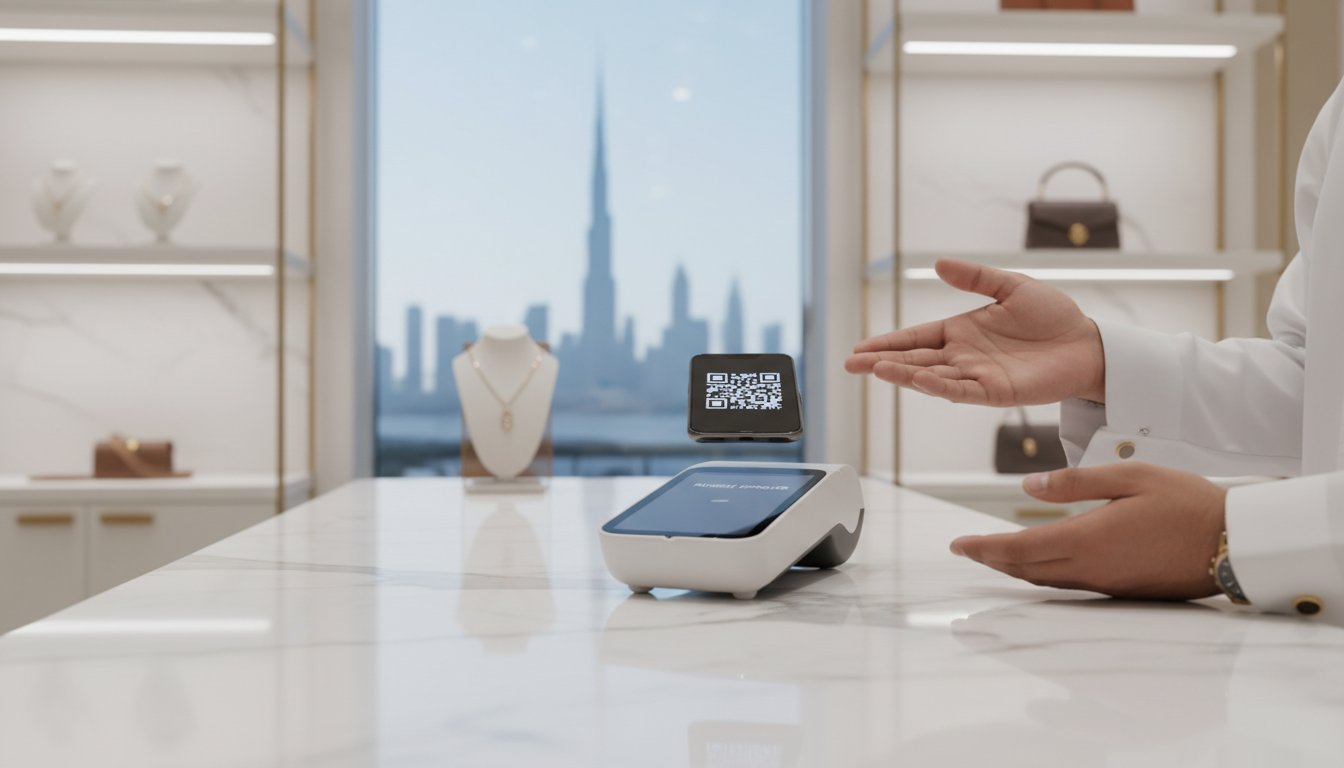
    In the high-end retail sectors of Mall of the Emirates, discretion and speed are the primary drivers of customer satisfaction. Luxury watch retailers frequently encounter ultra-high-net-worth individuals who prefer settling million-dirham invoices using stablecoins or Bitcoin. By utilizing a specialized terminal, these boutiques finalize sales instantly, bypassing the three-to-five-day delays often associated with international wire transfers. This technology provides a discreet, high-tech payment option that mirrors the premium service expected in five-star environments. Merchants can explore Pallapay’s hotel industry solutions to see how these integrations elevate the entire guest journey by removing payment friction at check-in and check-out.

    Real Estate and High-Ticket Services

    The Dubai real estate sector has seen a 15% increase in crypto-related transaction inquiries since 2024. Managing large-scale transfers for property down payments via a crypto pos machine dubai simplifies the logistics of significant capital movements. Instead of navigating complex banking correspondence, developers and property managers receive instant confirmation of funds. These terminals integrate directly with merchant dashboards, providing real-time reporting and automated accounting that satisfies institutional-grade compliance requirements. This level of transparency ensures that every high-ticket transaction is recorded and ready for audit.

    High-volume logistics providers, such as yacht charters and luxury car rentals, also benefit from this streamlined approach. These businesses often deal with international clients who require immediate access to services. Accepting digital assets allows these operators to secure bookings in seconds, ensuring that liquidity is maintained and assets are never left idle due to payment processing lags. The system handles the heavy lifting of technology behind the scenes, allowing the merchant to focus on delivering a world-class experience.

    Ready to modernize your payment infrastructure? Equip your business with the future of payments today.

    Choosing the Right Partner: The Pallapay Ecosystem Advantage

    Selecting a technology provider in the UAE requires a balance of innovation and institutional reliability. Pallapay serves over 500 institutional clients and thousands of SMEs across the region, positioning itself as the definitive bridge between traditional retail and the digital asset economy. The platform’s strength lies in its “All-in-One” ecosystem. By unifying the Pallapay Wallet, a high-performance payment gateway, and physical hardware, merchants avoid the technical debt of managing fragmented systems. This integration ensures that liquidity, settlement, and reporting happen within a single, secure environment.

    Scalability is a core feature of the Pallapay infrastructure. A single boutique in Dubai Design District requires the same level of security as a nationwide retail chain with 50 or more locations. Pallapay provides this consistency. Large enterprises leverage deep liquidity for high-volume transactions, while smaller businesses benefit from a crypto pos machine dubai solution that remains simple to operate. This flexibility allows a business to grow its digital payment capabilities without needing to overhaul its underlying financial architecture.

    Technical Support and Local Expertise

    Operational downtime is not an option in Dubai’s 24/7 economy. Pallapay maintains a physical presence with offices in Business Bay, Dubai, providing a level of accountability that offshore providers cannot match. Local experts handle on-site installation and conduct thorough staff training sessions to ensure every team member is comfortable processing blockchain transactions. Support teams stay active 24/7, aligning perfectly with UAE business hours and peak retail periods. Every crypto pos machine dubai receives continuous software updates. These remote patches ensure the hardware stays ahead of emerging blockchain trends and maintains the highest security standards in the fintech industry.

    Getting Started with Your Crypto POS

    The path to becoming a crypto-enabled merchant is designed for speed. The onboarding process is direct, moving from the initial application to your first live transaction in approximately 72 hours. Efficiency is the priority. Pallapay delivers hardware that is fully pre-installed and ready for immediate use, eliminating complex configuration steps for the merchant. This rapid deployment helps businesses stay competitive as the UAE accelerates its transition toward a digital-first economy.

    Success in the modern market requires the right tools and a visionary partner. Apply for your Pallapay Crypto POS machine today and lead the future of payments.

    Secure Your Competitive Edge in Dubai’s Digital Economy

    Dubai’s retail landscape is evolving at a rapid pace as VARA regulations provide the clear legal framework required for institutional adoption. Implementing a crypto pos machine dubai solution isn’t just about modernizing payments; it’s about capturing a global market that demands instant liquidity and absolute security. By partnering with a regulated MSB in the USA and Canada, your business gains the stability of a financial leader with a physical presence at the Binary Tower in Business Bay. You’ll benefit from instant fiat settlement in AED or USD. This ensures your cash flow remains shielded from market volatility while you provide a seamless checkout experience for every client. This transition bridges the gap between traditional commerce and the future of global finance. It’s time to transform your payment infrastructure into a strategic asset that drives measurable growth and builds lasting customer trust across the UAE. We’re ready to help you lead this transformation with confidence and technical precision.

    Equip your business with the Future of Payments: Get the Pallapay Crypto POS

    Frequently Asked Questions

    Is it legal to use a crypto POS machine for my business in Dubai?

    Yes, it’s entirely legal to use a crypto POS terminal in Dubai under the regulatory framework established by the Virtual Assets Regulatory Authority (VARA). The Virtual Assets and Related Activities Regulations 2023 provide a clear legal structure for businesses to accept digital assets through licensed providers. Using a crypto pos machine dubai ensures your business stays compliant while tapping into the city’s growing digital economy.

    How much are the transaction fees for a crypto POS terminal compared to credit cards?

    Crypto transaction fees are generally lower than traditional credit card processing fees, which often range from 2% to 3.5% according to 2024 Nilson Report data. By eliminating multiple banking intermediaries and cross-border surcharges, merchants often reduce their total overhead per transaction. This cost efficiency allows you to retain more revenue from every sale while offering customers a modern, secure payment alternative.

    Can I receive payments in AED even if the customer pays in Bitcoin or USDT?

    You’ll receive your funds in AED directly into your bank account regardless of the cryptocurrency used by the customer. The Pallapay gateway performs an instant conversion at the moment of sale to protect your business from market volatility. This seamless process ensures that your accounting remains straightforward and your liquidity is maintained in the local currency you use for daily operations.

    Do I need a special license from VARA to accept crypto in my store?

    Individual retail merchants don’t usually require a specific VARA license if they’re using a payment processor that’s already licensed. VARA’s 2023 guidelines focus on regulating the service providers who handle the underlying technology and liquidity. By partnering with a professional gateway, you leverage their institutional infrastructure to offer The Future of Payments without the burden of complex independent licensing procedures.

    What happens if the price of Bitcoin drops immediately after a customer pays?

    Your business is protected from price drops because the exchange rate is locked the moment the transaction is initiated. Our crypto pos machine dubai technology executes a real-time settlement, meaning the AED value you see on the screen is exactly what you receive. This instant conversion removes the risk of asset depreciation, allowing you to enjoy the benefits of blockchain technology with the stability of fiat currency.

    Which cryptocurrencies are supported by the Pallapay POS machine?

    The Pallapay terminal supports a comprehensive range of major digital assets including Bitcoin, Ethereum, and USDT. Our all-in-one ecosystem is designed to process the most liquid and widely held cryptocurrencies to ensure you never miss a sale. This broad compatibility makes your store a global destination for tech-savvy travelers and local crypto holders who demand flexible, secure payment options.

    How long does it take for the funds to reach my Dubai bank account?

    Funds are typically settled into your Dubai bank account within 24 to 48 hours, providing a reliable rhythm for your cash flow management. We prioritize speed in our settlement cycles to ensure that your business stays agile and liquid. This rapid turnaround time is a key advantage of our professional fintech bridge, connecting disruptive blockchain speed with traditional banking reliability.

    Does the crypto POS machine require a constant internet connection?

    Yes, a stable internet connection via Wi-Fi or a 4G/5G SIM card is essential for processing blockchain transactions in real time. The machine must communicate with the global network to verify wallet balances and confirm the transfer of assets instantly. This constant connectivity ensures that every payment is secure and that the exchange rate is accurately applied at the second of purchase.

  • Crypto POS Machine for Business: The 2026 Strategic Implementation Guide

    Crypto POS Machine for Business: The 2026 Strategic Implementation Guide

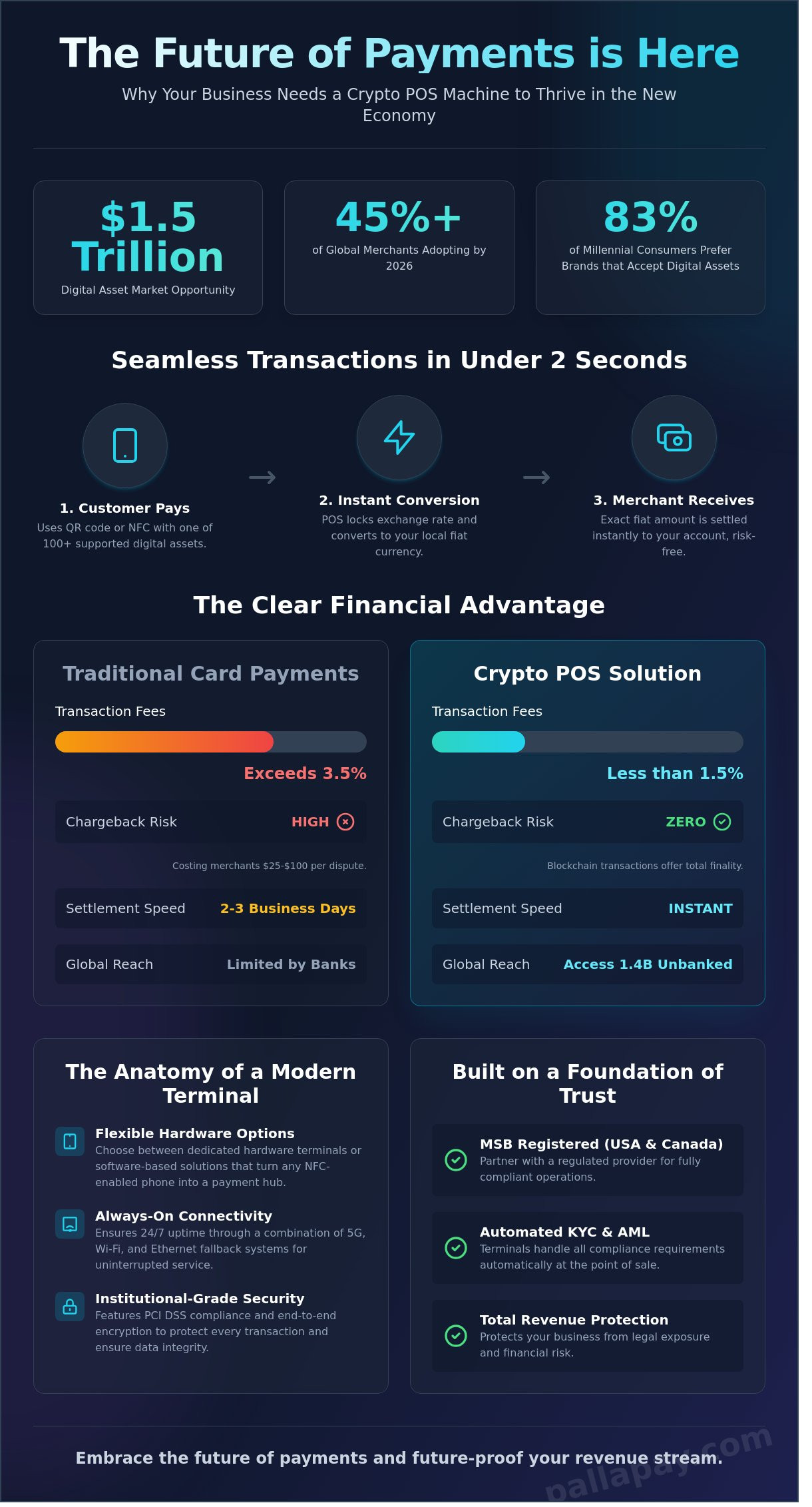
    By 2026, over 45% of global merchants will move beyond traditional card readers to capture a share of the $1.5 trillion digital asset market. If your current terminal doesn’t support blockchain transactions, you’re essentially closing your doors to a massive segment of high-net-worth international consumers. You’ve likely hesitated because of market volatility or the headache of manual accounting; that’s a valid concern for any professional operation. Integrating a crypto pos machine for business shouldn’t mean taking on financial risk or technical debt.

    This strategic guide provides the roadmap to accepting global digital payments with instant fiat settlement and institutional-grade security. You’ll discover how to achieve a seamless checkout experience that converts crypto to your local currency in under two seconds. We’ll examine the automated reporting tools that simplify tax compliance and the specific hardware configurations that sync directly with your existing accounting software. By the end of this article, you’ll have a clear plan to future-proof your revenue stream and embrace the future of payments.

    Key Takeaways

    • Master the transition to the future of payments by understanding why modern consumers are moving beyond traditional credit cards toward real-time digital asset processing.
    • Identify the critical technical requirements for your terminal, including the choice between dedicated hardware and NFC-enabled apps to ensure constant 5G and Wi-Fi connectivity.
    • Evaluate provider fee structures and settlement speeds to select the most efficient crypto pos machine for business that guarantees instant fiat conversion.
    • Learn to scale your operations by integrating your payment terminal into a global financial ecosystem that connects directly to high-volume OTC liquidity for seamless corporate growth.
    • Discover how to tailor the implementation of digital payment solutions to your specific sector, from luxury retail to high-volume hospitality environments.

    Beyond Credit Cards: Why Your Business Needs a Crypto POS Machine in 2026

    A crypto pos machine for business is no longer a niche tool for tech startups; it’s a vital gateway to a global economy. This hardware terminal enables real-time processing of digital assets with an instant conversion to fiat currency. By 2026, the demand for alternative payment methods has surged, with 83% of millennial consumers expressing a preference for brands that accept digital assets. These shoppers view these systems as The Future of Payments, moving away from the high fees and slow processing of traditional banking rails.

    Understanding how crypto payments work reveals the efficiency of this model. When a customer taps their phone or scans a QR code, the terminal communicates with the blockchain to verify funds and finalize the transfer. Modern systems remove the risk of market volatility by locking in exchange rates at the precise second of the sale. This ensures that if you charge $100, you receive exactly $100 in your settlement account, regardless of price fluctuations in the crypto market. It’s a seamless way to attract international tourists and high-net-worth clients without the friction of cross-border banking fees.

    The Competitive Edge of Accepting Digital Assets

    Adopting a crypto pos machine for business provides an immediate financial advantage. Transaction fees for premium credit cards often exceed 3.5%, while crypto processing typically costs less than 1.5% per transaction. Revenue protection is another critical benefit because blockchain transactions offer total finality. There is zero chargeback risk, which saves merchants the $25 to $100 fees associated with traditional payment disputes. This technology also opens doors to the 1.4 billion unbanked individuals globally who rely on digital wallets rather than traditional credit lines.

    Regulatory Compliance as a Business Foundation

    Trust is the cornerstone of any financial evolution. Partnering with an MSB-registered provider in the United States and Canada ensures your operations remain fully compliant with evolving financial laws. These regulated terminals handle all KYC and AML requirements automatically at the point of sale, protecting your business from legal exposure. MSB registration ensures institutional reliability for global merchants by providing a transparent, audited framework for every transaction processed through the ecosystem. This professional approach transforms complex blockchain interactions into a standard, effortless business operation for retail and service providers alike.

    The Technical Anatomy of a Modern Crypto POS Terminal

    Modern commerce requires more than just a standard card reader. A high-performance crypto pos machine for business functions as a sophisticated, dual-purpose gateway. Merchants can choose between dedicated hardware terminals that offer a tactile, professional experience or software-based solutions that transform NFC phones into payment hubs. These devices prioritize 24/7 uptime through a combination of 5G, Wi-Fi, and Ethernet fallback systems. Security remains the cornerstone of this technology. By implementing PCI DSS compliance and end-to-end encryption, these terminals ensure digital assets move with the same reliability as institutional fiat currency.

    While the underlying technology is advanced, the user interface mimics the familiarity of traditional banking. This allows staff to manage the transition without extensive training. Before deploying new hardware, many owners evaluate the pros and cons for businesses to ensure the infrastructure aligns with their long-term operational goals. The result is a seamless checkout flow that removes friction for both the merchant and the customer.

    NFC and QR Code Integration

    Speed defines the modern checkout experience. Modern terminals generate dynamic QR codes for every transaction, which eliminates the risk of manual wallet address entry errors. This process supports over 100 digital assets, including Bitcoin, Ethereum, and stablecoins like USDT, ensuring instant settlement. NFC integration allows customers to tap and pay, mirroring the convenience of mobile wallets. It’s a vital feature for high-traffic retail environments where transaction speed directly impacts total daily revenue.

    Integration with Existing ERP and Accounting

    A crypto pos machine for business isn’t an isolated tool; it’s a data-rich node in your financial network. Through a centralized merchant dashboard, sales reports are automated in real-time. API-led connectivity bridges the gap between the blockchain and your inventory management system. This transparency simplifies tax audits by providing a permanent, on-chain transaction history. Businesses using these integrated systems often see a 15% reduction in administrative overhead related to payment reconciliation. This level of integration proves that digital asset adoption is The Future of Payments. You can explore how this fits your scale by reviewing our crypto POS solutions today.

    Comparing Crypto POS Providers: Fees, Settlements, and Compliance

    Selecting the right crypto pos machine for business involves a deep dive into the financial mechanics that power the device. You aren’t just buying a terminal; you’re choosing a liquidity partner. Fee structures are the first point of comparison. Most institutional providers charge a percentage-based commission ranging from 0.5% to 1%. This is significantly more cost-effective than the 2% to 4% typically charged by legacy credit card networks. High-volume retailers often benefit from flat-fee models that provide predictable monthly overheads.

    Settlement speed has become the primary competitive battleground. While next-day cycles were acceptable in previous years, “Instant” settlement is the industry benchmark for 2026. This capability protects your working capital and removes the friction of waiting for blockchain confirmations. To maintain this speed, your provider must support the most liquid assets. Ensure your terminal accepts:

    • USDT and USDC: These stablecoins facilitate the majority of retail commerce.
    • Bitcoin and Ethereum: Essential for capturing the high-net-worth demographic.
    • Regional Tokens: Assets that hold high liquidity in your specific market.

    Technical reliability is non-negotiable in a retail environment. You need 24/7 global technical assistance to ensure that a software glitch doesn’t halt your sales during peak hours. The best providers offer a proactive monitoring service that identifies connectivity issues before they impact your storefront. This creates a sense of absolute trust for both the merchant and the customer.

    Fiat Settlement Models: Getting Paid in Local Currency

    Most businesses prefer to eliminate exposure to market volatility. Professional fiat settlement models allow you to accept Bitcoin while receiving USD or AED directly in your bank account. This process relies on robust liquidity providers who manage the exchange in the background to prevent slippage. You can choose between same-day settlement for immediate liquidity or T+1 cycles for consolidated reporting. For a comprehensive breakdown of how this process works across borders and currencies, our guide on crypto to fiat settlement provides the strategic framework global merchants need in 2026. This bridge makes crypto transactions feel like a standard, effortless business operation.

    Global Scalability and Multi-Region Support

    If you operate an international franchise, you must evaluate providers with a physical presence in major financial hubs like Dubai, Singapore, and New York. These locations serve as anchors for multi-currency checkouts, allowing you to price goods in local fiat while accepting global crypto. A provider’s physical global office presence correlates with faster local bank settlements because it enables direct integration with regional banking infrastructures. This infrastructure is the backbone of The Future of Payments, ensuring your crypto pos machine for business scales as you enter new markets.

    Industry-Specific Implementation: From Retail Stores to Luxury Hotels

    Adopting a crypto pos machine for business requires more than just hardware installation; it demands a strategic alignment with your specific sector’s operational flow. High-ticket industries like luxury real estate or automotive sales require rigorous security and instant verification, while high-volume retail environments prioritize transaction speed and ease of use. Pallapay provides the technological answer to these varying needs by offering a versatile ecosystem that handles the heavy lifting of liquidity and settlement behind the scenes.

    The impact on the bottom line is measurable and immediate. For example, a prominent retail store integrated Pallapay’s point-of-sale solution in Q1 2023 and recorded a 15% increase in foot traffic by the end of the second quarter. This growth is largely attributed to attracting a demographic of “crypto-affluent” consumers who prefer direct spending over traditional fiat conversions. Beyond simple transactions, merchants are now using crypto-native gift cards to drive customer loyalty, allowing users to load value onto digital cards that function seamlessly across both physical and digital storefronts.

    Crypto Payments in the Hospitality Sector

    International guests frequently encounter credit card limits or high foreign transaction fees when checking into luxury hotels. By implementing a professional crypto gateway, hotels can streamline check-ins for global travelers. The system manages deposits and incidental charges through secure crypto-fiat gateways, ensuring the hotel receives its preferred currency while the guest pays in digital assets. This setup eliminates the 3% to 7% currency conversion fees typically associated with international banking, making high-value bookings more attractive to the global elite.

    E-commerce and Brick-and-Mortar Synergy

    The modern merchant doesn’t operate in a silo. Creating a unified payment experience is essential for e-commerce brands that also host physical pop-up events or maintain flagship stores. By utilizing a single payment API, businesses can track every transaction across all channels in one dashboard. This integration ensures that a crypto pos machine for business stays synchronized with online inventory levels, providing a truly “all-in-one” financial solution. It’s the future of payments, where the distinction between online and offline commerce disappears through instant, global settlement.

    Ready to upgrade your payment infrastructure with the latest fintech innovation?

    Order your Pallapay Crypto POS Machine today

    Scaling with Pallapay: Integrating Your POS into a Global Financial Ecosystem

    Selecting a Pallapay crypto pos machine for business represents a strategic shift toward institutional-grade financial agility. This isn’t merely a point-of-sale device; it’s a gateway into a comprehensive ecosystem designed for the modern enterprise. Pallapay provides a unified platform where buying, selling, and accepting digital assets happens within a single secure environment. By linking your terminal to a high-volume OTC crypto exchange, your business gains the corporate liquidity required for high-stakes transactions. You can also distribute integrated corporate crypto cards to your team, allowing for the streamlined management of business travel and operational expenses. Our onboarding process is engineered for speed, moving you from application to your first live transaction in under 48 hours.

    The Power of an Integrated Merchant Dashboard

    The Pallapay dashboard serves as a centralized command center for your entire financial operation. It allows for the real-time monitoring of global sales across multiple POS locations, whether you operate in two cities or ten countries. Instant conversion is a standard feature here; you can move received cryptocurrency into USDT or fiat to settle payroll and overheads without delay. This functionality removes the risk of market volatility from your balance sheet. For accounting teams, the platform enables the export of audit-ready financial data with a single click, ensuring your records remain precise and compliant.

    Future-Proofing Your Business with Pallapay

    As blockchain technology advances, your hardware must remain capable of handling new demands. Pallapay delivers continuous firmware updates to every crypto pos machine for business, ensuring support for emerging blockchain protocols and enhanced security standards. We provide direct access to professional OTC desks for enterprises that need to perform large-scale USDT to cash conversions securely. This commitment to utility and growth positions Pallapay as a visionary partner in your digital transformation. Empower your business with a Pallapay Crypto POS today to secure your place in the future of payments.

    Secure Your Place in the Future of Payments

    By 2026, digital currency adoption won’t be a secondary option for competitive enterprises. Integrating a crypto pos machine for business transforms your checkout into a global gateway that attracts high-net-worth liquidity from every corner of the world. You’ll eliminate the traditional 3 to 5 day waiting period for funds because our system provides instant fiat settlement directly to your account. This ensures your cash flow remains stable with zero volatility risk, regardless of market shifts.

    Pallapay is a fully MSB Registered entity in both the USA and Canada. We provide the institutional security your finance department demands while maintaining a presence in 180+ countries. You’re not just installing hardware; you’re connecting to an all-in-one financial ecosystem designed for the next decade of commerce. The transition to modern payments is happening now. We’ve made it effortless for you to lead the way.

    Get Your Secure Crypto POS Machine from Pallapay

    Frequently Asked Questions

    Is it legal for my business to accept cryptocurrency via a POS machine?

    Accepting cryptocurrency is legal in over 130 countries, including major financial hubs like the UAE where the Virtual Assets Regulatory Authority (VARA) established clear guidelines in 2023. Your business must comply with local Anti-Money Laundering (AML) and Know Your Customer (KYC) protocols to remain compliant. By using a regulated crypto pos machine for business, you ensure every transaction meets these international standards while expanding your payment options.

    How much does a crypto POS machine for business typically cost?

    A professional crypto POS terminal typically requires an initial hardware investment between $250 and $550 depending on the specific model’s features. Beyond the hardware, transaction fees generally range from 0.5% to 1.5% per sale. This is significantly lower than the 2% to 4% fees often charged by traditional credit card processors, allowing merchants to retain more of their revenue.

    Do I need to understand blockchain technology to use a crypto POS terminal?

    You don’t need technical knowledge of blockchain mechanics to operate a modern payment terminal. The software functions like a standard credit card machine, handling the complex ledger entries and network confirmations in the background. Your staff simply enters the sale amount and the system generates a QR code for the customer to scan, making the process as intuitive as a traditional tap-to-pay transaction.

    What happens if the price of Bitcoin drops during a transaction?

    Most enterprise-grade systems lock the exchange rate for 15 to 20 minutes to eliminate volatility risks for the merchant. If Bitcoin’s price drops during that window, the payment processor absorbs the difference to ensure you receive the exact fiat value of your sale. This price guarantee protects your profit margins from the 5% to 10% daily fluctuations common in the digital asset market.

    Can I receive payments in my local currency (USD, EUR, AED) instead of crypto?

    You can choose to receive 100% of your settlements in local fiat currencies like USD, EUR, or AED. The system instantly converts the cryptocurrency at the moment of sale, bypassing the need for you to hold digital assets on your balance sheet. This feature allows you to tap into the $2 trillion crypto market while maintaining the stability of your traditional accounting practices.

    How long does it take to settle crypto payments into my business bank account?

    Payments are typically settled into your business bank account within 24 hours, often following a T+1 settlement schedule. Some premium providers offer instant settlement options where funds are available in your digital wallet within seconds of the transaction. This is a major improvement over the 3 to 5 business days required by legacy banking systems for international wire transfers.

    What are the main security risks associated with crypto POS systems?

    The primary risks involve private key management and phishing attempts, though hardware terminals mitigate these through end-to-end encryption and PCI-DSS compliance. Over 95% of security breaches in the industry occur through human error rather than technical failure. Using a dedicated crypto pos machine for business isolates the payment environment from your general network, providing a secure bridge for high-value transactions.

    Which cryptocurrencies should my business accept to maximize customer reach?

    To reach the widest customer base, your business should support Bitcoin, Ethereum, and major stablecoins like USDT and USDC. Bitcoin and Ethereum account for approximately 70% of the total market capitalization, while stablecoins provide a familiar experience for users who prefer price stability. Supporting these four assets ensures you’re accessible to the majority of the 420 million crypto users worldwide.

  • How to Choose a Crypto Payment Gateway in 2026: A Merchant’s Guide

    How to Choose a Crypto Payment Gateway in 2026: A Merchant’s Guide

    By 2026, the distinction between traditional finance and blockchain has vanished, leaving merchants with a simple choice: adapt or lose access to the 420 million global users who now prefer digital assets. As you look to choose crypto payment gateway technology for your business, you’ve likely hesitated because you don’t want to gamble your profit margins on market volatility. It’s a valid concern when regulatory frameworks in 190 countries are constantly shifting.

    This guide provides the critical criteria for selecting infrastructure that bridges the gap between innovation and institutional reliability. You’ll learn how to secure your revenue through instant fiat settlements and automatic conversions to USD, EUR, or AED, ensuring that the price you charge is the exact amount you receive. We’ll examine the requirements for a seamless, all-in-one dashboard that manages your entire global transaction flow, proving that the future of payments is both sophisticated and effortless.

    Key Takeaways

    • Learn why moving beyond the “1% fee standard” to volume-based pricing and instant fiat settlements is crucial for maintaining your business’s liquidity.
    • Understand how to choose a crypto payment gateway that mitigates market volatility by offering direct, instant conversion from digital assets to your fiat bank account.
    • Discover the essential regulatory requirements, including MSB and MiCA compliance, needed to ensure your global operations remain secure and legally sound.
    • Explore how an all-in-one ecosystem bridges the gap between online transactions and physical retail through integrated crypto POS terminals.
    • Identify the strategic advantages of using a corporate Mastercard to gain instant access to your earned funds for immediate global scalability.

    Understanding the Role of a Crypto Payment Gateway in 2026

    A crypto payment gateway functions as a critical financial bridge. It connects decentralized blockchain transactions directly to traditional merchant bank accounts. To understand what is a crypto payment gateway in the current market, one must look at its evolution into an institutional-grade settlement tool. By 2026, over 15% of global e-commerce transactions involve stablecoins or Bitcoin. This growth stems from businesses needing to bypass the friction of legacy banking systems.

    Merchants often hesitate due to market fluctuations. Modern gateways solve this by providing real-time price locking. This feature ensures that the exact fiat value at the moment of purchase is what the merchant receives; it eliminates volatility risk entirely. As you look to choose crypto payment gateway providers for your business, this stability is a non-negotiable requirement. What was once a niche option has become a foundational pillar for e-commerce industries worldwide, making the decision to choose crypto payment gateway infrastructure a strategic priority for global growth.

    Why Traditional Processors are Falling Behind

    Legacy systems struggle with high cross-border fees, often exceeding 3% per transaction. Crypto settlements happen near-instantly, reducing wait times from days to seconds. Blockchain finality also eliminates chargeback fraud. This protection saves businesses an average of 1% to 2% in lost revenue annually. This technology allows brands to reach the 1.4 billion unbanked individuals and the growing demographic of tech-savvy global consumers who prioritize privacy and speed.

    Key Components of a Modern Gateway

    A sophisticated gateway relies on three core pillars to ensure operational reliability:

    • The API layer: This creates a secure, instant connection between your digital checkout and the blockchain network.
    • The Settlement engine: This core technology converts digital assets into local fiat currency without slippage or delay.
    • The Merchant Dashboard: This provides real-time reporting and analytics, giving you total visibility over global sales and liquidity.

    These components work in unison to transform complex cryptographic processes into a seamless checkout experience. It’s no longer about just accepting a new currency; it’s about optimizing your entire financial supply chain.

    5 Critical Factors to Evaluate When You Choose a Crypto Payment Gateway

    Selecting the right partner requires looking far beyond surface-level marketing. When you choose a crypto payment gateway, the underlying technical architecture determines your long-term profit margins. While a 1% flat fee is common, high-volume merchants should prioritize providers offering volume-based value. A fixed rate is rarely the most efficient choice for businesses processing over $50,000 monthly. Settlement speed is equally vital to your operations. Traditional T+2 cycles create liquidity gaps that hinder growth. Modern gateways now provide instant fiat availability, allowing you to access capital without the standard 48-hour delay.

    Asset support must balance variety with stability. While Bitcoin and Ethereum are essential, 80% of merchant volume often flows through high-liquidity stablecoins like USDT and USDC. Security infrastructure is the final pillar of trust. You must verify that your provider utilizes cold storage for the majority of funds, 2FA for all account actions, and multi-signature wallet protocols for transaction authorization. While navigating the regulatory landscape, ensure your partner adheres to established FinCEN guidelines to maintain institutional-grade compliance.

    Analyzing the Total Cost of Ownership (TCO)

    Don’t let a low processing fee mask high hidden costs. A 0.5% transaction fee becomes expensive if currency conversion spreads exceed 2%. Network gas fees on the Ethereum blockchain averaged $15 in early 2024, which can erode profits on smaller retail transactions. Compare subscription models against pay-as-you-go structures. Subscriptions often provide superior value for established enterprises, while pay-as-you-go models offer the flexibility needed by startups. Always account for withdrawal limits and potential “network fees” that aren’t included in the base processing rate.

    Integration: Speed to Market Matters

    Your technical team’s time is a direct business expense. Evaluate the quality of developer documentation before committing. A gateway should offer robust Payment APIs for custom checkout experiences, alongside pre-built modules for CMS platforms like Shopify, WooCommerce, and Magento. A well-structured API can reduce your development timeline by 60%. For businesses requiring immediate deployment, hosted checkout pages provide a secure, ready-made solution. For those seeking a cohesive brand identity, embedded solutions offer the professional finish your customers expect. You can explore how fiat settlement options further simplify this transition into the future of payments.

    Comparing Settlement Models: Instant Fiat vs. Crypto-Native

    When you choose crypto payment gateway infrastructure, the primary decision involves how you receive your funds. Most institutional merchants prefer the crypto-to-fiat model to eliminate exposure to market swings. This setup ensures that if a customer pays 1,000 USD in Bitcoin, the merchant receives exactly 1,000 USD in their corporate bank account. It’s a reliable method for maintaining predictable cash flow.

    Professional gateways utilize direct bank settlements to move capital efficiently. For high-volume merchants processing over 50,000 USD daily, fiat settlement services rely on internal OTC desks. These desks handle large liquidations without slipping the market price, providing a stable exit for digital assets. This process connects disruptive blockchain technology with institutional financial reliability. For businesses seeking to understand the complete infrastructure behind these conversions, exploring a comprehensive fiat to crypto payment gateway guide reveals the technical mechanisms that enable instant global settlements without traditional banking delays.

    • Crypto-Native: You hold the digital asset on your balance sheet, benefiting from potential appreciation but accepting 100% of the market risk.
    • Instant Fiat: The gateway converts the asset at the point of sale, protecting your margins from the 5% to 10% daily price swings common in the crypto market.

    Volatility Protection and Price Locking

    Volatility is a hurdle for 85% of traditional retailers entering the digital asset space. Top-tier gateways solve this by locking the exchange rate at the exact millisecond a customer clicks “Pay.” This Instant conversion removes accounting headaches because the transaction enters your ledger as a fixed fiat amount. According to a guide to crypto payments for businesses, managing this price risk is essential for maintaining consistent profit margins. When handling refunds, the system calculates the original fiat value. This ensures the merchant doesn’t lose capital if the token price has risen since the initial purchase.

    Global Liquidity and Multi-Currency Support

    Global expansion requires more than just Bitcoin support; it demands settlement in regional currencies like USD, EUR, or AED. For Dubai-based businesses, AED settlement is a critical utility that simplifies local tax compliance and operational costs. Success in these markets depends on deep liquidity pools. Large-scale transactions require a partner that can facilitate immediate exchanges without delays. Using Sell USDT in Dubai services serves as a benchmark for local liquidity, ensuring that even multi-million dollar liquidations remain seamless. This infrastructure represents the future of payments, where digital and traditional finance exist in one unified, high-speed ecosystem.

    Compliance and Security: Navigating the 2026 Regulatory Landscape

    Regulation is no longer a peripheral concern for digital commerce. By December 2024, the full implementation of the MiCA (Markets in Crypto-Assets) framework redefined how businesses operate within the European Economic Area. To effectively choose crypto payment gateway services, you must prioritize providers that hold active Money Services Business (MSB) registrations with FinCEN in the United States and FINTRAC in Canada. These licenses ensure that your provider operates under strict federal oversight, protecting your business from the legal fallout of processing illicit funds.

    A sophisticated provider handles the heavy lifting of Know Your Customer (KYC) and Anti-Money Laundering (AML) protocols. This automation reduces your operational compliance costs by approximately 40% by removing the need for an in-house verification team. Security isn’t a static achievement; it’s a continuous process. Demand to see SOC2 Type II compliance reports or evidence of third-party penetration testing conducted within the last 180 days. These audits prove that the gateway’s infrastructure can withstand evolving cyber threats.

    Why Regulated Gateways are the Only Choice for Enterprises

    Unregulated offshore processors present a terminal risk to your brand. Data from 2024 indicates that 15% of unlicensed payment entities faced sudden asset freezes or regulatory shutdowns, leaving merchants without access to their capital. Regulated gateways provide the institutional trust necessary to maintain relationships with traditional banking partners. This alignment ensures your fiat settlements remain predictable. Choosing a licensed partner provides the long-term stability required to scale without the fear of sudden infrastructure collapse.

    Data Privacy and Transaction Security

    Protecting sensitive customer data is a legal mandate under GDPR and evolving local privacy laws. Your gateway must implement 24/7 real-time monitoring to detect and flag suspicious transaction patterns before they finalize. The choice between custodial and non-custodial solutions is critical for your security architecture. While non-custodial setups offer direct control, custodial solutions often provide a more seamless experience for high-volume enterprises by managing private key security on your behalf. Every transaction should be shielded by end-to-end encryption to ensure the future of payments remains secure and private.

    Secure your business infrastructure with a partner that prioritizes regulatory excellence. Integrate a compliant crypto payment API to start accepting global payments today.

    Why Pallapay is the Preferred All-in-One Ecosystem for Global Merchants

    Pallapay transforms how businesses interact with the digital economy by offering an all-in-one ecosystem that eliminates the friction of traditional banking. When you choose crypto payment gateway services, the goal is often to capture new market segments; however, Pallapay goes further by integrating online processing with physical hardware. Merchants can deploy Crypto POS terminals in their brick-and-mortar locations, allowing customers to pay with digital assets as easily as they use a credit card. This physical presence is backed by the Pallapay Mastercard, which grants corporate users instant access to their earned funds. Instead of waiting days for bank transfers, you can spend your crypto revenue immediately for operational costs.

    The platform’s global footprint spans four key regulatory regions: the UAE, USA, Canada, and Singapore. This compliance ensures that your business operates within a secure, legal framework regardless of where your customers are located. As you choose crypto payment gateway partners, consider the value of a regulated, multi-jurisdictional provider. For specialized sectors, Pallapay offers tailored solutions. Hotels can manage high-value bookings without the risk of chargebacks, while Retail Stores benefit from rapid checkout speeds that keep lines moving. For businesses specifically operating in the UAE, implementing a crypto payment gateway Dubai solution ensures VARA compliance and instant AED settlements for local market success.

    A Unified Financial Ecosystem

    Efficiency is the core of The Future of Payments. Pallapay centralizes your entire financial operation into a single merchant dashboard, where you can monitor online transactions and in-store sales simultaneously. A major advantage is the in-house OTC desk, which handles large-scale fiat conversions without relying on third-party liquidity providers. This setup facilitates instant settlement, meaning your business cash flow remains fluid and predictable. You don’t have to worry about the volatility of the market because the conversion happens the moment the transaction is confirmed.

    Getting Started with Pallapay

    The transition to blockchain-based commerce shouldn’t be a technical burden. Pallapay has streamlined the onboarding process so global merchants can go live in a fraction of the time required by traditional processors. If you encounter any hurdles, the 24/7 dedicated support team is available to resolve technical or financial queries in real-time. It’s a professional partnership designed for growth. Empower your business with Pallapay’s payment gateway today and join the evolution of global finance.

    Future-Proof Your Global Revenue Strategy

    As the digital economy matures in 2026, the criteria you use to choose crypto payment gateway providers will define your competitive edge. Success requires more than just processing transactions; it demands a partner that guarantees institutional security and regulatory transparency. Your business needs a gateway that offers instant fiat settlement across 180+ countries to maintain liquidity without the volatility risks of previous market cycles. Compliance is the foundation of trust. Prioritize providers that hold MSB licenses in the USA and Canada to ensure long-term stability and operational continuity.

    Pallapay bridges the gap between traditional finance and blockchain efficiency. With an official presence in Dubai, Singapore, and Istanbul, we provide the physical and digital infrastructure necessary for rapid global expansion. You don’t have to navigate the complexities of international settlement alone. Our ecosystem handles the heavy lifting, ensuring your funds are secure and accessible whenever you need them. It’s the most efficient way to scale your operations while maintaining total control over your capital.

    Accept Crypto Payments Globally with Pallapay

    The future of payments is already here, and your business is ready to lead the way into this new era of global commerce.

    Frequently Asked Questions

    How do I choose the best crypto payment gateway for my specific business size?

    To choose crypto payment gateway infrastructure effectively, a startup should prioritize low monthly overhead and 0% setup fees, while an enterprise requires 24/7 OTC liquidity and high-volume API capabilities. Small businesses often benefit from plug-and-play plugins for Shopify or WooCommerce. Large corporations need custom integrations that handle 1,000+ transactions per second to maintain operational efficiency at scale.

    Is it safe to accept crypto payments online in 2026?

    Accepting cryptocurrency is safer than traditional methods in 2026 because blockchain technology eliminates the $100 billion annual cost of merchant chargeback fraud. Modern gateways utilize ISO 27001 certified security frameworks and real-time AML6 monitoring to flag suspicious activity instantly. This cryptographic verification ensures that every transaction is final and immutable, providing a level of security that legacy banking systems cannot match.

    What are the typical fees for a crypto payment gateway?

    Typical transaction fees for a professional crypto gateway range from 0.5% to 1.5% per transaction. This represents a 60% reduction compared to the 2.9% plus $0.30 standard fee charged by traditional credit card processors. Merchants also avoid hidden currency conversion markups and cross-border intermediary bank fees, which can often consume an additional 3% of total revenue in legacy finance.

    Can I receive payments in Bitcoin but get settled in my local currency (USD/AED)?

    You can receive payments in Bitcoin and get settled instantly in USD or AED to eliminate the risk of market volatility. Pallapay provides a fixed conversion rate at the exact moment of the customer’s checkout, ensuring the $1,000 you charge is the exact amount you receive in your bank account. This seamless bridge between digital assets and fiat currency allows your business to scale globally without holding volatile assets.

    How long does it take to integrate a crypto payment API into my website?

    Integration takes 30 minutes for standard CMS plugins, making it easy to choose crypto payment gateway tools that fit your existing digital workflow. Custom API integrations for complex platforms typically require 48 hours of development time, including sandbox testing and live deployment. Our streamlined onboarding process ensures your business is ready to process global payments within a single business day, reflecting the instant nature of modern commerce.

    What is an MSB registration and why should my payment provider have one?

    An MSB registration is a mandatory legal status for Money Services Businesses that ensures the provider complies with strict FinCEN or UAE Central Bank anti-money laundering regulations. Choosing a provider with this registration protects your business from 100% of the legal risks associated with unlicensed financial activity. It serves as a badge of institutional-grade reliability, proving the gateway operates under heavy regulatory oversight and maintains high liquidity standards.

    Can I use the same gateway for both my online store and my physical retail location?

    You can use a single unified gateway to manage payments for both your e-commerce store and your physical retail point-of-sale systems. This all-in-one approach consolidates your financial reporting into one dashboard for 360-degree visibility of your global revenue. Whether a customer pays at a terminal in Dubai or through a mobile app in New York, Pallapay delivers the future of payments through a synchronized, professional interface.

    What happens if a customer wants a refund for a crypto payment?

    Refunds are processed by returning the exact fiat value of the original purchase in cryptocurrency to the customer’s wallet address. The merchant initiates the refund through their administrative dashboard, and the system calculates the precise crypto amount based on the current market exchange rate. This professional workflow maintains accounting accuracy and ensures the customer receives the correct value despite fluctuations in the digital asset market.

  • Crypto POS Machine: The Complete Guide for Merchants in 2026

    Crypto POS Machine: The Complete Guide for Merchants in 2026

    While 75% of global retailers aim to accept digital assets by 2026, many still lose over 3% of their daily revenue to legacy banking fees and slow settlement cycles. You’ve likely felt the pressure to modernize your checkout experience but hesitated due to technical barriers or the fear of market volatility. It’s frustrating to manage a business where traditional processors take a significant cut and hold your funds for 48 hours or longer. Integrating a crypto pos machine shouldn’t feel like a leap into the unknown. It is a strategic move toward higher margins and global reach.

    You’ll discover how to implement crypto POS terminals that offer instant digital payments with immediate conversion to fiat currency, effectively neutralizing price fluctuations. We’ll walk through the setup of secure gateways that reduce your processing costs by up to 50% compared to standard credit card networks. This guide provides the clear, professional roadmap you need to transition from legacy constraints to a fast, secure, and all-in-one payment ecosystem.

    Key Takeaways

    • Understand why integrating a crypto pos machine is a critical strategic move for merchants looking to capture mainstream retail demand in 2026.
    • Learn the streamlined 2026 transaction flow that enables your business to process digital payments via dynamic QR codes with absolute precision.
    • Discover how to significantly reduce operational overhead by transitioning from traditional 4% transaction fees to high-efficiency, low-cost blockchain settlements.
    • Explore tailored implementation strategies for luxury retail and hospitality to capture the growing global appetite for seamless digital currency options.
    • Master the process of securing instant fiat settlements to your local bank account, ensuring your business maintains liquidity without exposure to market volatility.

    What is a Crypto POS Machine and Why Does Your Business Need One?

    A crypto pos machine is a sophisticated hardware or software terminal designed to facilitate the acceptance of digital assets at the physical checkout. Unlike a traditional Point of Sale (POS) system that relies on legacy banking networks, these modern terminals process payments via QR codes or Near Field Communication (NFC) technology. By 2026, retail analysts project that cryptocurrency payments will transition from a niche technical experiment to a standard payment method in 15% of global brick-and-mortar stores. This shift is driven by a demand for speed, transparency, and financial sovereignty.

    Your business requires this technology to eliminate the friction inherent in old-world finance. Traditional credit card transactions often carry fees ranging from 2% to 4%, while crypto transactions typically settle with fees as low as 0.5% to 1%. Because blockchain transactions are immutable, your business gains absolute protection against fraudulent chargebacks. This security ensures that once a payment is confirmed, the funds belong to the merchant without the risk of reversal. Instant processing is no longer a luxury; it’s the core requirement for modern retail environments where every second at the checkout counter impacts customer satisfaction. By adopting a crypto pos machine, you position your brand as a visionary partner in the new economy, ready to serve a global customer base that prefers decentralized liquidity over restricted bank accounts.

    The Evolution of In-Store Digital Payments

    Digital payments have matured rapidly since the first Bitcoin transaction in 2009. Early systems were limited by slow confirmation times and high price volatility, making them impractical for a busy storefront. Today, the landscape has evolved into a multi-chain environment that supports stablecoins like USDT and USDC alongside major assets like ETH. This evolution removes the slow settlement problem that once plagued the industry. Merchants now receive liquidity in real-time, bypassing the 3 to 5-day waiting periods imposed by traditional cross-border bank transfers. By 2025, the cost of cross-border settlements is expected to drop by 80% for businesses using decentralized gateways, proving that the future of payments is already here.

    Core Components of a Modern Crypto Terminal

    Choosing the right infrastructure depends on your specific operational needs. Hardware-based POS solutions offer a dedicated, professional presence at the counter, featuring integrated thermal printers and responsive touch-screen interfaces for seamless navigation. These devices are built for high-volume environments where durability is essential. Software-based solutions allow merchants to transform existing tablets or smartphones into payment hubs via secure applications. Connectivity is the lifeblood of these systems. To maintain 99.9% uptime, modern terminals utilize 4G, 5G, and secure Wi-Fi protocols. This ensures that every transaction is broadcast to the blockchain without delay, providing the instant confirmation that global commerce demands.

    The integration of these terminals is the first step toward an all-in-one financial ecosystem. When you bridge the gap between blockchain innovation and institutional reliability, you don’t just accept a new currency; you upgrade your entire business model. The move toward digital asset adoption is an inevitable global financial evolution that rewards early adopters with lower costs and expanded market reach.

    How Crypto POS Terminals Work: The 2026 Transaction Flow

    The 2026 transaction flow represents a peak in financial engineering. It transforms a complex cryptographic handshake into a three-second retail event. Efficiency is the core requirement for modern commerce; a professional crypto pos machine functions as the bridge between decentralized assets and institutional settlement. This process doesn’t just move data; it manages value, liquidity, and risk in a single, synchronized motion.

    A modern crypto pos machine follows a rigorous five-step protocol to ensure every payment is finalized with absolute precision:

    • Step 1: Fiat Entry. The merchant enters the local currency amount, such as 150.00 AED, directly into the terminal interface.
    • Step 2: Dynamic QR Generation. The system pings liquidity providers via millisecond-level API calls to calculate the exact crypto equivalent. It then generates a unique QR code containing the wallet address and the precise amount.
    • Step 3: Customer Authorization. The shopper scans the code using a mobile wallet. They approve the transaction using biometric authentication, sending the signal to the blockchain.
    • Step 4: Rate Locking. As the blockchain validates the broadcast, the POS provider locks the exchange rate for a 15-second window. This protects both parties from price shifts during the confirmation period.
    • Step 5: Instant Settlement. The system completes an internal ledger swap. The merchant receives the funds in their choice of fiat or stablecoin, such as USDT, effectively bypassing traditional 3-day banking delays.

    Real-Time Price Calculation and Volatility Protection

    Volatility is often cited as a barrier to adoption. To solve this, the 2026 ecosystem relies on deep liquidity pools that provide millisecond-accurate data. When a price is displayed on the terminal, it’s backed by an immediate OTC (Over-the-Counter) quote. This ensures that the 100 USD worth of Bitcoin a customer sends is exactly what the merchant receives in their balance. These fixed-rate windows provide the peace of mind necessary for high-volume retail environments. Businesses looking to lead this transition can explore integrated settlement solutions that simplify these complex steps into a single interface.

    Security Protocols: Beyond the Blockchain

    Security in a crypto-enabled retail space extends far beyond the decentralized ledger. Every signal sent from the terminal uses end-to-end encryption to prevent “man-in-the-middle” attacks. While retailers must understand the risks of cryptocurrency payments, professional-grade hardware mitigates these through institutional-level safeguards. This includes mandatory two-factor authentication (2FA) for all merchant dashboard actions and automated AML (Anti-Money Laundering) screening that flags suspicious wallet addresses in real-time. By adhering to ISO 27001 standards, modern providers ensure that digital asset processing is as secure as traditional chip-and-pin transactions. The result is a system that isn’t just fast, but fundamentally resilient against the evolving threats of the digital age.

    Finalizing the cycle, the terminal provides an instant digital receipt. This ledger-backed proof of payment serves as a definitive record for both accounting software and tax compliance. By 2026, the distinction between a “crypto payment” and a “standard payment” has largely vanished, replaced by a singular, high-performance checkout experience.

    Crypto POS vs. Traditional Terminals: A Strategic Comparison

    Business owners often view payment processing as a fixed cost of doing business, but the shift from legacy systems to digital assets proves otherwise. Traditional terminals rely on a complex web of intermediary banks and clearinghouses that introduce friction. Implementing a crypto pos machine bypasses these bottlenecks, creating a direct, peer-to-peer financial interaction that benefits the merchant’s bottom line.

    Traditional credit card networks typically charge between 2% and 4% per transaction. These costs escalate when you add monthly hardware rentals, statement fees, and PCI compliance charges. Crypto transactions through the Pallapay ecosystem reduce these overheads significantly, often hovering at 1% or less. For a high-volume retailer, this 3% difference represents a substantial increase in annual profit margins without requiring a single change in pricing strategy.

    Liquidity remains a critical concern for any growing enterprise. Legacy banking rails usually operate on a T+2 or T+3 settlement cycle, meaning funds are trapped for 48 to 72 hours before they’re accessible. In contrast, crypto payments offer near-instant verification. Merchants can opt for next-day fiat settlement in their local bank account or keep the digital assets for immediate use within their own supply chain. This speed ensures that capital is always moving, not sitting in a bank’s pending queue. For a deeper understanding of how to optimize this process, our guide on crypto to fiat settlement strategies for global merchants provides a comprehensive breakdown of instant conversion technology and audit-ready reporting.

    Cross-border trade shouldn’t carry a financial penalty. Traditional cards often impose a 3% foreign transaction fee on the buyer, while the merchant pays an additional 1% cross-border surcharge. A crypto pos machine eliminates these geographic boundaries entirely. Since blockchain networks are global by design, a transaction from a tourist in Dubai is processed with the same efficiency as a local payment. This accessibility is essential for businesses in international hubs where diverse clientele is the standard.

    Eliminating the Risk of Chargebacks

    Blockchain transactions are immutable and irreversible by design. Once a customer authorizes a payment, the funds are moved securely without the possibility of a third-party reversal. This architecture effectively ends “friendly fraud,” a problem that cost global retailers over $100 billion in 2023 according to industry data. For high-ticket retailers selling luxury goods, this protection provides absolute certainty. It removes the stress of 90-day dispute windows, allowing for more predictable cash flow and lower administrative costs.

    Regulatory Compliance and Financial Transparency

    Adhering to legal standards is the foundation of institutional trust. In the United States and Canada, maintaining MSB (Money Services Business) registration is a strict requirement for payment providers. By 2026, new global reporting standards will demand even greater transparency between digital transactions and tax authorities. Pallapay operates as a regulated bridge, ensuring that every transaction meets these evolving criteria. Our platform generates automated reports for tax and accounting purposes, handling the technical heavy lifting so merchants can focus on expansion.

    Implementing Crypto Payments Across Diverse Industries

    The adoption of the crypto pos machine transcends niche tech markets. It serves as a sophisticated tool for businesses aiming to capture a high-net-worth demographic. Global crypto ownership reached 580 million people in early 2024. This massive user base seeks physical locations where they can spend their digital assets without the friction of traditional fiat conversions. By integrating blockchain technology into daily operations, merchants aren’t just following a trend; they’re establishing a professional bridge to the future of global finance.

    Crypto for High-End Retail and Luxury Goods

    Luxury brands utilize crypto to attract “whales” and affluent international travelers. A 2023 study showed that 40% of customers paying with crypto are new to the merchant. For retail stores, integrating this technology is a natural step toward modernization. It positions the brand as a visionary leader. High-ticket items like watches or designer bags become more accessible to global buyers when they can pay instantly using their digital wallets. This approach removes the barriers often found with traditional credit card limits on expensive purchases.

    Hospitality and Tourism: A Global Use Case

    The travel industry faces constant challenges with cross-border payments and volatile exchange rates. For hotels, accepting crypto simplifies the entire guest journey. It eliminates the 3% to 5% currency conversion fees often charged by traditional banks. Guests can settle their bills instantly at the concierge desk. This “Future of Payments” approach reduces administrative overhead and enhances the guest experience in luxury travel sectors. It provides a seamless check-out process that aligns with the expectations of modern, tech-savvy travelers.

    E-commerce brands are also bridging the gap by opening physical pop-up shops. These temporary setups require agile, secure payment solutions. A portable crypto pos machine allows these brands to maintain their digital-first identity while engaging with customers in person. It creates a unified financial ecosystem where online and offline sales data merge effortlessly. Using these devices provides several operational advantages:

    • Instant Settlement: Merchants receive funds without the typical 3-day waiting period of legacy systems.
    • Reduced Fraud: Blockchain transactions are final; they eliminate the risk of chargebacks that plague traditional retail.
    • Global Accessibility: Accept payments from any guest, regardless of their home country or local banking restrictions.

    Operational logistics don’t have to be a hurdle for your team. Implementation requires minimal effort because modern interfaces are designed for clarity. Training staff to handle digital asset transactions takes less than 15 minutes. Employees simply enter the amount in fiat; the machine generates a dynamic QR code for the customer to scan. The system handles the “heavy lifting” of the conversion behind the scenes. This efficiency ensures that the checkout process remains fast, professional, and secure for everyone involved.

    Ready to modernize your payment infrastructure? Get started with Pallapay’s crypto solutions today.

    Scaling Your Business with the Pallapay Crypto POS Ecosystem

    Scaling a modern enterprise requires more than just the ability to accept digital assets; it demands a robust infrastructure that bridges the gap between blockchain innovation and institutional reliability. The Pallapay ecosystem serves as this bridge, offering an all-in-one super-app and hardware suite designed for high-growth environments. By moving beyond fragmented payment tools, Pallapay provides a unified financial gateway that handles the heavy lifting of technology behind the scenes, allowing you to focus on expansion.

    Cash flow remains the lifeblood of any retail operation. Volatility often deters traditional merchants from entering the crypto space, but Pallapay solves this through fiat settlement directly to your local bank account. Instead of holding digital assets on a balance sheet, you receive funds in your preferred local currency. This process eliminates market risk and ensures that your accounting remains compliant with standard financial practices. It’s a professional solution that makes crypto-fiat conversion feel like a standard business operation.

    For enterprises operating at scale, integration is key to efficiency. The Pallapay payment API is fully customizable, allowing technical teams to bake crypto processing into existing ERP and inventory management systems. This flexibility has enabled 1,200+ merchants to synchronize their global sales data without manual intervention. This technological edge is supported by a physical presence in the world’s most influential financial hubs. With established offices in Dubai, Singapore, and Istanbul, Pallapay offers a level of localized support and regulatory confidence that digital-only competitors cannot provide.

    The Hardware: Pallapay Crypto POS Machine

    The Pallapay crypto pos machine is engineered for the high-end retail environment, featuring a sleek, professional design that fits seamlessly on any luxury counter. It supports all major cryptocurrencies and stablecoins, ensuring your business never misses a sale due to payment limitations. Every transaction is linked to the Pallapay Merchant Dashboard in real-time. This allows managers to track performance across multiple locations, providing the data needed to make informed inventory and staffing decisions instantly.

    Closing the Loop: Mastercard and Wallet Integration

    True financial agility comes from instant access to capital. The Pallapay Mastercard enables you to spend your earned crypto immediately at millions of locations worldwide, effectively closing the loop on business liquidity. By managing your funds through the secure Pallapay wallet, you bypass the friction and 3% to 5% fees typically associated with international wire transfers. This unified fintech partnership simplifies cross-border commerce, positioning your brand as a leader in the future of payments. It’s a secure, efficient way to manage global wealth in a single platform.

    Secure Your Competitive Edge in the Global Economy

    Adopting a crypto pos machine is no longer a speculative choice but a vital strategy for merchants entering the 2026 fiscal year. By integrating this technology, you eliminate the friction of traditional cross-border fees and bypass the standard 3-day settlement delays found in legacy banking. You’re not just accepting new currency; you’re accessing a global network of 560 million digital asset holders who prioritize speed and security. This transition transforms your checkout process into a high-performance gateway for international capital.

    Pallapay acts as your visionary partner by handling the complex technical integrations behind every transaction. We provide absolute stability through official MSB Registration in the USA and Canada, serving businesses in 180+ countries with institutional reliability. Our ecosystem ensures you receive instant settlement in your preferred fiat currency, keeping your cash flow liquid and your operations efficient. For businesses ready to implement a comprehensive solution, our crypto pos machine for business strategic implementation guide provides detailed technical specifications and accounting integration protocols. It’s the most direct path to scaling your business on a global stage while maintaining the professional standards your customers expect.

    Upgrade your business with the Pallapay Crypto POS Machine today

    The future of payments is here, and your business is ready to lead the way.

    Frequently Asked Questions

    Is it legal to use a crypto POS machine for my business?

    It’s legal to use a crypto POS machine in more than 130 countries that have established clear regulatory frameworks for digital assets. For example, the UAE Virtual Assets Regulatory Authority (VARA) issued comprehensive guidelines in February 2023 to govern these retail transactions. You must ensure your business complies with local Anti-Money Laundering (AML) laws and completes the standard KYC verification to maintain a fully regulated payment environment.

    What happens if the price of Bitcoin drops during a transaction?

    You’re protected from market volatility because our system locks the exchange rate the instant a customer initiates a payment. If a product costs $100, the terminal calculates the exact crypto amount based on real-time liquidity at that specific second. Even if Bitcoin’s value drops by 10% during the confirmation process, you still receive the full $100 in your account. We handle the market risk so your margins stay protected.

    How do I withdraw the money I receive from crypto payments?

    You can withdraw your funds through automated bank transfers or by visiting one of our physical OTC branches for instant cash settlement. Most merchants opt for our daily settlement cycle which moves funds to your linked bank account within 24 hours of the transaction. Our all-in-one dashboard provides a seamless interface to manage these payouts, ensuring your digital earnings are always available as liquid capital for your business operations.

    Do I need a special bank account to accept crypto payments?

    You don’t need a specialized crypto-friendly bank account to start accepting digital currencies at your store. Pallapay acts as the professional bridge that converts digital assets into fiat currency before they’re deposited. This means the funds arrive in your existing corporate bank account as a standard credit. It’s a secure way to embrace the future of payments without changing your current banking relationships or institutional setup.

    What cryptos are most commonly used for in-store purchases?

    Bitcoin, Ethereum, and USDT currently account for over 85% of all in-store digital currency transactions. Stablecoins like USDT are particularly popular for daily commerce because they maintain a 1:1 peg with the US Dollar, providing price stability for both you and your customers. Our hardware supports more than 30 different cryptocurrencies, giving your international clients the flexibility to pay with their preferred tokens while you receive guaranteed value.

    How long does it take to set up a Pallapay POS machine?

    Setting up a Pallapay crypto pos machine typically takes between 24 and 48 hours once your documentation is submitted. The process is designed for maximum efficiency, starting with a quick digital KYC check followed by the remote activation of your terminal. Once the device arrives at your location, it connects to your local Wi-Fi or 4G network instantly. You’ll be ready to process blockchain payments without any complex technical installation.

    Are there monthly fees for maintaining a crypto POS terminal?

    There are zero monthly maintenance fees for the Pallapay terminal, ensuring your business overhead remains predictable and low. We use a transparent, transaction-based pricing model where a small fee is only applied when you successfully process a sale. This performance-driven approach means you don’t pay for the technology unless it’s actively helping you grow. It’s a cost-effective solution that scales directly with your actual sales volume.

    What is the difference between a crypto gateway and a POS machine?

    A crypto gateway is a software-based API used for online e-commerce checkouts, whereas a POS machine is physical hardware used for face-to-face retail. The gateway handles virtual shopping carts on your website, while the POS terminal generates dynamic QR codes for customers to scan in person. Both systems link to your central Pallapay account, providing a unified view of your global revenue across both digital and physical storefronts.

  • How Do Crypto POS Systems Work? The Complete Merchant Guide for 2026

    How Do Crypto POS Systems Work? The Complete Merchant Guide for 2026

    By 2026, global retail spending via digital assets is projected to reach $22.5 billion, marking a definitive shift toward the future of payments. To remain competitive in this evolving landscape, you must understand exactly how do crypto pos systems work to facilitate these high-speed exchanges. You’ve likely felt the hesitation that comes with blockchain technology; the fear that a sudden price drop will impact your revenue or that a slow network will cause a bottleneck at your checkout counter.

    We’ve designed this guide to bridge the gap between technical innovation and institutional reliability. You’ll discover how modern POS solutions provide instant liquidity and seamless conversion, allowing you to accept cryptocurrency while receiving stable fiat currency in your bank account. We will break down the essential hardware requirements, the four-step transaction lifecycle, and the settlement processes that keep your business secure and efficient in a global market.

    Key Takeaways

    • Understand exactly how do crypto pos systems work to facilitate seamless, direct interactions between blockchain networks and your retail terminal.
    • Master the four-step transaction lifecycle that ensures instant payment verification through dynamic QR codes and secure wallet signatures.
    • Discover how to eliminate volatility risks by utilizing instant fiat conversion for stable, predictable business settlements.
    • Identify critical multi-currency features and ERP integration capabilities necessary for scaling a modern global retail operation.
    • Learn to leverage MSB-regulated infrastructure to ensure institutional-grade security for every digital asset transaction.

    What is a Crypto POS System? Defining the Modern Terminal

    A Crypto POS (Point-of-Sale) system represents the professional evolution of retail hardware. It’s a sophisticated combination of secure hardware and cloud-based software that empowers merchants to accept digital assets like Bitcoin, Ethereum, or USDT. Unlike traditional terminals that rely on legacy banking rails and multi-day clearing cycles, these modern systems interact directly with decentralized blockchain networks or specialized payment gateways. A Crypto POS serves as the bridge between decentralized finance and traditional retail commerce.

    Understanding how crypto payments work is the first step toward modernizing a business’s financial infrastructure. These systems calculate real-time exchange rates at the exact moment of sale. This ensures the merchant receives the precise value of the transaction in their preferred currency, effectively neutralizing the risks associated with price volatility. By 2026, the global market for these terminals has expanded significantly as businesses seek faster settlement times and lower fees compared to traditional credit card processors. So, how do crypto pos systems work in a practical retail setting? They convert the requested fiat amount into its crypto equivalent instantly, generating a unique QR code or an NFC signal for the customer to authorize from their digital wallet.

    The system functions as an all-in-one ecosystem that handles the heavy lifting of blockchain verification. When a customer initiates a payment, the terminal communicates with a payment gateway to verify the availability of funds and the authenticity of the transaction. This process happens in seconds, providing an instant confirmation that mirrors the speed of a standard debit card swipe. Merchants don’t need to manage private keys or interact with complex exchange interfaces; the terminal provides a streamlined, professional interface that mirrors the tools they already use. These devices represent the future of payments, offering a global reach that traditional banks cannot match.

    Clearing the Confusion: POS vs. PoS

    It’s common to find overlapping results when searching for these terms, but they serve entirely different roles. POS refers to the Point-of-Sale terminal used at a checkout counter for retail transactions. In contrast, PoS stands for Proof-of-Stake, which is a consensus mechanism used by blockchains like Ethereum to secure their networks. You don’t need to understand the complexities of staking or network validation to operate a Point-of-Sale terminal. Confusion between these terms often leads business owners to believe crypto payments are technically inaccessible, but the reality is a user-friendly experience designed for efficiency.

    The Evolution of Retail Payments in 2026

    Crypto terminals have transitioned from niche experimental tech into mainstream retail necessities. The integration of NFC technology has made crypto payments as fast as tapping a traditional credit card, which is essential for high-traffic environments. Various sectors are leading this change, with hotels and luxury retailers adopting these systems to cater to a global, tech-savvy clientele. These industries recognize that offering diverse payment options is a standard for global commerce. By removing the friction of currency conversion, these terminals allow businesses to scale their operations internationally with ease.

    Behind the Scenes: The 4-Step Transaction Lifecycle

    Understanding how do crypto pos systems work requires looking past the sleek hardware to the sophisticated software stack that manages digital assets in real time. While a traditional credit card transaction relies on legacy banking rails that can take days to settle, a crypto POS terminal operates on a decentralized infrastructure designed for immediate finality. This process transforms a complex blockchain interaction into a familiar, user-friendly retail experience that mirrors the speed of a standard contactless payment.

    Step 1 & 2: Initiation and Wallet Communication

    The lifecycle begins when the merchant enters the fiat amount into the terminal interface. At this moment, the Payment API performs the heavy lifting by calculating the exact cryptocurrency equivalent. This isn’t a static conversion; the system queries multiple global liquidity providers to secure the most competitive exchange rate available in 2024. Once the rate is determined, the terminal generates a dynamic QR code. This code is more than just an image. It’s a secure data packet containing the merchant’s destination address, the precise amount, and a unique transaction ID.

    When the customer scans this code using their mobile wallet, the two devices establish a secure connection using encrypted protocols. The wallet then broadcasts a digitally signed transaction to the payment gateway. This signature acts as a cryptographic guarantee of ownership, ensuring that the funds cannot be redirected or altered. Because the communication is peer-to-peer, it bypasses the multiple intermediaries that typically slow down traditional financial transfers. Merchants often find that how do crypto pos systems work is actually more direct than the 5-step process involved in standard visa or mastercard processing.

    Step 3 & 4: Validation and Confirmation

    Once the payment gateway receives the signed transaction, it moves into the validation phase. To protect the merchant from price volatility, the gateway typically locks in the exchange rate for a window of 15 minutes. This prevents “slippage,” where the value of the crypto might change between the scan and the settlement. A critical distinction here is the difference between on-chain confirmation and instant gateway approval. While a base-layer Bitcoin transaction might take 10 minutes to confirm on the blockchain, modern gateways use Layer-2 solutions like the Lightning Network to achieve sub-second transaction times. These protocols allow for 0.5-second processing, making crypto viable for high-traffic environments like cafes or supermarkets.

    As noted by industry experts at Tech Times, understanding How a Crypto POS System Works is becoming vital for retailers who want to eliminate the 3% fees associated with traditional banks. After the gateway verifies the availability of funds, the terminal displays a green checkmark and prints a physical or digital receipt. In the backend, the merchant’s dashboard reflects the transaction immediately. The system automatically logs the data for tax compliance and inventory management, providing a seamless bridge between blockchain technology and daily business operations. If you’re ready to modernize your storefront, you can explore our professional terminal options to see these steps in action.

    The final step involves the actual settlement. Even though the receipt is printed instantly, the gateway handles the “settlement” by moving the funds into the merchant’s designated account. Depending on the merchant’s preference, these funds can remain as cryptocurrency or be automatically converted into fiat currency like USD or AED. This flexibility ensures that the business remains protected from market swings while still offering customers the freedom to pay with digital assets.

    Fiat vs. Crypto Settlements: How Your Business Gets Paid

    Understanding how do crypto pos systems work requires looking at the final destination of your revenue. Merchants don’t need to be blockchain experts to accept digital payments because the system handles the complex conversion layers. You have the executive power to decide whether your sales revenue stays in the digital ecosystem or arrives in your bank account as local currency. This flexibility bridges the gap between disruptive technology and the practical needs of daily business operations.

    The Instant Fiat Settlement Advantage

    Chief Financial Officers often prioritize stability and predictable cash flow over market speculation. By utilizing fiat settlement services, your business locks in the exact price of a sale the moment a customer completes the transaction. This process effectively eliminates the risk of price drops that might occur between the time of sale and the bank deposit. Recent research on cryptocurrency market behavior shows that while retail trading flows can be volatile, a professional gateway absorbs this volatility so your balance sheet doesn’t have to. You receive the precise fiat amount listed on your invoice, minus a transparent processing fee.

    Managing the administrative side of these transactions is equally streamlined. Your merchant dashboard provides the following benefits:

    • Automated Tax Reporting: Generate real-time reports that categorize every transaction for local tax compliance.
    • Accounting Integration: Export data directly to software like QuickBooks or Xero via secure API hooks.
    • Volatility Shielding: The gateway locks the exchange rate for a specific window, ensuring the customer pays the fair market value while you receive a fixed fiat sum.

    The settlement cycle is the engine that drives your liquidity. Once the blockchain confirms a payment, the gateway initiates the transfer to your linked accounts. Modern 2026 systems allow for same-day fiat settlement in over 180 countries. This speed is a significant upgrade from the legacy T+3 or T+5 cycles common in traditional credit card processing, where funds are often held for days before becoming accessible. For a comprehensive breakdown of how to optimize this process for your enterprise, our crypto to fiat settlement strategic guide for global merchants covers instant conversion technology and audit-ready reporting in detail.

    Direct Crypto Settlements for Digital Treasuries

    Some enterprises choose to bypass fiat conversion entirely to build a digital treasury. If your business pays global suppliers in stablecoins or wants to hold Bitcoin as a long-term asset, you can opt for direct crypto settlements. In this scenario, the revenue moves directly into secure crypto wallets managed by your company. This is a strategic choice for the 28% of global businesses now operating in cross-border markets where traditional banking remains slow or prohibitively expensive.

    When you choose to keep digital assets, you often benefit from lower overall fees. Since there’s no conversion from crypto to fiat, the “spread” or exchange fee is removed from the equation. This allows you to retain more of every dollar earned. It’s a pure peer-to-peer flow that highlights exactly how do crypto pos systems work to maximize profit margins. Whether you’re holding USDT for its dollar-pegged stability or BTC for its growth potential, the choice remains entirely in your hands, accessible through a single, professional interface.

    Key Features and Implementation for Global Retailers

    Modern commerce demands flexibility. A robust crypto POS terminal isn’t just a card reader; it’s a gateway to a global liquidity pool. Understanding how do crypto pos systems work requires looking at their core infrastructure, which bridges the gap between digital assets and traditional accounting. These systems handle the heavy lifting of real-time conversion, ensuring that a merchant receives their preferred currency without exposure to market volatility. By 2024, the ability to accept Bitcoin, Ethereum, and USDT on a single device has become a standard requirement for businesses aiming to capture the growing segment of 420 million crypto users worldwide.

    Security and compliance form the backbone of these operations. Every transaction utilizes end-to-end encryption and mandatory two-factor authentication (2FA) to protect both the merchant and the consumer. For legal operations, using a provider registered as a Money Services Business (MSB) is non-negotiable. This registration ensures the provider adheres to strict Anti-Money Laundering (AML) and Know Your Customer (KYC) protocols, shielding your business from regulatory risks. Integration isn’t a hurdle either. Modern terminals sync with existing ERP and inventory management software via secure APIs, maintaining a single source of truth for all financial data.

    • Multi-Currency Support: Accept over 100 digital assets with instant settlement options.
    • ERP Integration: Sync sales data directly with platforms like SAP, Oracle, or Microsoft Dynamics.
    • Anti-Fraud Monitoring: Real-time blockchain analysis flags suspicious wallet addresses before a transaction completes.
    • Regulatory Peace of Mind: MSB-registered providers handle all compliance reporting automatically.

    Hardware vs. Software-Only POS

    Dedicated physical terminals offer the highest level of customer trust in a retail store environment. These devices are built for durability and provide a familiar checkout experience. For mobile businesses or popup shops, “SoftPOS” technology turns any NFC-enabled Android phone into a terminal. While software-only solutions offer 100% portability, physical hardware remains the gold standard for high-volume brick-and-mortar locations due to its superior processing speed and professional appearance.

    Integrating with E-commerce and In-Store

    The goal for 2025 is a seamless omnichannel experience. By utilizing e-commerce gateways, you can track online and offline sales through a unified dashboard. This synchronization allows for better cash flow management and inventory accuracy. Training your team is equally efficient; most staff members can master the process of generating a QR code and verifying a transaction in under 5 minutes. It’s a simple, intuitive workflow that mirrors traditional credit card processing but with lower fees and faster settlement.

    Experience the future of payments today. Get started with Pallapay’s all-in-one crypto POS solution and scale your business globally.

    The Pallapay Advantage: Secure, Regulated POS Infrastructure

    Pallapay operates as a sophisticated bridge between decentralized finance and institutional retail commerce. We provide an all-in-one ecosystem that removes the technical barriers merchants often face when adopting new payment technologies. Our infrastructure is built on a foundation of institutional trust; we hold active Money Services Business (MSB) registrations with FinCEN in the United States and FINTRAC in Canada. These registrations aren’t just badges of honor; they represent a commitment to strict anti-money laundering (AML) protocols and financial transparency that protects your business from the volatility of unregulated markets.

    We maintain a physical presence in the world’s leading financial hubs, including Dubai, Singapore, and Istanbul. Having local offices means we provide boots-on-the-ground support that anonymous digital platforms cannot offer. When you analyze how do crypto pos systems work within a regulated framework, you realize that security is about more than just code; it’s about legal accountability and physical presence. This global footprint allows us to offer 24/7 localized support, ensuring that your payment gateway never experiences downtime during peak trading hours.

    The Pallapay ecosystem is designed to be a “Global Enabler” for merchants who want to tap into the $2 trillion cryptocurrency market without the traditional headaches of digital asset management. We handle the complex liquidity and settlement processes behind the scenes. This allows your staff to process a Bitcoin or USDT transaction as easily as they would a standard credit card payment. Our goal is to make the transition to digital currency feel like a standard, effortless business operation.

    Regulated Financial Technology

    Pallapay’s regulatory status protects your retail business from the legal and financial risks associated with “gray market” exchanges. We implement security protocols that exceed standard banking requirements, including end-to-end AES-256 encryption for all data transmissions. High-volume retail locations benefit from a dedicated account manager who oversees your specific integration and settlement needs. This human-centric approach ensures your liquidity remains stable. We manage the heavy lifting of compliance and KYC so you can focus on serving your customers. Our system provides instant conversion, meaning you never have to worry about the price of an asset changing between the time of sale and the time of settlement.

    Setting Up Your POS in 2026

    The onboarding process is designed for maximum efficiency, reflecting the fast-paced nature of modern commerce. You can complete your initial application in under 10 minutes, and our compliance team typically verifies accounts within 24 hours. Once the terminal arrives, it connects to your existing Wi-Fi or 5G network instantly. Merchants in the UAE enjoy unique flexibility; you can sell USDT for cash in Dubai at our physical branches or settle your daily sales directly to a local bank account in your preferred fiat currency. This flexibility is why 98% of our partner merchants report a seamless transition from traditional hardware to our crypto-ready terminals. Understanding how do crypto pos systems work is the first step toward future-proofing your revenue streams.

    The Future of Payments is not a distant concept; it’s a functional tool available right now. By integrating a Pallapay terminal, you’re positioning your brand at the forefront of a global financial evolution. Our technology ensures that every transaction is instant, secure, and fully compliant with international standards.

    Future-Proof Your Business with Seamless Crypto Integration

    The transition toward digital assets represents a fundamental shift in global liquidity. Merchants who master how do crypto pos systems work gain an immediate competitive advantage by accessing a borderless economy. These modern terminals handle the complex heavy lifting of blockchain verification and instant fiat conversion; this ensures your business receives local currency without the risks of market volatility. By adopting a regulated infrastructure, you’re not just accepting new payment methods, you’re positioning your brand as a visionary partner in the global marketplace.

    Pallapay delivers the institutional reliability necessary for high-volume retail. We’re MSB registered in the USA and Canada, currently serving merchants in over 180 countries. Our ecosystem provides instant fiat settlement in AED, USD, and EUR, which means your cash flow remains predictable and liquid. You don’t have to navigate the complexities of decentralized finance alone when you have a secure, professional gateway at your fingertips.

    For businesses looking to implement a comprehensive digital payment strategy, our crypto pos machine for business strategic implementation guide provides detailed insights into automated reporting tools and hardware configurations that sync directly with existing accounting software.

    Get started with the world’s most secure Crypto POS machine

    The future of payments is already here, and it’s built on speed, security, and global reach. We’re ready to help you lead the way.

    Frequently Asked Questions

    Is a crypto POS system faster than a credit card terminal?

    Yes, crypto POS systems offer instant transaction verification, often completing in under 5 seconds. Traditional card networks involve multiple intermediaries like issuing banks and clearinghouses that take 48 to 72 hours for final settlement. Pallapay terminals bypass these delays by providing real-time liquidity. This speed ensures your cash flow stays liquid and predictable. It’s the most efficient way to handle modern commerce.

    Do I need to have a crypto wallet to accept payments as a merchant?

    You don’t need a personal wallet because the terminal integrates an all-in-one merchant account. The system generates a unique QR code for each transaction, and the funds deposit directly into your secure business gateway. Understanding how do crypto pos systems work simplifies this; the terminal acts as the professional bridge between the customer’s digital assets and your bank account. We handle the heavy lifting of technology behind the scenes.

    What are the typical fees for using a crypto POS system?

    Transaction fees typically range from 0.5% to 1.5%, which is significantly lower than the 2.5% to 4% charged by legacy credit card processors. Merchants save up to 60% on processing costs by eliminating traditional interchange fees. Pallapay provides a transparent fee structure with no hidden charges. This cost efficiency allows businesses to reinvest their savings into scaling global operations and accelerating growth.

    What happens if the price of Bitcoin drops immediately after a customer pays?

    You aren’t affected by market volatility because the system locks in the exchange rate at the exact second of the transaction. If a customer pays 500 USD in Bitcoin, you receive 500 USD regardless of price swings. Our instant settlement technology converts the crypto to fiat immediately. This feature provides a secure financial environment where price fluctuations never impact your bottom line or financial stability.

    Is it legal to use a crypto POS machine in my country?

    Crypto payments are legal in over 130 countries as of October 2023, including the UAE, EU, and USA. You must comply with local AML and KYC regulations, which our terminal handles automatically during the initial onboarding process. Pallapay ensures your business operates within the legal framework of your specific region. We provide the professional bridge to the future of payments while maintaining strict institutional reliability.

    Can I accept multiple cryptocurrencies on one POS device?

    Yes, a single device supports over 50 major cryptocurrencies including Bitcoin, Ethereum, and USDT. This versatility allows you to cater to a global customer base without needing multiple hardware units. Learning how do crypto pos systems work reveals that the software manages various blockchain protocols through one seamless interface. It’s a visionary solution for modern merchants who want to offer their customers total payment flexibility.

    How do I withdraw the money I earn from crypto sales into my bank account?

    You withdraw funds via an automated OTC desk that settles directly into your bank account within 24 hours. The platform converts your digital assets into local fiat currency like AED, USD, or EUR. This process ensures your earnings are always accessible for operational expenses. Our all-in-one ecosystem makes the transition from crypto to cash feel like a standard, effortless business operation for any global merchant.

    Do I need a special internet connection for a crypto POS terminal?

    You only need a standard 4G, 5G, or Wi-Fi connection with a minimum speed of 2 Mbps. The terminal functions like a traditional mobile card reader and requires very little bandwidth to process encrypted blockchain data. This allows you to accept payments at a physical storefront or a mobile pop-up shop. It’s a highly portable tool designed for the efficiency-oriented business owner who values mobility.