

By mid-2026, the era of the “wild west” crypto market hasn’t just faded; it’s been replaced by a global financial framework that demands absolute transparency. With over 560 million people now participating in the digital economy, the focus has shifted from speculative hype to institutional-grade security. You’ve likely felt the lingering anxiety of past exchange collapses or the frustration of trying to move your assets into a bank account without triggering a compliance nightmare. Understanding the core benefits of using a regulated crypto exchange is now the only way to ensure your capital remains both protected and liquid.
We’ll show you how new standards like the SEC joint interpretations and the GENIUS Act of 2026 have transformed digital assets into secure tools for global commerce. This guide explores how regulatory oversight guarantees asset safety while providing the seamless fiat conversion necessary for modern business. You’ll discover how to leverage institutional transparency to turn crypto into a stable, high-speed component of your financial strategy.
Key Takeaways
- Learn how regulatory mandates protect your capital by requiring the strict segregation of client assets from operational company funds.
- It’s vital to understand the core benefits of using a regulated crypto exchange to ensure institutional-grade transparency through mandatory proof-of-reserves.
- Identify the security protocols that allow for the safe conversion of crypto to fiat currencies like USD, EUR, and GBP without legal friction.
- Understand how to bridge the gap between digital assets and traditional finance with seamless, instant crypto to bank transfers.
- Explore how a licensed ecosystem, featuring OTC desks and crypto POS machines, transforms digital assets into practical tools for global commerce.
What Defines a Regulated Crypto Exchange in 2026?
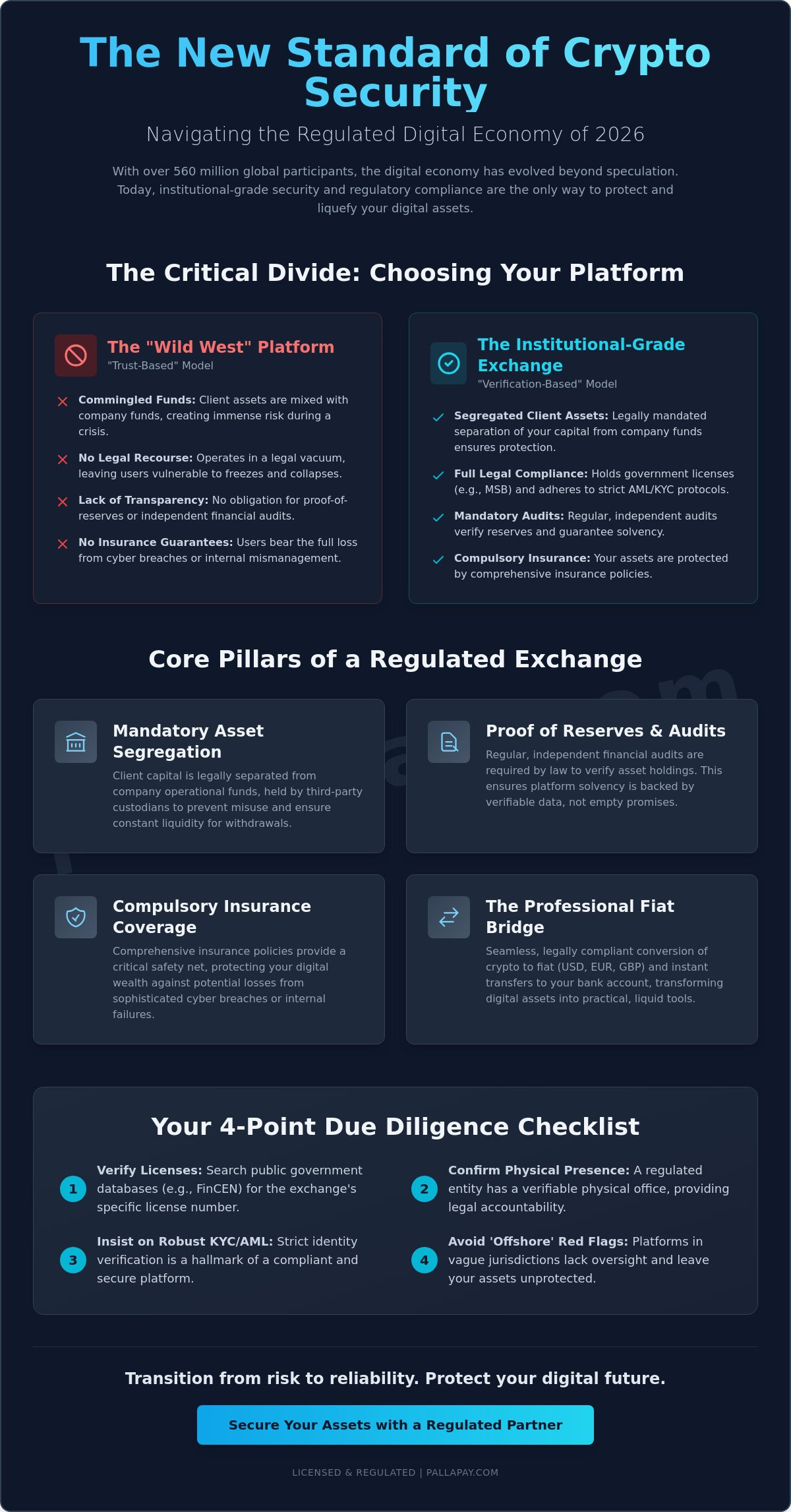
In the current financial landscape, the distinction between a simple trading platform and a regulated financial institution has never been more critical. By 2026, the global Regulation of cryptocurrency has evolved from a fragmented set of guidelines into a rigorous legal mandate. Regulatory oversight isn’t just a badge of honor; it’s a structural requirement for operational transparency. It ensures that every transaction is monitored, every asset is accounted for, and every user is protected by the same standards governing traditional finance. One of the primary benefits of using a regulated crypto exchange is the transition from a “trust-based” model to a “verification-based” model where legal compliance is the ultimate security feature.
Modern standards require more than just a basic business registration. While many platforms claim to be “registered,” a truly regulated exchange holds specific government-issued licenses that authorize digital asset transactions. These licenses, such as the Money Services Business (MSB) designation, subject the provider to strict audits and capital requirements. This institutional-grade framework is what allows professional users to execute high-volume trades and manage crypto offramp operations with absolute confidence. Without these authorizations, an exchange operates in a legal vacuum, leaving users vulnerable to sudden freezes or liquidity crises.
The Legal Framework of Modern Digital Assets
The journey from the unregulated markets of 2018 to the sophisticated environment of 2026 has been defined by the rise of “hyper-compliance.” Key regulatory bodies like FinCEN in the United States and FINTRAC in Canada now set the global pace for digital asset safety. These agencies require exchanges to implement robust Anti-Money Laundering (AML) and Know Your Customer (KYC) protocols that mirror traditional banking standards. Today, an MSB registration is the gold standard for global compliance, signaling that an exchange has the procedural depth to handle complex technical conversions as standard business operations. This evolution ensures that your digital wealth is recognized as a legitimate financial tool by global commerce entities.
Verifying Compliance: A Checklist for Users
Identifying a secure partner requires active due diligence rather than relying on marketing claims. You should always verify an exchange’s credentials by searching public government databases for their specific license numbers. A legitimate provider will maintain a physical office presence in regulated jurisdictions, providing a clear point of legal accountability. Watch for red flags such as “offshore” platforms that lack a verifiable physical address or those that offer high-speed fiat conversions without requiring identity verification. In 2026, the benefits of using a regulated crypto exchange are most apparent when you can easily confirm that your provider is integrated into the formal financial system, ensuring your assets remain accessible and legally compliant.
Superior Security Protocols and Asset Protection
Security in the digital asset space has evolved from a technical preference into a strict legal obligation. One of the primary benefits of using a regulated crypto exchange is the mandatory segregation of client assets from the platform’s operational funds. This legal requirement ensures that your capital isn’t used for company expenses or high-risk lending practices. When an exchange operates under institutional-grade oversight, third-party custodians often hold the assets, providing a layer of protection that unregulated platforms simply cannot match. This structural separation is a cornerstone of this guide to cryptocurrency regulation, which highlights how legal frameworks prioritize investor safety.
Compulsory insurance requirements further bolster this security. In 2026, regulated entities must maintain comprehensive insurance policies to cover potential losses from cyber breaches or internal mismanagement. This transition from “trust-based” security to “guaranteed” protection means that your digital wealth is backed by the same level of financial accountability found in traditional banking. Regular independent financial audits verify these reserves, ensuring that the platform’s claims of solvency are backed by verifiable data rather than empty promises.
Custodial Safety and Segregated Accounts
Segregated accounts are the most effective defense against the “bank runs” that historically crippled the crypto market. By keeping user deposits separate, regulated exchanges ensure that liquidity is always available for immediate withdrawal. This system is supported by multi-signature cold storage protocols, where multiple authorized parties must approve any movement of funds from offline wallets. You can explore more about these technical safeguards in our detailed look at Crypto Security. These protocols eliminate single points of failure, protecting your assets from both external hackers and internal fraud. For those seeking the highest level of personal control within this secure framework, utilizing a secure digital wallet provides an integrated way to manage your holdings.
AML and KYC: Protecting the Ecosystem
Robust identity verification through Anti-Money Laundering (AML) and Know Your Customer (KYC) protocols isn’t just a hurdle; it’s a protective shield for the entire ecosystem. These processes prevent illicit actors from using the exchange, which in turn ensures “clean” liquidity for high-volume institutional traders. When you trade on a regulated platform, you aren’t just protecting your own assets; you’re participating in a market that is recognized by global regulators. This high level of compliance significantly reduces the risk of government-led asset freezes that often plague unregulated, offshore platforms. By adhering to these standards, a regulated exchange provides a stable environment where your transactions are processed with speed and legal certainty.
Market Integrity and Operational Transparency
One of the primary benefits of using a regulated crypto exchange is the elimination of the “black box” operational style that once characterized the early digital asset market. In 2026, market integrity isn’t a voluntary choice; it’s a structural requirement enforced by rigorous surveillance and reporting standards. Regulated platforms must implement sophisticated monitoring systems designed to detect and prevent wash trading, spoofing, and other forms of market manipulation. This oversight ensures that the prices you see on the order book reflect genuine supply and demand rather than artificial volume generated by bots. When you trade in an environment governed by the CLARITY Act or similar global standards, you’re participating in a fair market where every participant plays by the same rules.
Transparency also extends to the cost of doing business. Unlike unregulated platforms that often hide their profit margins within opaque “spreads,” regulated entities are legally bound to provide clear, upfront fee structures. This clarity allows professional users to calculate their exact overhead when they sell crypto to bank accounts or execute high-volume conversions. Reporting requirements ensure that users receive fair market prices, with every transaction backed by a verifiable audit trail that satisfies both internal compliance officers and external tax authorities.
Preventing Market Manipulation
Regulated exchanges use institutional-grade surveillance tools to maintain a healthy trading ecosystem. These systems flag suspicious patterns in real-time, preventing bad actors from abusing the order book to the detriment of honest traders. This level of scrutiny leads to more accurate price discovery, which is essential for businesses that rely on stable valuations for their operations. For those conducting large-scale transactions through an OTC crypto exchange, fair execution is guaranteed by these anti-manipulation protocols. You don’t have to worry about “slippage” caused by artificial price spikes, as the exchange’s regulatory status mandates a commitment to execution quality.
The Power of Audited Reserves
There’s a fundamental difference between a “self-reported” proof-of-reserves and a certified regulatory audit. While many platforms might offer a snapshot of their holdings, a regulated exchange undergoes regular, independent financial audits that verify its solvency and asset backing. This transparency builds the confidence needed for massive institutional adoption, which has already pushed the global crypto market cap to approximately $2.5 trillion as of March 2026. Pallapay’s ecosystem is built on this foundation of verified stability. By maintaining global MSB registrations, the platform ensures that every technical conversion, from a crypto wallet deposit to a Mastercard payment, is supported by a robust and legally recognized financial framework.
The Professional Bridge: Seamless Fiat Integration
Bridging the gap between disruptive digital assets and traditional financial infrastructure requires more than just code; it requires a recognized legal standing. One of the most practical benefits of using a regulated crypto exchange is the high level of trust it establishes with global banking partners. Banks are historically risk-averse and often hesitate to process transfers from platforms that lack clear oversight. When an exchange operates under a recognized license, it provides the “clean” audit trail that financial institutions demand. This transparency ensures that your funds aren’t flagged or delayed, allowing for a fluid movement of capital between the digital and traditional worlds.
The ability to convert crypto to fiat instantly is a game-changer for both individual professionals and global enterprises. By 2026, regulated platforms have streamlined this process to feel like a standard banking operation. You can move from Bitcoin or USDT to major currencies like USD, EUR, or GBP without the legal friction typically associated with offshore entities. This connectivity allows users to maintain liquidity and react to market changes in real-time. Beyond simple transfers, regulation enables the use of sophisticated tools like the Pallapay Mastercard, which allows you to spend your digital holdings at millions of locations worldwide just as easily as traditional cash.
Reliable Fiat Off-Ramping
Accessing your capital shouldn’t be a source of anxiety. A secure off-ramp is essential for maintaining the utility of your digital assets. Unregulated platforms frequently face “banking blackouts,” where sudden regulatory shifts or lack of compliance lead to frozen transfers and lost access to fiat gateways. In contrast, a regulated status ensures consistent bank connectivity by adhering to the same reporting standards as the banks themselves. This alignment means your transfers are recognized as legitimate commercial activity, providing a reliable path for those who need to sell crypto to bank accounts quickly and securely.
Merchant Utility and Global Settlements
For businesses, the benefits of using a regulated crypto exchange extend into daily operations and customer interactions. Utilizing a regulated payment API allows merchants to accept various cryptocurrencies while settling in their local currency, effectively neutralizing the risks of price volatility. This technology is particularly transformative for the hotel industry and high-end retail, where international clients often prefer the speed of digital payments. Compliant POS systems and payment gateways provide a professional experience for the customer while ensuring the business remains fully aligned with local tax and legal requirements. Start your journey toward financial flexibility and convert crypto to fiat instantly through our secure, regulated ecosystem.
Choosing the Right Partner: The Pallapay Standard
Selecting a financial partner in the digital asset space requires a focus on verifiable credentials and institutional reliability. One of the most significant benefits of using a regulated crypto exchange is the assurance that your provider operates under the direct supervision of major financial authorities. Pallapay LLC maintains registration with FinCEN as a Money Services Business in the United States, while Pallapay Ltd is registered with FINTRAC in Canada. These registrations aren’t mere formalities; they’re active commitments to the highest global standards of financial conduct and asset protection. By operating within these recognized frameworks, the platform ensures that every technical conversion is backed by a legally compliant infrastructure.
In an increasingly digital world, the importance of a physical office presence and local accountability cannot be overstated. While many platforms operate from anonymous offshore locations, a regulated partner provides a clear point of legal contact and a physical footprint in the jurisdictions they serve. This transparency builds the absolute trust required for professional and individual users to manage high-value transactions. This infrastructure empowers users across 180+ countries to engage in global commerce with the confidence that their assets are handled by a sophisticated financial partner. Trust is the currency of 2026.
A Global Ecosystem of Compliance
Efficiency in modern commerce stems from having a comprehensive, integrated ecosystem that handles everything from exchange to settlement. Pallapay provides a single destination for all relevant technical needs, offering a seamless transition between various digital assets and local currencies. High-volume traders can leverage the specialized services of an OTC Crypto Exchange to execute large orders without disrupting market prices. Having a single partner for your exchange, payment, and crypto offramp needs reduces the complexity of managing multiple accounts and ensures that your compliance trail remains clean and consolidated.
The Future of Regulated Finance
The global move toward “hyper-compliance” positions licensed providers as the essential components of an inevitable global evolution. As digital assets become a standard part of the financial toolkit, the ability to spend those assets with ease becomes a primary operational need. The Pallapay Mastercard bridges this gap, allowing you to utilize your holdings for daily business and personal expenses at millions of locations. By aligning with a partner that understands the benefits of using a regulated crypto exchange, you eliminate the operational risks associated with offshore, unlicensed platforms. Prioritize your security by choosing a partner that handles complex background processes with the professionalism your capital deserves.
Securing Your Position in the Global Digital Economy
The transition toward a regulated cryptocurrency landscape in 2026 has redefined how professionals and institutions interact with digital wealth. You now have the power to move beyond speculative uncertainty by choosing platforms that prioritize legal accountability and asset segregation. By prioritizing these standards, you unlock the full benefits of using a regulated crypto exchange while insulating your capital from the risks of the unregulated market. This strategic choice ensures that your holdings are recognized as legitimate financial tools within the global economy.
Success in this evolving sector requires a partner with a proven track record of compliance and a comprehensive ecosystem. With official MSB registrations in the United States and Canada, and a presence spanning 180+ countries, Pallapay provides the institutional-grade stability your operations require. You can manage everything from high-volume OTC trades to instant fiat settlements within a single, secure environment. It’s time to elevate your financial strategy with a partner that bridges the gap between innovation and reliability. Experience the security of a fully regulated exchange; join Pallapay today.
Frequently Asked Questions
Why is a regulated crypto exchange safer than a decentralized one?
Regulated exchanges provide a layer of legal accountability that decentralized platforms lack. They are mandated to follow strict asset segregation and insurance protocols. This structure ensures that user funds are protected from internal mismanagement or platform failure. By operating within a recognized legal framework, these exchanges offer a level of security that decentralized protocols cannot guarantee.
What does MSB registration mean for a crypto platform?
MSB registration stands for Money Services Business, a designation issued by authorities like FinCEN in the US or FINTRAC in Canada. It confirms the platform adheres to rigorous Anti-Money Laundering (AML) and Know Your Customer (KYC) standards. This status is one of the primary benefits of using a regulated crypto exchange, as it verifies the entity’s commitment to global financial transparency and institutional reliability.
Will using a regulated exchange affect my transaction speed?
Transaction speeds on regulated platforms are typically comparable to or faster than unregulated ones, especially for fiat integrations. Since these exchanges maintain direct relationships with global banking networks, processes like a crypto to bank transfer are executed with institutional efficiency. Compliance protocols are integrated into the background to ensure that speed isn’t sacrificed for security.
How do regulated exchanges protect my personal data during KYC?
Regulated exchanges must comply with international data protection laws, ensuring your personal information is encrypted and stored securely. Unlike offshore platforms, these entities are legally liable for any data breaches. They use sophisticated cybersecurity frameworks to manage KYC documents, preventing unauthorized access while maintaining the clean liquidity required for professional commerce and global settlements.
Can I still withdraw cash from a regulated exchange?
You can certainly convert your digital holdings into physical currency through authorized channels. Regulated providers allow users to sell Bitcoin for cash or sell USDT for cash at physical locations. These operations are conducted within a secure framework that ensures every cash transaction is compliant with local regulations and reporting requirements.
What happens to my assets if a regulated exchange faces legal issues?
Segregated account mandates ensure that user assets remain separate from the exchange’s operational capital. If a platform faces legal or financial difficulties, these funds are protected from being used to satisfy company debts. This legal firewall is a core component of institutional reliability, providing a safety net that is nonexistent on unregulated or decentralized platforms.
Are fees higher on regulated crypto platforms?
Fees on regulated platforms are characterized by transparency rather than just cost. While some unregulated exchanges hide their margins in wide spreads, regulated entities provide clear, upfront pricing for services like an OTC crypto exchange. This clarity allows businesses to accurately forecast their operational costs without worrying about hidden expenses or artificial price manipulation.
How do I check if a crypto exchange is actually licensed in 2026?
You can verify an exchange’s status by searching official government registries using their unique license number. In the US, you would search the FinCEN MSB database, while in Canada, you would check the FINTRAC registry. A legitimate provider will clearly display these credentials and maintain physical offices in their registered jurisdictions to ensure absolute accountability and professional service.
Disclaimer
The information provided on this website and blog is for general informational and educational purposes only and does not constitute financial, investment, legal, tax, or other professional advice.
Cryptocurrency and digital asset services may be subject to regulatory restrictions in certain jurisdictions. Users are solely responsible for ensuring compliance with applicable local laws and regulations before using any products or services mentioned on this website.
PallaPay does not guarantee the accuracy, completeness, or timeliness of any information published and accepts no liability for any loss or damages arising from reliance on the content. Any opinions expressed are those of the respective authors and may change without notice.
Certain services, features, or products referenced may be provided through third-party partners, licensed entities, or affiliated service providers subject to separate terms and regulatory approvals. Availability of services may vary by country or region.
This website may contain references to digital assets, virtual currencies, or blockchain-related services that are not available to residents of certain jurisdictions, including where prohibited by law. Nothing on this website constitutes an offer, solicitation, or recommendation to buy or sell any financial instrument or virtual asset.
Leave a Reply