Tag: Merchant Services

  • Crypto Payment Gateway Dubai: The 2026 Merchant Guide to Instant Settlements

    Crypto Payment Gateway Dubai: The 2026 Merchant Guide to Instant Settlements

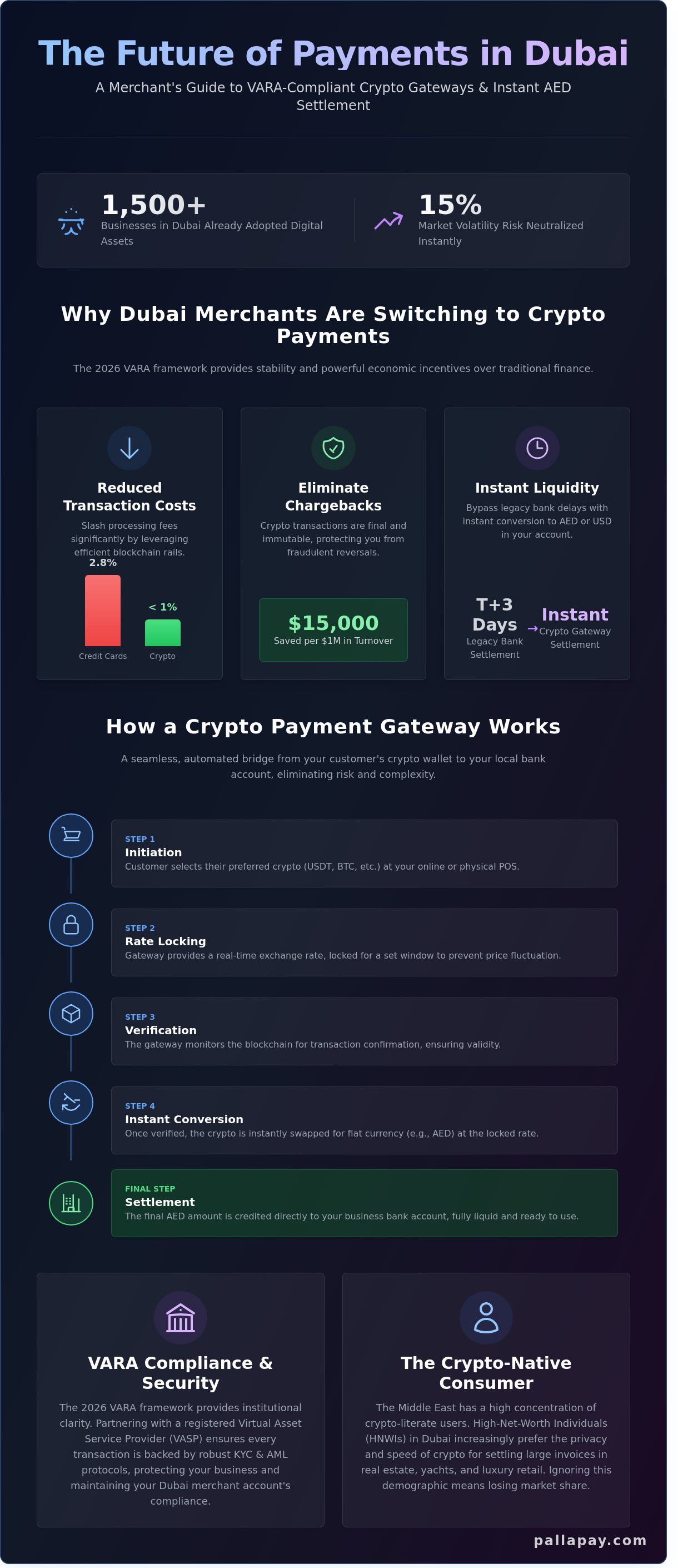
    The traditional cash-only retail model in the UAE is facing a sharp decline in relevance as over 1,500 businesses in Dubai have already pivoted to digital asset adoption. You likely recognize that while the opportunity is vast, the complexity of VARA regulations and the threat of 15% market volatility can make integration feel like a risk you aren’t ready to take. It’s a common concern for merchants who want the benefits of the future without the instability of the present. Securely implementing a crypto payment gateway dubai requires a partner that understands both the disruptive nature of blockchain and the necessity of institutional reliability.

    This guide empowers you to master the modern payment landscape by deploying VARA-compliant systems that guarantee instant AED bank settlements. You’ll learn how to eliminate price risk through real-time conversion and provide a seamless experience across both your e-commerce platforms and physical storefronts. We’re providing the roadmap to move beyond simple transactions and embrace the future of payments with absolute confidence and technical ease.

    Key Takeaways

    • Navigate the evolution of Dubai’s 2026 VARA framework to transition your business from traditional finance to a high-utility crypto payment model.
    • Master the mechanics of real-time conversion to ensure every transaction results in instant AED bank settlements without exposure to market volatility.
    • Evaluate the essential security benchmarks and fee transparency needed when choosing a crypto payment gateway dubai to protect your bottom line.
    • Leverage cross-border payment efficiencies to capture international revenue streams and simplify global trade through a unified digital infrastructure.
    • Discover how an all-in-one ecosystem integrates online gateways with physical POS hardware to provide a seamless payment experience for every customer.

    The 2026 Dubai Crypto Landscape: Why Merchants are Switching

    Dubai’s transformation into a global crypto capital is no longer a forecast; it’s a realized economic shift. By January 2026, the city has successfully integrated blockchain into the fabric of its retail and service sectors. Merchants are moving away from traditional payment processors because the crypto payment gateway dubai infrastructure now provides stability that rivals legacy banking. This transition is driven by the 2026 Virtual Assets Regulatory Authority (VARA) framework, which has replaced market uncertainty with institutional clarity.

    The shift from viewing crypto as a speculative investment to a daily payment utility is evident across the Emirates. Businesses aren’t just “experimenting” with digital assets; they’re adopting them to solve fundamental inefficiencies in the traditional financial system. The economic incentives for Dubai merchants include:

    • Reduced Transaction Costs: Processing fees have dropped from a traditional credit card average of 2.8% to less than 1% via blockchain rails.
    • Elimination of Chargebacks: Crypto transactions are final and immutable, saving merchants approximately $15,000 for every $1 million in turnover by removing fraudulent reversals.
    • Instant Liquidity: A professional crypto payment gateway dubai acts as the essential bridge, converting volatile assets into stable AED or USD instantly, bypassing the T+3 settlement delays of legacy banks.

    VARA Compliance and the Legal Framework

    The 2026 VARA guidelines mandate strict operational standards for all virtual asset service providers. These regulations ensure that every transaction is backed by robust KYC and AML protocols, protecting businesses from illicit activity. By registering as a Virtual Asset Service Provider (VASP) or partnering with MSB-registered hubs, platforms provide a layer of institutional trust. This legal maturity allows merchants to maintain a compliant Dubai merchant account while accessing the global liquidity of the decentralized web.

    Market Demand: The Rise of the Crypto-Native Consumer

    The Middle East now hosts one of the highest concentrations of crypto-literate consumers globally. High-net-worth individuals (HNWIs) in Dubai’s luxury sector increasingly prefer settling invoices for real estate, yachts, and high-end retail using USDT or BTC. These users prioritize the privacy and speed that blockchain offers. Businesses that ignore this demographic risk losing market share to tech-forward competitors. You can explore more about the Strategic Benefits of Accepting Cryptocurrency for Businesses in 2026 to understand how this shift impacts long-term profitability and customer retention.

    Pallapay stands at the center of this evolution, offering the tools necessary to turn complex blockchain technology into a standard, effortless business operation. It’s about more than just accepting a new currency; it’s about joining the future of payments.

    How a Crypto Payment Gateway Works for Dubai Businesses

    A crypto payment gateway dubai businesses utilize acts as a sophisticated bridge between decentralized digital assets and traditional financial systems. It functions as a real-time translator, converting volatile cryptocurrencies into stable local currency the moment a transaction occurs. This process removes the technical barriers that previously kept merchants from tapping into the trillion-dollar crypto market. When a customer initiates a payment, the gateway locks the exchange rate for a specific window, protecting the merchant from price fluctuations that could occur during blockchain confirmation times.

    The journey of a single transaction follows a precise, automated path to ensure security and speed:

    • Initiation: The customer selects their preferred digital asset, such as USDT, BTC, or ETH, at the point of sale.
    • Rate Locking: The gateway pulls data from global liquidity providers to offer a competitive, real-time exchange rate.
    • Verification: The transaction is broadcast to the blockchain; the gateway monitors for confirmation.
    • Instant Conversion: Once verified, the system automatically swaps the crypto for fiat currency like AED or USD.
    • Settlement: The final amount is credited to the merchant’s business account, ready for withdrawal or reinvestment.

    Liquidity providers are the essential engine room of this operation. By maintaining deep reserves of both digital and traditional assets, they allow the gateway to facilitate “Instant” settlements. This infrastructure means businesses don’t have to wait for a buyer on a public exchange; the liquidity is already there, waiting to be deployed. This reliability transforms crypto from a speculative asset into a practical tool for daily commerce.

    Instant Fiat Settlement: From Crypto to AED

    The fiat settlement process is designed to mirror the speed of modern digital life. While traditional banking typically operates on T+2 or T+3 cycles, meaning you wait up to 72 hours for funds, this system enables settlements in under 5 minutes. Dubai-based merchants can convert assets like USDT into AED 24/7, including weekends and public holidays. This constant availability ensures that cash flow remains fluid, allowing you to pay suppliers or staff without the delays inherent in legacy banking. To manage these incoming flows effectively, many enterprises start by setting up a secure business wallet to oversee their digital treasury.

    Technical Integration Methods

    Adapting your business to accept crypto doesn’t require a total overhaul of your existing systems. For custom e-commerce platforms, a Payment API provides a robust framework to build a bespoke checkout experience. If you require a faster setup, no-code solutions allow you to generate payment links for social media sales or direct invoicing in seconds. These links function as “Instant” invoices that customers can pay from any global wallet. For a deeper dive into choosing the right setup, consult The Ultimate Guide to Crypto Payment Gateways to see which method aligns with your specific volume and technical capacity.

    Crypto Payment Gateway Dubai: The 2026 Merchant Guide to Instant Settlements

    Evaluating the Best Crypto Payment Gateway in Dubai

    Selecting a crypto payment gateway dubai requires more than a glance at a feature list; it demands a rigorous audit of regulatory compliance and technical architecture. In 2024, the Virtual Assets Regulatory Authority (VARA) established strict guidelines that every merchant must verify before integration. Security isn’t a luxury; it’s the foundation of institutional trust. If a provider lacks a transparent regulatory status in the UAE, they risk your capital and your business license. Merchants should prioritize partners that treat compliance as a core product feature rather than an afterthought.

    Security Features and Asset Protection

    The Future of Payments for Dubai enterprises relies on 100% secure processing. A professional gateway must utilize cold storage for at least 98% of digital assets, keeping them offline and away from potential breaches. Multi-signature (multi-sig) wallets add another layer of defense by requiring multiple authorized approvals before any significant movement of funds occurs. You should identify red flags immediately. If a provider operates solely from an offshore jurisdiction or lacks clear KYC (Know Your Customer) protocols, they pose a systemic risk to your liquidity. Reliable gateways provide institutional-grade protection that mirrors traditional banking security.

    Cost Analysis: Crypto vs. Traditional Gateways

    Profitability depends on understanding the gap between advertised rates and actual ROI. Traditional international credit card processors often charge between 3% and 5% per transaction, excluding currency conversion markups. A sophisticated crypto settlement solution typically reduces these costs to a range of 1% to 2%. This represents a 50% reduction in overhead for high-volume retailers. Beyond the base fee, merchants gain massive value by eliminating “friendly fraud” and chargeback disputes, which cost global businesses over $20 billion in 2023. Unlike credit cards, crypto transactions are final and immutable. For businesses seeking to bridge traditional banking with digital assets, implementing a fiat to crypto payment gateway provides the infrastructure to accept both traditional and digital currencies seamlessly.

    The Total Cost of Ownership for a crypto gateway encompasses the initial payment API integration effort, a standard 1% processing fee, and any applicable fiat settlement charges required to move funds to a corporate bank account.

    Liquidity and Localized Support

    Multi-currency support is a non-negotiable requirement for modern commerce. While Bitcoin and Ethereum are standard, stablecoins like USDT and USDC facilitate over 90% of commercial crypto volume due to their price stability. Your gateway must handle these assets with Instant precision to avoid volatility. Localized 24/7 assistance is equally critical for high-volume traders moving $500,000 or more daily. When a technical glitch occurs at 2:00 AM GST, you can’t wait for a support ticket response from a different time zone. A Dubai-based partner ensures that your operations never stall, providing the professional bridge between digital innovation and reliable retail execution.
    Industry Applications: Tailoring Payments for Dubai Sectors

    Dubai’s status as a premier global trade hub demands financial infrastructure that operates at the speed of its markets. Implementing a crypto payment gateway dubai allows businesses to capture international revenue without the 3 to 5 day delays typical of traditional SWIFT transfers. By 2026, over 25% of cross-border trade in the UAE is projected to involve some form of digital asset settlement. This shift isn’t just about speed; it’s about precision and compliance. Pallapay ensures every transaction adheres to the “Travel Rule” requirements set by VARA, providing the necessary data transparency while maintaining the privacy high-net-worth clients expect. We provide the professional bridge between traditional commerce and the future of payments.

    Luxury Hospitality and Real Estate

    The demand for digital asset integration is highest in the premium sectors. Leading hotels in Dubai are adopting crypto to attract a new demographic of global travelers who prefer decentralized liquidity. These guests often book high-value suites where instant confirmation is essential. For real estate firms, the ability to facilitate large-scale transactions for property rentals and sales using crypto removes the friction of currency conversion fees. A developer can receive a multi-million dirham payment via stablecoins and see settlement in their corporate account immediately, ensuring the property remains off the market for the shortest time possible.

    E-commerce and High-End Retail

    Digital storefronts are evolving. Integrating crypto into e-commerce platforms provides a borderless sales channel that eliminates chargeback fraud, a risk that cost retailers globally over $100 billion in 2023. Our Retail Store solutions bridge the gap between physical boutiques and digital wallets. Shoppers in the Dubai Mall can now use their mobile wallets for high-end purchases as easily as a credit card. Beyond direct sales, forward-thinking brands are tokenizing loyalty programs. By using gift cards powered by blockchain, retailers create a secure, transferable value system that keeps customers within their ecosystem. Using a crypto payment gateway dubai ensures these retailers stay ahead of the curve while maintaining institutional-grade security.

    Ready to modernize your revenue streams? Integrate our Payment API today to start accepting global payments instantly.

    Getting Started with Pallapay: Dubai’s Leading Gateway

    Pallapay serves as the visionary partner for enterprises looking to lead the Dubai market into 2026. As a premier crypto payment gateway dubai, the platform provides the essential infrastructure to bridge digital assets with institutional financial reliability. Merchants no longer need to juggle multiple vendors for their financial needs. Pallapay offers an all-in-one ecosystem that spans from high-speed online gateways to robust physical hardware. Efficiency is the core priority. Businesses can move from initial account creation to their first live transaction in under 24 hours. This rapid deployment allows companies to capture market share without the delays associated with legacy banking systems.

    Trust is anchored in a significant physical presence. While the technology is decentralized, the support is local and professional. Pallapay maintains dedicated OTC desks at the Binary Tower in Business Bay. This physical infrastructure provides a level of security and personal consultation that digital-only platforms cannot match. For corporate entities handling large-scale settlements, having a professional team available for face-to-face strategy ensures absolute stability and transparency in every transaction.

    The Pallapay POS Advantage

    Accepting digital currencies in a physical retail environment shouldn’t be complex. The Crypto POS Machine allows merchants to process transactions with the same familiarity as traditional card readers. These devices feature full NFC and QR code payment support, ensuring instant retail transactions at the point of sale. This technology eliminates wait times and provides customers with a seamless checkout experience. For a deeper understanding of hardware capabilities, merchants can consult our Crypto POS Machine: The Complete Guide for Merchants in 2026.

    Next Steps for Your Business

    Transitioning to a modern financial stack is a straightforward process. Corporate entities in the UAE need to provide standard onboarding requirements, including a valid trade license and shareholder identification, to begin. You can schedule a private consultation at our Dubai Binary Tower office to discuss custom liquidity requirements or complex API integrations. Our team handles the heavy lifting of technical setup so you can focus on scaling your operations. Join the Future of Payments with Pallapay today and secure your position in the evolving global economy.

    The Future of Payments is Already Here

    Dubai’s transition to a blockchain-powered economy isn’t a distant goal; it’s a 2026 reality that demands immediate merchant adaptation. By integrating a robust crypto payment gateway dubai, your business eliminates the 24-hour settlement delays typical of legacy banking. You gain the ability to accept global liquidity while receiving instant AED deposits directly into your local account. Security remains the cornerstone of this evolution. Pallapay provides this stability through its status as a regulated MSB in the US and Canada, backed by a dedicated physical headquarters in Dubai’s Business Bay.

    Success in this new landscape requires a partner that handles technical complexity so you can focus on growth. Whether you’re in luxury retail or real estate, the shift toward digital assets offers a clear competitive edge. It’s time to move beyond traditional limitations and embrace a system built for speed and absolute transparency. Empower your business with Dubai’s most secure crypto payment gateway and start settling your transactions in real-time. Your journey toward institutional-grade financial flexibility starts today.

    Frequently Asked Questions

    Is it legal to accept cryptocurrency payments for my business in Dubai?

    Yes, it’s fully legal to accept cryptocurrency payments in Dubai under the regulatory framework established by the Virtual Assets Regulatory Authority (VARA) in March 2022. Businesses can legally integrate a crypto payment gateway dubai to accept digital assets as long as they process transactions through a licensed provider like Pallapay. This structure ensures your operations remain compliant with UAE federal laws and global anti-money laundering standards.

    How long does it take to settle crypto payments into my UAE bank account?

    Pallapay provides instant settlements that ensure funds reach your UAE bank account within 24 hours of a transaction. While traditional cross-border transfers often take 3 to 5 business days, our infrastructure bypasses these delays through direct liquidity pools. You can choose to receive your settlements in AED, USD, or EUR, which helps your business maintain a consistent and predictable cash flow.

    What are the transaction fees for using a crypto payment gateway in Dubai?

    Transaction fees for using our crypto payment gateway dubai typically range from 0.5% to 1% per transaction. This is significantly more cost-effective than the 2.5% to 3.5% fees often charged by traditional credit card processors in the UAE. By reducing these overhead costs, you increase your profit margins on every sale while providing your customers with modern payment flexibility.

    Which cryptocurrencies can I accept through the Pallapay gateway?

    You can accept over 100 different cryptocurrencies including Bitcoin, Ethereum, and major stablecoins like USDT and USDC. Pallapay supports a diverse range of digital assets to ensure you don’t miss a sale from global customers. Our platform handles the conversion of these assets into your preferred fiat currency at the point of sale, making it a seamless experience for your accounting team.

    Do I need a special license to accept crypto payments in the UAE?

    Merchants don’t need a specific crypto license to accept payments if they partner with a licensed third-party processor. By using Pallapay, you leverage our existing VARA-compliant infrastructure and regulatory approvals. Your primary requirement is to maintain a valid UAE trade license for your specific business activity, while we manage the complex technical compliance and reporting behind the scenes.

    How does Pallapay protect my business from crypto price volatility?

    Pallapay eliminates volatility risk by locking the exchange rate at the exact moment of the transaction. If a customer pays 5,000 AED worth of Bitcoin, you receive exactly 5,000 AED regardless of market fluctuations that occur minutes later. This instant conversion mechanism ensures your revenue remains stable, allowing you to treat digital asset payments with the same financial certainty as a standard bank transfer.

    Can I use a crypto payment gateway for my physical retail store in Dubai?

    Yes, you can implement crypto payments in physical retail locations using our dedicated Point of Sale (POS) terminals or simple QR code displays. Customers scan the code with their mobile wallet to complete the purchase in seconds. This hardware integration represents the future of payments, bridging the gap between digital assets and physical commerce for luxury boutiques and service providers across the city.

    What is the difference between a crypto gateway and an OTC desk?

    A crypto gateway is an automated system for processing individual retail transactions at checkout, whereas an OTC desk is designed for high-volume trades exceeding 50,000 AED. Gateways provide a seamless experience for daily sales through websites or POS systems. In contrast, our OTC services offer personalized liquidity for institutional moves or large corporate treasury conversions that require specialized handling outside of public exchange order books.

    Disclaimer

    The information provided on this website and blog is for general informational and educational purposes only and does not constitute financial, investment, legal, tax, or other professional advice.
    Cryptocurrency and digital asset services may be subject to regulatory restrictions in certain jurisdictions. Users are solely responsible for ensuring compliance with applicable local laws and regulations before using any products or services mentioned on this website.
    PallaPay does not guarantee the accuracy, completeness, or timeliness of any information published and accepts no liability for any loss or damages arising from reliance on the content. Any opinions expressed are those of the respective authors and may change without notice.
    Certain services, features, or products referenced may be provided through third-party partners, licensed entities, or affiliated service providers subject to separate terms and regulatory approvals. Availability of services may vary by country or region.
    This website may contain references to digital assets, virtual currencies, or blockchain-related services that are not available to residents of certain jurisdictions, including where prohibited by law. Nothing on this website constitutes an offer, solicitation, or recommendation to buy or sell any financial instrument or virtual asset.

  • Crypto POS Machine for Business: The 2026 Strategic Implementation Guide

    Crypto POS Machine for Business: The 2026 Strategic Implementation Guide

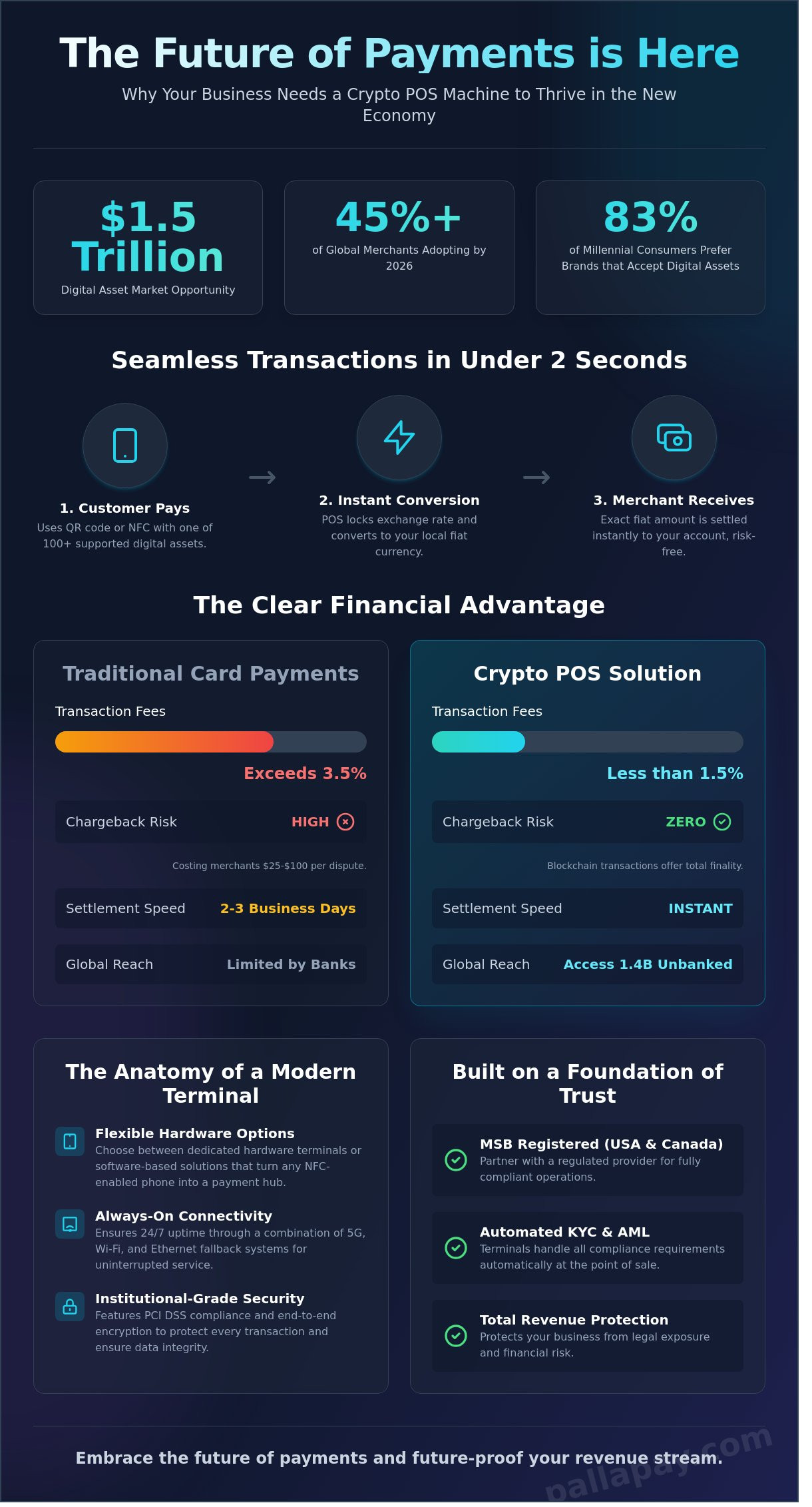
    By 2026, over 45% of global merchants will move beyond traditional card readers to capture a share of the $1.5 trillion digital asset market. If your current terminal doesn’t support blockchain transactions, you’re essentially closing your doors to a massive segment of high-net-worth international consumers. You’ve likely hesitated because of market volatility or the headache of manual accounting; that’s a valid concern for any professional operation. Integrating a crypto pos machine for business shouldn’t mean taking on financial risk or technical debt.

    This strategic guide provides the roadmap to accepting global digital payments with instant fiat settlement and institutional-grade security. You’ll discover how to achieve a seamless checkout experience that converts crypto to your local currency in under two seconds. We’ll examine the automated reporting tools that simplify tax compliance and the specific hardware configurations that sync directly with your existing accounting software. By the end of this article, you’ll have a clear plan to future-proof your revenue stream and embrace the future of payments.

    Key Takeaways

    • Master the transition to the future of payments by understanding why modern consumers are moving beyond traditional credit cards toward real-time digital asset processing.
    • Identify the critical technical requirements for your terminal, including the choice between dedicated hardware and NFC-enabled apps to ensure constant 5G and Wi-Fi connectivity.
    • Evaluate provider fee structures and settlement speeds to select the most efficient crypto pos machine for business that guarantees instant fiat conversion.
    • Learn to scale your operations by integrating your payment terminal into a global financial ecosystem that connects directly to high-volume OTC liquidity for seamless corporate growth.
    • Discover how to tailor the implementation of digital payment solutions to your specific sector, from luxury retail to high-volume hospitality environments.

    Beyond Credit Cards: Why Your Business Needs a Crypto POS Machine in 2026

    A crypto pos machine for business is no longer a niche tool for tech startups; it’s a vital gateway to a global economy. This hardware terminal enables real-time processing of digital assets with an instant conversion to fiat currency. By 2026, the demand for alternative payment methods has surged, with 83% of millennial consumers expressing a preference for brands that accept digital assets. These shoppers view these systems as The Future of Payments, moving away from the high fees and slow processing of traditional banking rails.

    Understanding how crypto payments work reveals the efficiency of this model. When a customer taps their phone or scans a QR code, the terminal communicates with the blockchain to verify funds and finalize the transfer. Modern systems remove the risk of market volatility by locking in exchange rates at the precise second of the sale. This ensures that if you charge $100, you receive exactly $100 in your settlement account, regardless of price fluctuations in the crypto market. It’s a seamless way to attract international tourists and high-net-worth clients without the friction of cross-border banking fees.

    The Competitive Edge of Accepting Digital Assets

    Adopting a crypto pos machine for business provides an immediate financial advantage. Transaction fees for premium credit cards often exceed 3.5%, while crypto processing typically costs less than 1.5% per transaction. Revenue protection is another critical benefit because blockchain transactions offer total finality. There is zero chargeback risk, which saves merchants the $25 to $100 fees associated with traditional payment disputes. This technology also opens doors to the 1.4 billion unbanked individuals globally who rely on digital wallets rather than traditional credit lines.

    Regulatory Compliance as a Business Foundation

    Trust is the cornerstone of any financial evolution. Partnering with an MSB-registered provider in the United States and Canada ensures your operations remain fully compliant with evolving financial laws. These regulated terminals handle all KYC and AML requirements automatically at the point of sale, protecting your business from legal exposure. MSB registration ensures institutional reliability for global merchants by providing a transparent, audited framework for every transaction processed through the ecosystem. This professional approach transforms complex blockchain interactions into a standard, effortless business operation for retail and service providers alike.

    The Technical Anatomy of a Modern Crypto POS Terminal

    Modern commerce requires more than just a standard card reader. A high-performance crypto pos machine for business functions as a sophisticated, dual-purpose gateway. Merchants can choose between dedicated hardware terminals that offer a tactile, professional experience or software-based solutions that transform NFC phones into payment hubs. These devices prioritize 24/7 uptime through a combination of 5G, Wi-Fi, and Ethernet fallback systems. Security remains the cornerstone of this technology. By implementing PCI DSS compliance and end-to-end encryption, these terminals ensure digital assets move with the same reliability as institutional fiat currency.

    While the underlying technology is advanced, the user interface mimics the familiarity of traditional banking. This allows staff to manage the transition without extensive training. Before deploying new hardware, many owners evaluate the pros and cons for businesses to ensure the infrastructure aligns with their long-term operational goals. The result is a seamless checkout flow that removes friction for both the merchant and the customer.

    NFC and QR Code Integration

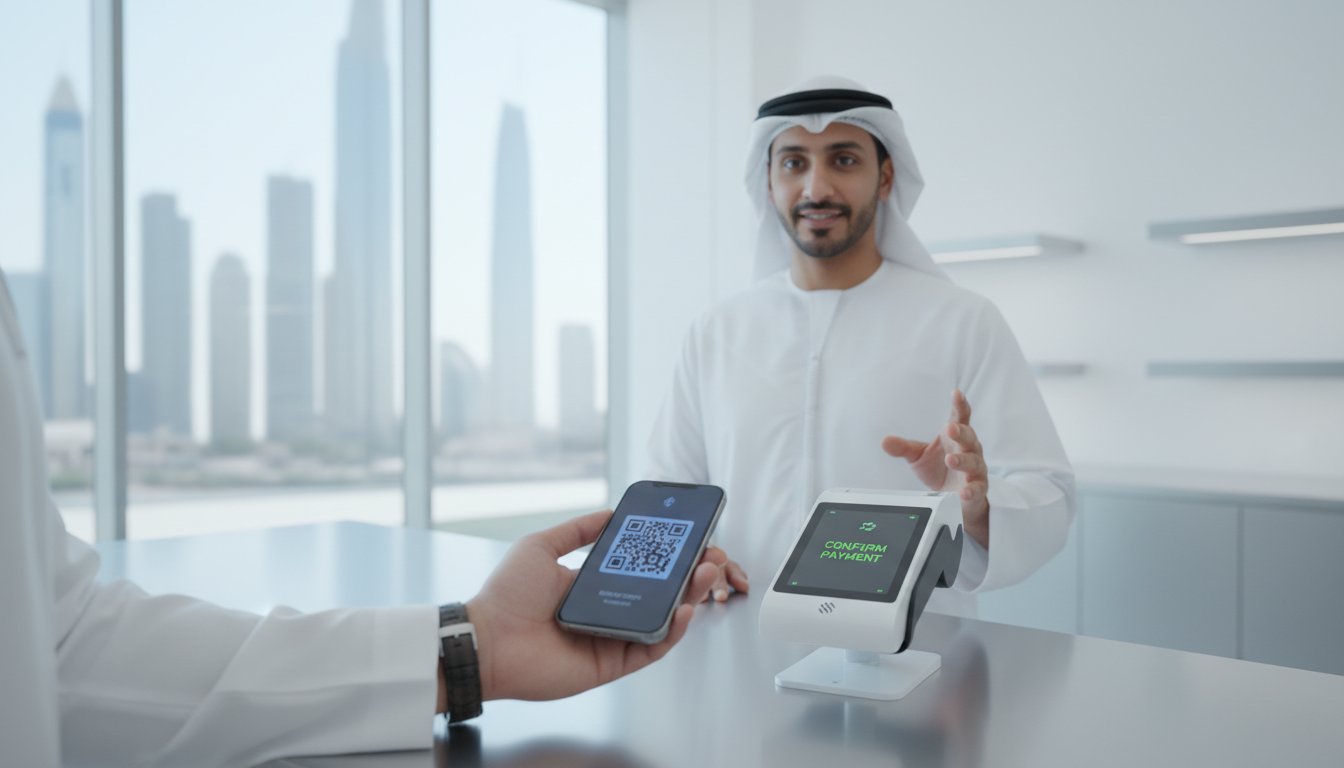
    Speed defines the modern checkout experience. Modern terminals generate dynamic QR codes for every transaction, which eliminates the risk of manual wallet address entry errors. This process supports over 100 digital assets, including Bitcoin, Ethereum, and stablecoins like USDT, ensuring instant settlement. NFC integration allows customers to tap and pay, mirroring the convenience of mobile wallets. It’s a vital feature for high-traffic retail environments where transaction speed directly impacts total daily revenue.

    Integration with Existing ERP and Accounting

    A crypto pos machine for business isn’t an isolated tool; it’s a data-rich node in your financial network. Through a centralized merchant dashboard, sales reports are automated in real-time. API-led connectivity bridges the gap between the blockchain and your inventory management system. This transparency simplifies tax audits by providing a permanent, on-chain transaction history. Businesses using these integrated systems often see a 15% reduction in administrative overhead related to payment reconciliation. This level of integration proves that digital asset adoption is The Future of Payments. You can explore how this fits your scale by reviewing our crypto POS solutions today.

    Crypto POS Machine for Business: The 2026 Strategic Implementation Guide

    Comparing Crypto POS Providers: Fees, Settlements, and Compliance

    Selecting the right crypto pos machine for business involves a deep dive into the financial mechanics that power the device. You aren’t just buying a terminal; you’re choosing a liquidity partner. Fee structures are the first point of comparison. Most institutional providers charge a percentage-based commission ranging from 0.5% to 1%. This is significantly more cost-effective than the 2% to 4% typically charged by legacy credit card networks. High-volume retailers often benefit from flat-fee models that provide predictable monthly overheads.

    Settlement speed has become the primary competitive battleground. While next-day cycles were acceptable in previous years, “Instant” settlement is the industry benchmark for 2026. This capability protects your working capital and removes the friction of waiting for blockchain confirmations. To maintain this speed, your provider must support the most liquid assets. Ensure your terminal accepts:

    • USDT and USDC: These stablecoins facilitate the majority of retail commerce.
    • Bitcoin and Ethereum: Essential for capturing the high-net-worth demographic.
    • Regional Tokens: Assets that hold high liquidity in your specific market.

    Technical reliability is non-negotiable in a retail environment. You need 24/7 global technical assistance to ensure that a software glitch doesn’t halt your sales during peak hours. The best providers offer a proactive monitoring service that identifies connectivity issues before they impact your storefront. This creates a sense of absolute trust for both the merchant and the customer.

    Fiat Settlement Models: Getting Paid in Local Currency

    Most businesses prefer to eliminate exposure to market volatility. Professional fiat settlement models allow you to accept Bitcoin while receiving USD or AED directly in your bank account. This process relies on robust liquidity providers who manage the exchange in the background to prevent slippage. You can choose between same-day settlement for immediate liquidity or T+1 cycles for consolidated reporting. For a comprehensive breakdown of how this process works across borders and currencies, our guide on crypto to fiat settlement provides the strategic framework global merchants need in 2026. This bridge makes crypto transactions feel like a standard, effortless business operation.

    Global Scalability and Multi-Region Support

    If you operate an international franchise, you must evaluate providers with a physical presence in major financial hubs like Dubai, Singapore, and New York. These locations serve as anchors for multi-currency checkouts, allowing you to price goods in local fiat while accepting global crypto. A provider’s physical global office presence correlates with faster local bank settlements because it enables direct integration with regional banking infrastructures. This infrastructure is the backbone of The Future of Payments, ensuring your crypto pos machine for business scales as you enter new markets.

    Industry-Specific Implementation: From Retail Stores to Luxury Hotels

    Adopting a crypto pos machine for business requires more than just hardware installation; it demands a strategic alignment with your specific sector’s operational flow. High-ticket industries like luxury real estate or automotive sales require rigorous security and instant verification, while high-volume retail environments prioritize transaction speed and ease of use. Pallapay provides the technological answer to these varying needs by offering a versatile ecosystem that handles the heavy lifting of liquidity and settlement behind the scenes.

    The impact on the bottom line is measurable and immediate. For example, a prominent retail store integrated Pallapay’s point-of-sale solution in Q1 2023 and recorded a 15% increase in foot traffic by the end of the second quarter. This growth is largely attributed to attracting a demographic of “crypto-affluent” consumers who prefer direct spending over traditional fiat conversions. Beyond simple transactions, merchants are now using crypto-native gift cards to drive customer loyalty, allowing users to load value onto digital cards that function seamlessly across both physical and digital storefronts.

    Crypto Payments in the Hospitality Sector

    International guests frequently encounter credit card limits or high foreign transaction fees when checking into luxury hotels. By implementing a professional crypto gateway, hotels can streamline check-ins for global travelers. The system manages deposits and incidental charges through secure crypto-fiat gateways, ensuring the hotel receives its preferred currency while the guest pays in digital assets. This setup eliminates the 3% to 7% currency conversion fees typically associated with international banking, making high-value bookings more attractive to the global elite.

    E-commerce and Brick-and-Mortar Synergy

    The modern merchant doesn’t operate in a silo. Creating a unified payment experience is essential for e-commerce brands that also host physical pop-up events or maintain flagship stores. By utilizing a single payment API, businesses can track every transaction across all channels in one dashboard. This integration ensures that a crypto pos machine for business stays synchronized with online inventory levels, providing a truly “all-in-one” financial solution. It’s the future of payments, where the distinction between online and offline commerce disappears through instant, global settlement.

    Ready to upgrade your payment infrastructure with the latest fintech innovation?

    Order your Pallapay Crypto POS Machine today

    Scaling with Pallapay: Integrating Your POS into a Global Financial Ecosystem

    Selecting a Pallapay crypto pos machine for business represents a strategic shift toward institutional-grade financial agility. This isn’t merely a point-of-sale device; it’s a gateway into a comprehensive ecosystem designed for the modern enterprise. Pallapay provides a unified platform where buying, selling, and accepting digital assets happens within a single secure environment. By linking your terminal to a high-volume OTC crypto exchange, your business gains the corporate liquidity required for high-stakes transactions. You can also distribute integrated corporate crypto cards to your team, allowing for the streamlined management of business travel and operational expenses. Our onboarding process is engineered for speed, moving you from application to your first live transaction in under 48 hours.

    The Power of an Integrated Merchant Dashboard

    The Pallapay dashboard serves as a centralized command center for your entire financial operation. It allows for the real-time monitoring of global sales across multiple POS locations, whether you operate in two cities or ten countries. Instant conversion is a standard feature here; you can move received cryptocurrency into USDT or fiat to settle payroll and overheads without delay. This functionality removes the risk of market volatility from your balance sheet. For accounting teams, the platform enables the export of audit-ready financial data with a single click, ensuring your records remain precise and compliant.

    Future-Proofing Your Business with Pallapay

    As blockchain technology advances, your hardware must remain capable of handling new demands. Pallapay delivers continuous firmware updates to every crypto pos machine for business, ensuring support for emerging blockchain protocols and enhanced security standards. We provide direct access to professional OTC desks for enterprises that need to perform large-scale USDT to cash conversions securely. This commitment to utility and growth positions Pallapay as a visionary partner in your digital transformation. Empower your business with a Pallapay Crypto POS today to secure your place in the future of payments.

    Secure Your Place in the Future of Payments

    By 2026, digital currency adoption won’t be a secondary option for competitive enterprises. Integrating a crypto pos machine for business transforms your checkout into a global gateway that attracts high-net-worth liquidity from every corner of the world. You’ll eliminate the traditional 3 to 5 day waiting period for funds because our system provides instant fiat settlement directly to your account. This ensures your cash flow remains stable with zero volatility risk, regardless of market shifts.

    Pallapay is a fully MSB Registered entity in both the USA and Canada. We provide the institutional security your finance department demands while maintaining a presence in 180+ countries. You’re not just installing hardware; you’re connecting to an all-in-one financial ecosystem designed for the next decade of commerce. The transition to modern payments is happening now. We’ve made it effortless for you to lead the way.

    Get Your Secure Crypto POS Machine from Pallapay

    Frequently Asked Questions

    Is it legal for my business to accept cryptocurrency via a POS machine?

    Accepting cryptocurrency is legal in over 130 countries, including major financial hubs like the UAE where the Virtual Assets Regulatory Authority (VARA) established clear guidelines in 2023. Your business must comply with local Anti-Money Laundering (AML) and Know Your Customer (KYC) protocols to remain compliant. By using a regulated crypto pos machine for business, you ensure every transaction meets these international standards while expanding your payment options.

    How much does a crypto POS machine for business typically cost?

    A professional crypto POS terminal typically requires an initial hardware investment between $250 and $550 depending on the specific model’s features. Beyond the hardware, transaction fees generally range from 0.5% to 1.5% per sale. This is significantly lower than the 2% to 4% fees often charged by traditional credit card processors, allowing merchants to retain more of their revenue.

    Do I need to understand blockchain technology to use a crypto POS terminal?

    You don’t need technical knowledge of blockchain mechanics to operate a modern payment terminal. The software functions like a standard credit card machine, handling the complex ledger entries and network confirmations in the background. Your staff simply enters the sale amount and the system generates a QR code for the customer to scan, making the process as intuitive as a traditional tap-to-pay transaction.

    What happens if the price of Bitcoin drops during a transaction?

    Most enterprise-grade systems lock the exchange rate for 15 to 20 minutes to eliminate volatility risks for the merchant. If Bitcoin’s price drops during that window, the payment processor absorbs the difference to ensure you receive the exact fiat value of your sale. This price guarantee protects your profit margins from the 5% to 10% daily fluctuations common in the digital asset market.

    Can I receive payments in my local currency (USD, EUR, AED) instead of crypto?

    You can choose to receive 100% of your settlements in local fiat currencies like USD, EUR, or AED. The system instantly converts the cryptocurrency at the moment of sale, bypassing the need for you to hold digital assets on your balance sheet. This feature allows you to tap into the $2 trillion crypto market while maintaining the stability of your traditional accounting practices.

    How long does it take to settle crypto payments into my business bank account?

    Payments are typically settled into your business bank account within 24 hours, often following a T+1 settlement schedule. Some premium providers offer instant settlement options where funds are available in your digital wallet within seconds of the transaction. This is a major improvement over the 3 to 5 business days required by legacy banking systems for international wire transfers.

    What are the main security risks associated with crypto POS systems?

    The primary risks involve private key management and phishing attempts, though hardware terminals mitigate these through end-to-end encryption and PCI-DSS compliance. Over 95% of security breaches in the industry occur through human error rather than technical failure. Using a dedicated crypto pos machine for business isolates the payment environment from your general network, providing a secure bridge for high-value transactions.

    Which cryptocurrencies should my business accept to maximize customer reach?

    To reach the widest customer base, your business should support Bitcoin, Ethereum, and major stablecoins like USDT and USDC. Bitcoin and Ethereum account for approximately 70% of the total market capitalization, while stablecoins provide a familiar experience for users who prefer price stability. Supporting these four assets ensures you’re accessible to the majority of the 420 million crypto users worldwide.

    Disclaimer

    The information provided on this website and blog is for general informational and educational purposes only and does not constitute financial, investment, legal, tax, or other professional advice.
    Cryptocurrency and digital asset services may be subject to regulatory restrictions in certain jurisdictions. Users are solely responsible for ensuring compliance with applicable local laws and regulations before using any products or services mentioned on this website.
    PallaPay does not guarantee the accuracy, completeness, or timeliness of any information published and accepts no liability for any loss or damages arising from reliance on the content. Any opinions expressed are those of the respective authors and may change without notice.
    Certain services, features, or products referenced may be provided through third-party partners, licensed entities, or affiliated service providers subject to separate terms and regulatory approvals. Availability of services may vary by country or region.
    This website may contain references to digital assets, virtual currencies, or blockchain-related services that are not available to residents of certain jurisdictions, including where prohibited by law. Nothing on this website constitutes an offer, solicitation, or recommendation to buy or sell any financial instrument or virtual asset.
  • How Do Crypto POS Systems Work? The Complete Merchant Guide for 2026

    How Do Crypto POS Systems Work? The Complete Merchant Guide for 2026

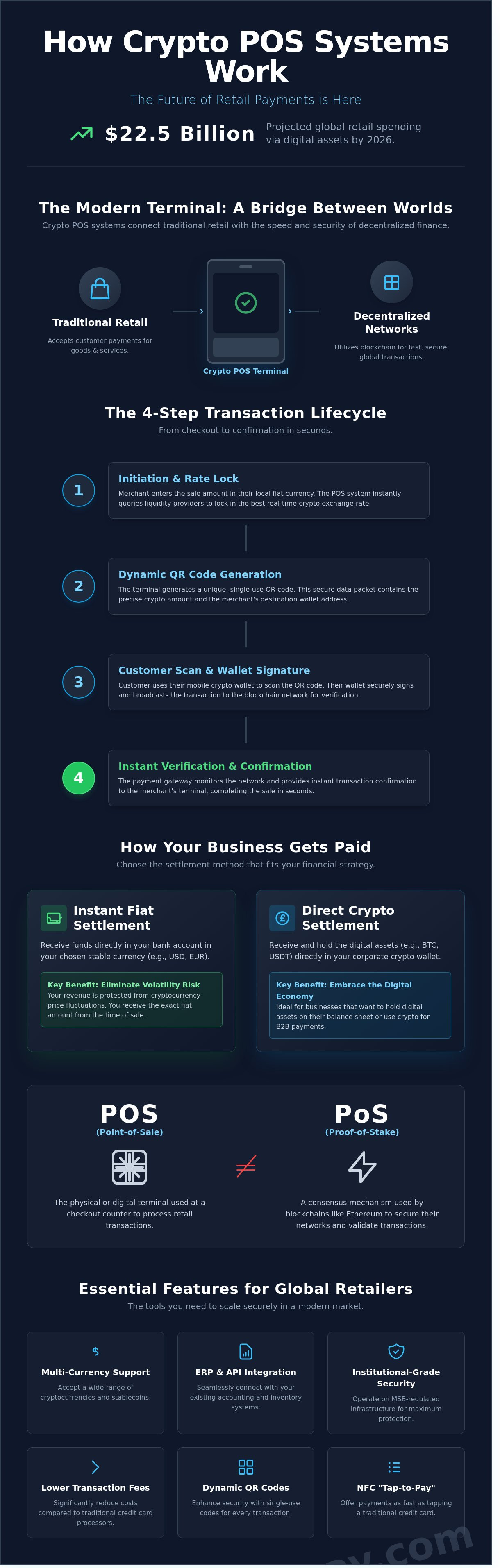
    By 2026, global retail spending via digital assets is projected to reach $22.5 billion, marking a definitive shift toward the future of payments. To remain competitive in this evolving landscape, you must understand exactly how do crypto pos systems work to facilitate these high-speed exchanges. You’ve likely felt the hesitation that comes with blockchain technology; the fear that a sudden price drop will impact your revenue or that a slow network will cause a bottleneck at your checkout counter.

    We’ve designed this guide to bridge the gap between technical innovation and institutional reliability. You’ll discover how modern POS solutions provide instant liquidity and seamless conversion, allowing you to accept cryptocurrency while receiving stable fiat currency in your bank account. We will break down the essential hardware requirements, the four-step transaction lifecycle, and the settlement processes that keep your business secure and efficient in a global market.

    Key Takeaways

    • Understand exactly how do crypto pos systems work to facilitate seamless, direct interactions between blockchain networks and your retail terminal.
    • Master the four-step transaction lifecycle that ensures instant payment verification through dynamic QR codes and secure wallet signatures.
    • Discover how to eliminate volatility risks by utilizing instant fiat conversion for stable, predictable business settlements.
    • Identify critical multi-currency features and ERP integration capabilities necessary for scaling a modern global retail operation.
    • Learn to leverage MSB-regulated infrastructure to ensure institutional-grade security for every digital asset transaction.

    What is a Crypto POS System? Defining the Modern Terminal

    A Crypto POS (Point-of-Sale) system represents the professional evolution of retail hardware. It’s a sophisticated combination of secure hardware and cloud-based software that empowers merchants to accept digital assets like Bitcoin, Ethereum, or USDT. Unlike traditional terminals that rely on legacy banking rails and multi-day clearing cycles, these modern systems interact directly with decentralized blockchain networks or specialized payment gateways. A Crypto POS serves as the bridge between decentralized finance and traditional retail commerce.

    Understanding how crypto payments work is the first step toward modernizing a business’s financial infrastructure. These systems calculate real-time exchange rates at the exact moment of sale. This ensures the merchant receives the precise value of the transaction in their preferred currency, effectively neutralizing the risks associated with price volatility. By 2026, the global market for these terminals has expanded significantly as businesses seek faster settlement times and lower fees compared to traditional credit card processors. So, how do crypto pos systems work in a practical retail setting? They convert the requested fiat amount into its crypto equivalent instantly, generating a unique QR code or an NFC signal for the customer to authorize from their digital wallet.

    The system functions as an all-in-one ecosystem that handles the heavy lifting of blockchain verification. When a customer initiates a payment, the terminal communicates with a payment gateway to verify the availability of funds and the authenticity of the transaction. This process happens in seconds, providing an instant confirmation that mirrors the speed of a standard debit card swipe. Merchants don’t need to manage private keys or interact with complex exchange interfaces; the terminal provides a streamlined, professional interface that mirrors the tools they already use. These devices represent the future of payments, offering a global reach that traditional banks cannot match.

    Clearing the Confusion: POS vs. PoS

    It’s common to find overlapping results when searching for these terms, but they serve entirely different roles. POS refers to the Point-of-Sale terminal used at a checkout counter for retail transactions. In contrast, PoS stands for Proof-of-Stake, which is a consensus mechanism used by blockchains like Ethereum to secure their networks. You don’t need to understand the complexities of staking or network validation to operate a Point-of-Sale terminal. Confusion between these terms often leads business owners to believe crypto payments are technically inaccessible, but the reality is a user-friendly experience designed for efficiency.

    The Evolution of Retail Payments in 2026

    Crypto terminals have transitioned from niche experimental tech into mainstream retail necessities. The integration of NFC technology has made crypto payments as fast as tapping a traditional credit card, which is essential for high-traffic environments. Various sectors are leading this change, with hotels and luxury retailers adopting these systems to cater to a global, tech-savvy clientele. These industries recognize that offering diverse payment options is a standard for global commerce. By removing the friction of currency conversion, these terminals allow businesses to scale their operations internationally with ease.

    Behind the Scenes: The 4-Step Transaction Lifecycle

    Understanding how do crypto pos systems work requires looking past the sleek hardware to the sophisticated software stack that manages digital assets in real time. While a traditional credit card transaction relies on legacy banking rails that can take days to settle, a crypto POS terminal operates on a decentralized infrastructure designed for immediate finality. This process transforms a complex blockchain interaction into a familiar, user-friendly retail experience that mirrors the speed of a standard contactless payment.

    Step 1 & 2: Initiation and Wallet Communication

    The lifecycle begins when the merchant enters the fiat amount into the terminal interface. At this moment, the Payment API performs the heavy lifting by calculating the exact cryptocurrency equivalent. This isn’t a static conversion; the system queries multiple global liquidity providers to secure the most competitive exchange rate available in 2024. Once the rate is determined, the terminal generates a dynamic QR code. This code is more than just an image. It’s a secure data packet containing the merchant’s destination address, the precise amount, and a unique transaction ID.

    When the customer scans this code using their mobile wallet, the two devices establish a secure connection using encrypted protocols. The wallet then broadcasts a digitally signed transaction to the payment gateway. This signature acts as a cryptographic guarantee of ownership, ensuring that the funds cannot be redirected or altered. Because the communication is peer-to-peer, it bypasses the multiple intermediaries that typically slow down traditional financial transfers. Merchants often find that how do crypto pos systems work is actually more direct than the 5-step process involved in standard visa or mastercard processing.

    Step 3 & 4: Validation and Confirmation

    Once the payment gateway receives the signed transaction, it moves into the validation phase. To protect the merchant from price volatility, the gateway typically locks in the exchange rate for a window of 15 minutes. This prevents “slippage,” where the value of the crypto might change between the scan and the settlement. A critical distinction here is the difference between on-chain confirmation and instant gateway approval. While a base-layer Bitcoin transaction might take 10 minutes to confirm on the blockchain, modern gateways use Layer-2 solutions like the Lightning Network to achieve sub-second transaction times. These protocols allow for 0.5-second processing, making crypto viable for high-traffic environments like cafes or supermarkets.

    As noted by industry experts at Tech Times, understanding How a Crypto POS System Works is becoming vital for retailers who want to eliminate the 3% fees associated with traditional banks. After the gateway verifies the availability of funds, the terminal displays a green checkmark and prints a physical or digital receipt. In the backend, the merchant’s dashboard reflects the transaction immediately. The system automatically logs the data for tax compliance and inventory management, providing a seamless bridge between blockchain technology and daily business operations. If you’re ready to modernize your storefront, you can explore our professional terminal options to see these steps in action.

    The final step involves the actual settlement. Even though the receipt is printed instantly, the gateway handles the “settlement” by moving the funds into the merchant’s designated account. Depending on the merchant’s preference, these funds can remain as cryptocurrency or be automatically converted into fiat currency like USD or AED. This flexibility ensures that the business remains protected from market swings while still offering customers the freedom to pay with digital assets.

    How Do Crypto POS Systems Work? The Complete Merchant Guide for 2026

    Fiat vs. Crypto Settlements: How Your Business Gets Paid

    Understanding how do crypto pos systems work requires looking at the final destination of your revenue. Merchants don’t need to be blockchain experts to accept digital payments because the system handles the complex conversion layers. You have the executive power to decide whether your sales revenue stays in the digital ecosystem or arrives in your bank account as local currency. This flexibility bridges the gap between disruptive technology and the practical needs of daily business operations.

    The Instant Fiat Settlement Advantage

    Chief Financial Officers often prioritize stability and predictable cash flow over market speculation. By utilizing fiat settlement services, your business locks in the exact price of a sale the moment a customer completes the transaction. This process effectively eliminates the risk of price drops that might occur between the time of sale and the bank deposit. Recent research on cryptocurrency market behavior shows that while retail trading flows can be volatile, a professional gateway absorbs this volatility so your balance sheet doesn’t have to. You receive the precise fiat amount listed on your invoice, minus a transparent processing fee.

    Managing the administrative side of these transactions is equally streamlined. Your merchant dashboard provides the following benefits:

    • Automated Tax Reporting: Generate real-time reports that categorize every transaction for local tax compliance.
    • Accounting Integration: Export data directly to software like QuickBooks or Xero via secure API hooks.
    • Volatility Shielding: The gateway locks the exchange rate for a specific window, ensuring the customer pays the fair market value while you receive a fixed fiat sum.

    The settlement cycle is the engine that drives your liquidity. Once the blockchain confirms a payment, the gateway initiates the transfer to your linked accounts. Modern 2026 systems allow for same-day fiat settlement in over 180 countries. This speed is a significant upgrade from the legacy T+3 or T+5 cycles common in traditional credit card processing, where funds are often held for days before becoming accessible. For a comprehensive breakdown of how to optimize this process for your enterprise, our crypto to fiat settlement strategic guide for global merchants covers instant conversion technology and audit-ready reporting in detail.

    Direct Crypto Settlements for Digital Treasuries

    Some enterprises choose to bypass fiat conversion entirely to build a digital treasury. If your business pays global suppliers in stablecoins or wants to hold Bitcoin as a long-term asset, you can opt for direct crypto settlements. In this scenario, the revenue moves directly into secure crypto wallets managed by your company. This is a strategic choice for the 28% of global businesses now operating in cross-border markets where traditional banking remains slow or prohibitively expensive.

    When you choose to keep digital assets, you often benefit from lower overall fees. Since there’s no conversion from crypto to fiat, the “spread” or exchange fee is removed from the equation. This allows you to retain more of every dollar earned. It’s a pure peer-to-peer flow that highlights exactly how do crypto pos systems work to maximize profit margins. Whether you’re holding USDT for its dollar-pegged stability or BTC for its growth potential, the choice remains entirely in your hands, accessible through a single, professional interface.

    Key Features and Implementation for Global Retailers

    Modern commerce demands flexibility. A robust crypto POS terminal isn’t just a card reader; it’s a gateway to a global liquidity pool. Understanding how do crypto pos systems work requires looking at their core infrastructure, which bridges the gap between digital assets and traditional accounting. These systems handle the heavy lifting of real-time conversion, ensuring that a merchant receives their preferred currency without exposure to market volatility. By 2024, the ability to accept Bitcoin, Ethereum, and USDT on a single device has become a standard requirement for businesses aiming to capture the growing segment of 420 million crypto users worldwide.

    Security and compliance form the backbone of these operations. Every transaction utilizes end-to-end encryption and mandatory two-factor authentication (2FA) to protect both the merchant and the consumer. For legal operations, using a provider registered as a Money Services Business (MSB) is non-negotiable. This registration ensures the provider adheres to strict Anti-Money Laundering (AML) and Know Your Customer (KYC) protocols, shielding your business from regulatory risks. Integration isn’t a hurdle either. Modern terminals sync with existing ERP and inventory management software via secure APIs, maintaining a single source of truth for all financial data.

    • Multi-Currency Support: Accept over 100 digital assets with instant settlement options.
    • ERP Integration: Sync sales data directly with platforms like SAP, Oracle, or Microsoft Dynamics.
    • Anti-Fraud Monitoring: Real-time blockchain analysis flags suspicious wallet addresses before a transaction completes.
    • Regulatory Peace of Mind: MSB-registered providers handle all compliance reporting automatically.

    Hardware vs. Software-Only POS

    Dedicated physical terminals offer the highest level of customer trust in a retail store environment. These devices are built for durability and provide a familiar checkout experience. For mobile businesses or popup shops, “SoftPOS” technology turns any NFC-enabled Android phone into a terminal. While software-only solutions offer 100% portability, physical hardware remains the gold standard for high-volume brick-and-mortar locations due to its superior processing speed and professional appearance.

    Integrating with E-commerce and In-Store

    The goal for 2025 is a seamless omnichannel experience. By utilizing e-commerce gateways, you can track online and offline sales through a unified dashboard. This synchronization allows for better cash flow management and inventory accuracy. Training your team is equally efficient; most staff members can master the process of generating a QR code and verifying a transaction in under 5 minutes. It’s a simple, intuitive workflow that mirrors traditional credit card processing but with lower fees and faster settlement.

    Experience the future of payments today. Get started with Pallapay’s all-in-one crypto POS solution and scale your business globally.

    The Pallapay Advantage: Secure, Regulated POS Infrastructure

    Pallapay operates as a sophisticated bridge between decentralized finance and institutional retail commerce. We provide an all-in-one ecosystem that removes the technical barriers merchants often face when adopting new payment technologies. Our infrastructure is built on a foundation of institutional trust; we hold active Money Services Business (MSB) registrations with FinCEN in the United States and FINTRAC in Canada. These registrations aren’t just badges of honor; they represent a commitment to strict anti-money laundering (AML) protocols and financial transparency that protects your business from the volatility of unregulated markets.

    We maintain a physical presence in the world’s leading financial hubs, including Dubai, Singapore, and Istanbul. Having local offices means we provide boots-on-the-ground support that anonymous digital platforms cannot offer. When you analyze how do crypto pos systems work within a regulated framework, you realize that security is about more than just code; it’s about legal accountability and physical presence. This global footprint allows us to offer 24/7 localized support, ensuring that your payment gateway never experiences downtime during peak trading hours.

    The Pallapay ecosystem is designed to be a “Global Enabler” for merchants who want to tap into the $2 trillion cryptocurrency market without the traditional headaches of digital asset management. We handle the complex liquidity and settlement processes behind the scenes. This allows your staff to process a Bitcoin or USDT transaction as easily as they would a standard credit card payment. Our goal is to make the transition to digital currency feel like a standard, effortless business operation.

    Regulated Financial Technology

    Pallapay’s regulatory status protects your retail business from the legal and financial risks associated with “gray market” exchanges. We implement security protocols that exceed standard banking requirements, including end-to-end AES-256 encryption for all data transmissions. High-volume retail locations benefit from a dedicated account manager who oversees your specific integration and settlement needs. This human-centric approach ensures your liquidity remains stable. We manage the heavy lifting of compliance and KYC so you can focus on serving your customers. Our system provides instant conversion, meaning you never have to worry about the price of an asset changing between the time of sale and the time of settlement.

    Setting Up Your POS in 2026

    The onboarding process is designed for maximum efficiency, reflecting the fast-paced nature of modern commerce. You can complete your initial application in under 10 minutes, and our compliance team typically verifies accounts within 24 hours. Once the terminal arrives, it connects to your existing Wi-Fi or 5G network instantly. Merchants in the UAE enjoy unique flexibility; you can sell USDT for cash in Dubai at our physical branches or settle your daily sales directly to a local bank account in your preferred fiat currency. This flexibility is why 98% of our partner merchants report a seamless transition from traditional hardware to our crypto-ready terminals. Understanding how do crypto pos systems work is the first step toward future-proofing your revenue streams.

    The Future of Payments is not a distant concept; it’s a functional tool available right now. By integrating a Pallapay terminal, you’re positioning your brand at the forefront of a global financial evolution. Our technology ensures that every transaction is instant, secure, and fully compliant with international standards.

    Future-Proof Your Business with Seamless Crypto Integration

    The transition toward digital assets represents a fundamental shift in global liquidity. Merchants who master how do crypto pos systems work gain an immediate competitive advantage by accessing a borderless economy. These modern terminals handle the complex heavy lifting of blockchain verification and instant fiat conversion; this ensures your business receives local currency without the risks of market volatility. By adopting a regulated infrastructure, you’re not just accepting new payment methods, you’re positioning your brand as a visionary partner in the global marketplace.

    Pallapay delivers the institutional reliability necessary for high-volume retail. We’re MSB registered in the USA and Canada, currently serving merchants in over 180 countries. Our ecosystem provides instant fiat settlement in AED, USD, and EUR, which means your cash flow remains predictable and liquid. You don’t have to navigate the complexities of decentralized finance alone when you have a secure, professional gateway at your fingertips.

    For businesses looking to implement a comprehensive digital payment strategy, our crypto pos machine for business strategic implementation guide provides detailed insights into automated reporting tools and hardware configurations that sync directly with existing accounting software.

    Get started with the world’s most secure Crypto POS machine

    The future of payments is already here, and it’s built on speed, security, and global reach. We’re ready to help you lead the way.

    Frequently Asked Questions

    Is a crypto POS system faster than a credit card terminal?

    Yes, crypto POS systems offer instant transaction verification, often completing in under 5 seconds. Traditional card networks involve multiple intermediaries like issuing banks and clearinghouses that take 48 to 72 hours for final settlement. Pallapay terminals bypass these delays by providing real-time liquidity. This speed ensures your cash flow stays liquid and predictable. It’s the most efficient way to handle modern commerce.

    Do I need to have a crypto wallet to accept payments as a merchant?

    You don’t need a personal wallet because the terminal integrates an all-in-one merchant account. The system generates a unique QR code for each transaction, and the funds deposit directly into your secure business gateway. Understanding how do crypto pos systems work simplifies this; the terminal acts as the professional bridge between the customer’s digital assets and your bank account. We handle the heavy lifting of technology behind the scenes.

    What are the typical fees for using a crypto POS system?

    Transaction fees typically range from 0.5% to 1.5%, which is significantly lower than the 2.5% to 4% charged by legacy credit card processors. Merchants save up to 60% on processing costs by eliminating traditional interchange fees. Pallapay provides a transparent fee structure with no hidden charges. This cost efficiency allows businesses to reinvest their savings into scaling global operations and accelerating growth.

    What happens if the price of Bitcoin drops immediately after a customer pays?

    You aren’t affected by market volatility because the system locks in the exchange rate at the exact second of the transaction. If a customer pays 500 USD in Bitcoin, you receive 500 USD regardless of price swings. Our instant settlement technology converts the crypto to fiat immediately. This feature provides a secure financial environment where price fluctuations never impact your bottom line or financial stability.

    Is it legal to use a crypto POS machine in my country?

    Crypto payments are legal in over 130 countries as of October 2023, including the UAE, EU, and USA. You must comply with local AML and KYC regulations, which our terminal handles automatically during the initial onboarding process. Pallapay ensures your business operates within the legal framework of your specific region. We provide the professional bridge to the future of payments while maintaining strict institutional reliability.

    Can I accept multiple cryptocurrencies on one POS device?

    Yes, a single device supports over 50 major cryptocurrencies including Bitcoin, Ethereum, and USDT. This versatility allows you to cater to a global customer base without needing multiple hardware units. Learning how do crypto pos systems work reveals that the software manages various blockchain protocols through one seamless interface. It’s a visionary solution for modern merchants who want to offer their customers total payment flexibility.

    How do I withdraw the money I earn from crypto sales into my bank account?

    You withdraw funds via an automated OTC desk that settles directly into your bank account within 24 hours. The platform converts your digital assets into local fiat currency like AED, USD, or EUR. This process ensures your earnings are always accessible for operational expenses. Our all-in-one ecosystem makes the transition from crypto to cash feel like a standard, effortless business operation for any global merchant.

    Do I need a special internet connection for a crypto POS terminal?

    You only need a standard 4G, 5G, or Wi-Fi connection with a minimum speed of 2 Mbps. The terminal functions like a traditional mobile card reader and requires very little bandwidth to process encrypted blockchain data. This allows you to accept payments at a physical storefront or a mobile pop-up shop. It’s a highly portable tool designed for the efficiency-oriented business owner who values mobility.

    Disclaimer

    The information provided on this website and blog is for general informational and educational purposes only and does not constitute financial, investment, legal, tax, or other professional advice.
    Cryptocurrency and digital asset services may be subject to regulatory restrictions in certain jurisdictions. Users are solely responsible for ensuring compliance with applicable local laws and regulations before using any products or services mentioned on this website.
    PallaPay does not guarantee the accuracy, completeness, or timeliness of any information published and accepts no liability for any loss or damages arising from reliance on the content. Any opinions expressed are those of the respective authors and may change without notice.
    Certain services, features, or products referenced may be provided through third-party partners, licensed entities, or affiliated service providers subject to separate terms and regulatory approvals. Availability of services may vary by country or region.
    This website may contain references to digital assets, virtual currencies, or blockchain-related services that are not available to residents of certain jurisdictions, including where prohibited by law. Nothing on this website constitutes an offer, solicitation, or recommendation to buy or sell any financial instrument or virtual asset.