Tag: fiat settlement

  • How to Accept Crypto Payments in Dubai: The Complete 2026 Merchant Guide

    How to Accept Crypto Payments in Dubai: The Complete 2026 Merchant Guide

    Dubai’s Digital Economy Strategy aims to double the digital sector’s contribution to GDP to 100 billion dollars by 2031, leaving no room for businesses that rely solely on legacy financial systems. To accept crypto payments dubai merchants need a solution that bridges the gap between disruptive innovation and institutional stability. You recognize that your customers demand the flexibility of digital assets, yet the complexity of VARA regulations and the risk of market volatility remain significant barriers to entry. It is a challenge to balance the need for innovation with the necessity of financial security.

    This guide provides the professional clarity you need to integrate cryptocurrency with absolute confidence. We’ll show you how to establish a secure, VARA-compliant payment gateway that offers instant conversion to AED, ensuring your liquidity is never compromised by price swings. You will discover the exact steps to eliminate technical friction and position your brand as a visionary leader in the future of payments. We will explore the seamless transition from digital assets to fiat settlement, covering everything from liquidity management to automated API integrations for a truly global reach.

    Key Takeaways

    • Understand the 2026 VARA regulatory framework to ensure your business remains fully compliant within Dubai’s evolving cashless ecosystem.
    • Discover the seamless process to accept crypto payments dubai merchants use to tap into a global market of high-net-worth digital asset holders.
    • Learn how instant fiat settlement eliminates volatility risks by converting cryptocurrency payments into AED with institutional-grade efficiency.
    • Explore industry-specific integration strategies for luxury real estate and hospitality that streamline high-ticket transactions via specialized OTC desks.
    • Identify the strategic benefits of an all-in-one payment ecosystem to future-proof your business with a regulated, global fintech partner.

    The Regulatory Landscape: Accepting Crypto in Dubai in 2026

    Dubai’s transition to a digital economy reached a critical milestone in 2026. The Dubai Cashless Strategy, launched by the Digital Dubai Office, now targets a 100% digital transaction rate across all government and private sector interactions. This initiative transformed how businesses accept crypto payments dubai, moving digital assets from the fringes of finance into the heart of the city’s commercial infrastructure. The city’s commitment to becoming a global hub for the “Future of Payments” is no longer a goal; it’s a reality that businesses must adapt to for continued growth.

    The Virtual Assets Regulatory Authority (VARA) provides the framework that makes this possible. Established under the Virtual Assets Law of 2022, VARA introduced refined 2026 updates that clarify exactly how merchants can process digital wealth. These updates distinguish between “Proprietary Trading” and “Merchant Services,” ensuring that retail businesses don’t face the same licensing hurdles as major exchanges. While individuals enjoy high levels of freedom, businesses must operate through regulated gateways to maintain legal standing. You can find more detail on the global context of cryptocurrency legality in the UAE and how it compares to other international jurisdictions.

    VARA Compliance for Merchants

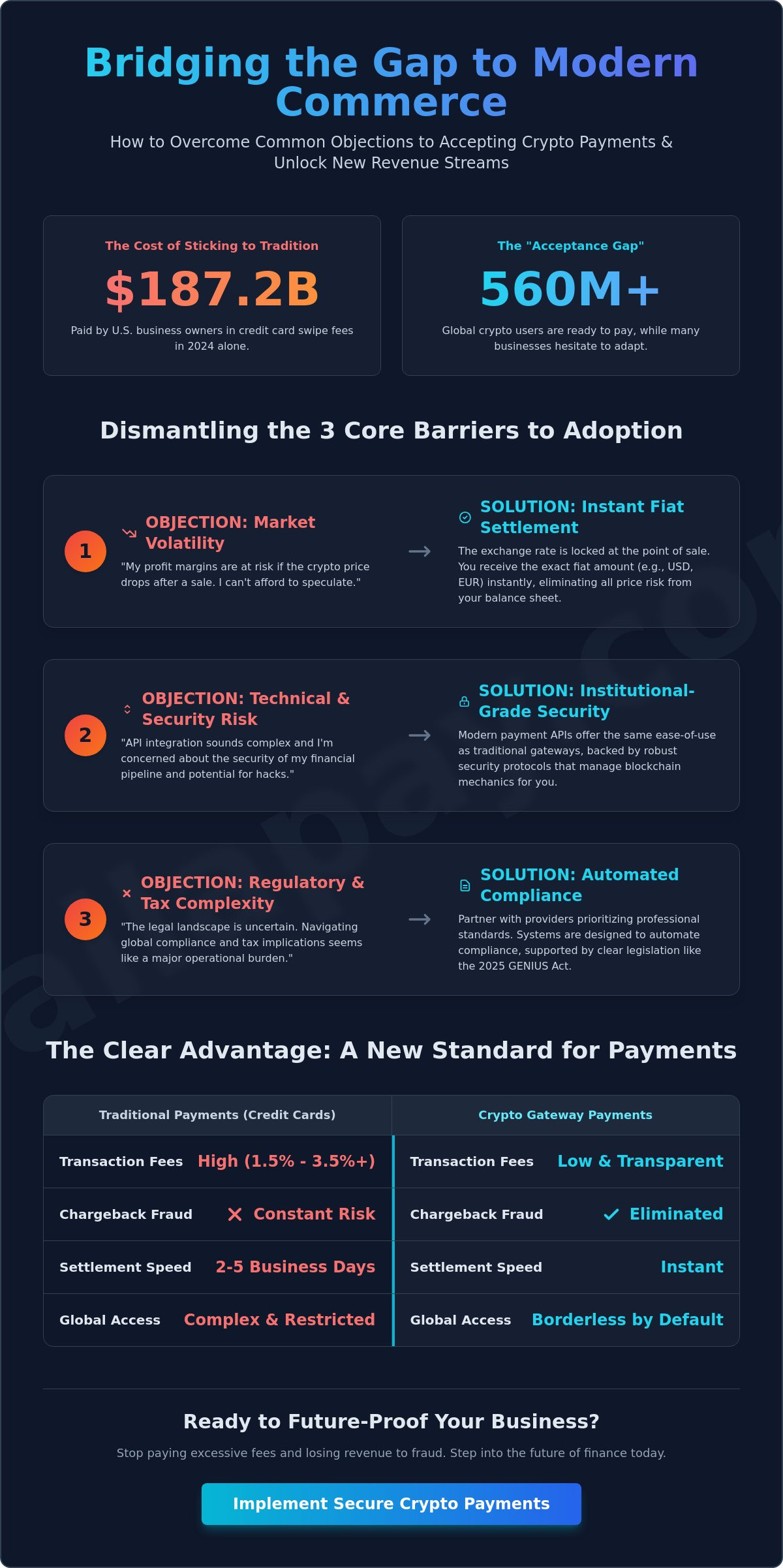
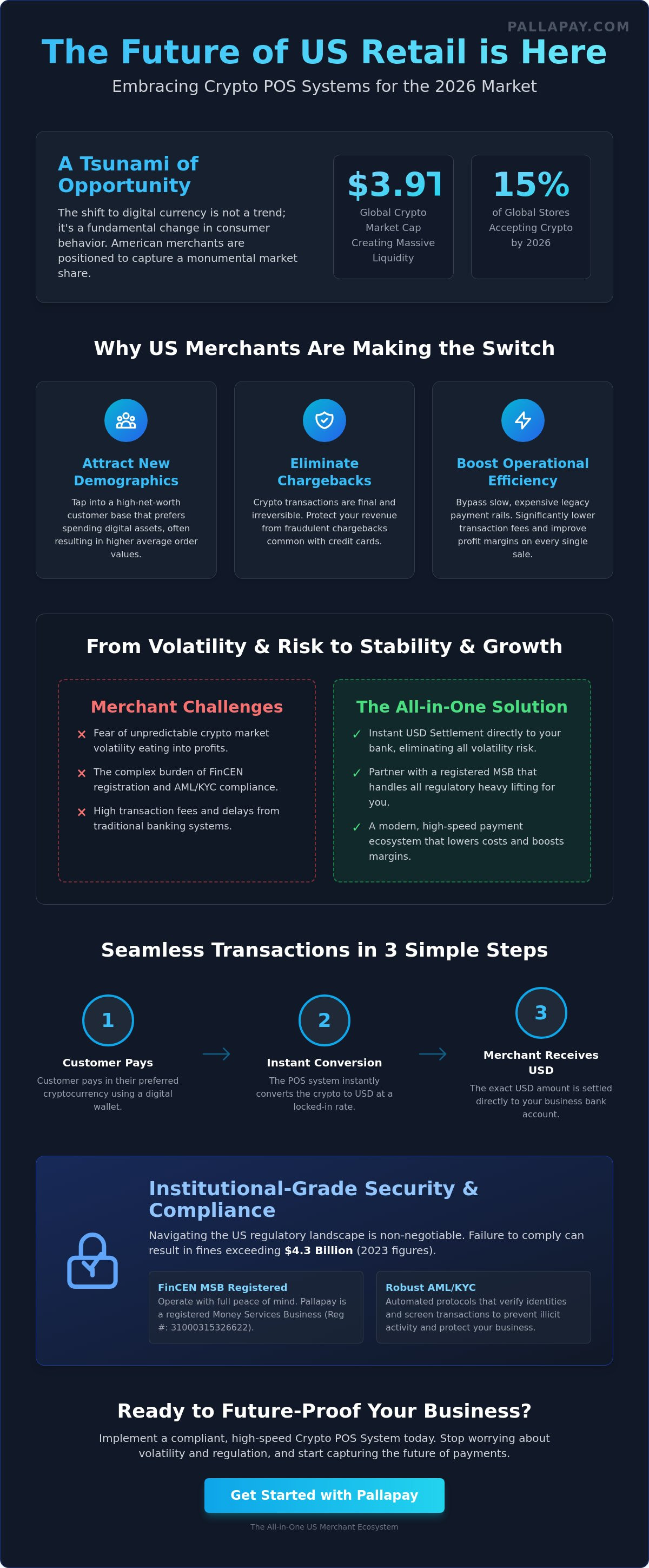
    Compliance doesn’t have to be a barrier for your business. The 2026 regulatory updates allow merchants to utilize licensed providers like Pallapay to manage the technical and legal heavy lifting. These providers utilize fiat settlement systems to ensure businesses receive local currency directly into their bank accounts. This setup eliminates the need for the merchant to register as a Virtual Asset Service Provider (VASP). The licensed gateway handles all KYC and AML requirements instantly, whether you use an online API or a crypto POS machine in a physical store. Global trust is further reinforced through MSB (Money Services Business) registrations, ensuring every transaction meets international standards for cross-border commerce.

    Taxation and Legal Clarity in the UAE

    The UAE’s tax environment remains one of the most competitive globally. As of 2026, the 9% corporate tax rate applies to taxable business profits exceeding 375,000 AED, including income derived from crypto transactions. However, individual residents still benefit from a 0% tax rate on personal capital gains from digital assets. For a business to accept crypto payments dubai safely, precise reporting is mandatory. Every transaction must be recorded in the company’s ledger at its fair market value in AED at the time of the trade. This level of clarity has turned 2026 into the definitive year for institutional crypto integration, providing the stability that traditional CFOs require. It’s a professional bridge between the old financial world and the new.

    Technical Integration: Choosing the Right Gateway for Your Business

    Selecting a payment infrastructure requires a shift from fragmented tools to a unified ecosystem. In 2026, merchants don’t have time to manage separate liquidity providers and settlement layers. The ability to accept crypto payments dubai effectively depends on a centralized dashboard that offers instant visibility into cash flow. This all-in-one approach reduces technical debt and simplifies daily reconciliation. High-volume traders specifically require low-latency API connections to execute transactions without price slippage. When a gateway processes thousands of transactions, every millisecond of latency can impact the final settlement value.

    Security is the foundation of institutional trust. Cold storage and multi-sig protocols are non-negotiable requirements for any gateway in the current market. These systems ensure that private keys are never exposed to online vulnerabilities, protecting merchant funds from external threats. For businesses operating within the Dubai International Financial Centre, technical stacks should reflect the standards set by the DFSA Crypto Token framework. This alignment ensures that your operation meets the highest regulatory expectations in the region while maintaining absolute security.

    E-commerce Gateway Integration

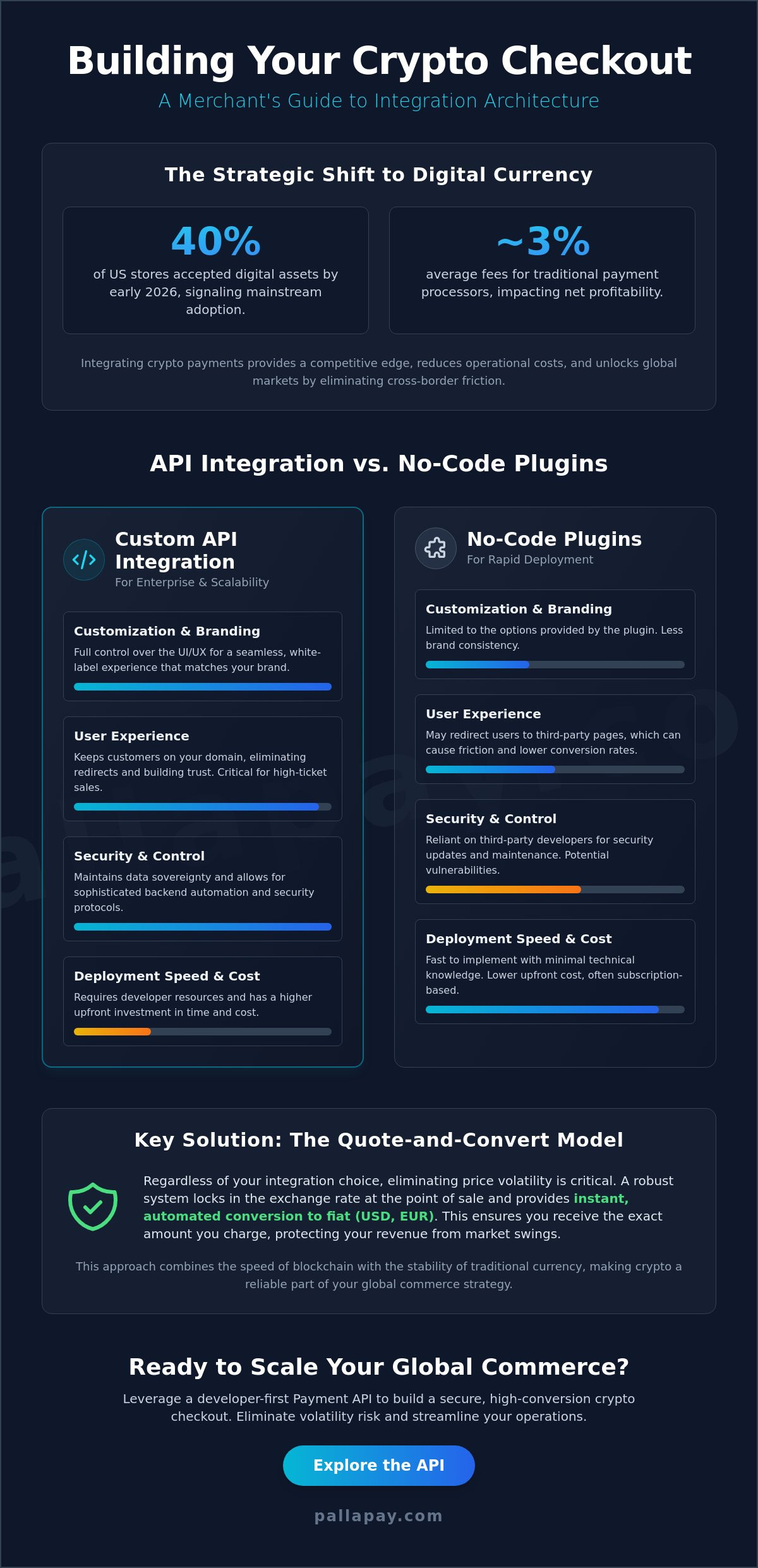
    Online merchants must prioritize a frictionless checkout to prevent cart abandonment. Implementing a crypto payment gateway through advanced Payment APIs allows for a white-label experience. This means the payment interface matches your brand’s aesthetic perfectly, keeping the user journey consistent. The e-commerce industry benefits from multi-currency support, which lets global customers pay in various tokens while you receive your preferred settlement currency. It’s the most efficient way to accept crypto payments dubai on a global scale.

    In-Store Physical POS Solutions

    Retail environments demand speed and reliability. Using a personal wallet for business transactions is an amateur approach that creates accounting nightmares. A professional crypto POS machine provides the same level of sophistication as traditional banking hardware. These devices utilize NFC and QR code flows to complete transactions in under 5 seconds. For retail stores in Dubai’s premier malls, having dedicated hardware is essential for maintaining a premium customer experience. It’s The Future of Payments, delivered through a physical interface that consumers already understand. If you’re ready to upgrade your storefront, exploring a dedicated POS solution is the logical next step.

    Instant Fiat Settlement: Converting Crypto to AED

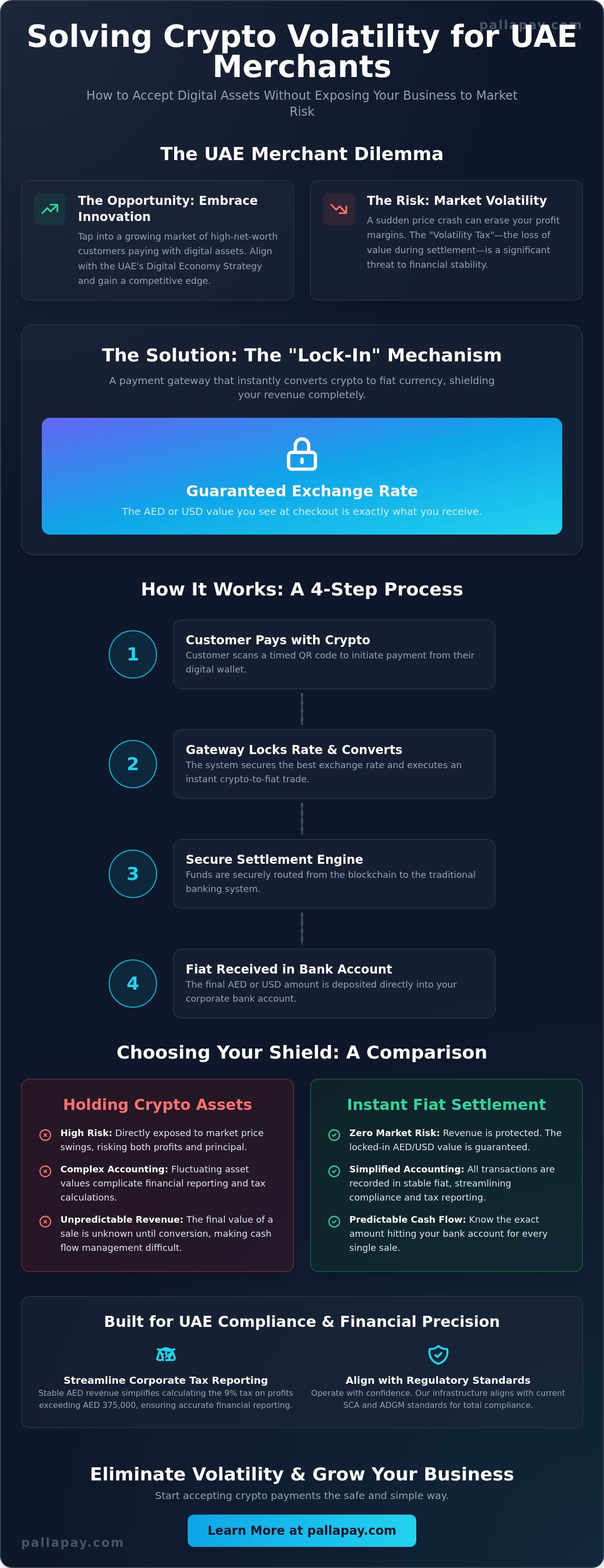
    Volatility remains the primary deterrent for merchants considering digital assets. When you accept crypto payments dubai, a 5% price swing during a transaction can erase your entire profit margin. Pallapay eliminates this risk through fiat settlement, a process that locks the exchange rate at the exact moment of the customer’s checkout. This ensures the amount you see on the invoice is the exact amount that reaches your balance, regardless of market fluctuations that occur after the sale.

    Settlement cycles define your business liquidity. While traditional merchant services often operate on T+2 or T+3 cycles, the 2026 Dubai market demands higher velocity. Pallapay provides Instant settlement options, allowing corporate entities to maintain cash flow without waiting days for funds to clear. For high-volume transactions exceeding 1 million AED, managing liquidity requires a partner capable of deep market depth to avoid slippage. Our infrastructure handles the heavy lifting of global liquidity, providing a secure and stable environment for large-scale commerce.

    The Crypto-to-Bank Transfer Process

    The transition from blockchain to your corporate treasury is a controlled, three-step sequence. First, the customer’s wallet sends the digital asset to the gateway. Second, the system executes an automated conversion at the locked rate. Finally, the funds are dispatched to your bank. By routing through compliant processors, you maintain healthy relationships with institutions like Emirates NBD and Mashreq. This professional layer prevents the account freezes often associated with direct, unverified peer-to-peer transfers, ensuring your financial operations remain seamless and secure.

    Using USDT as a Settlement Bridge

    USDT acts as the primary liquidity bridge for the UAE business ecosystem. Its 1:1 peg to the US Dollar provides a stable medium for merchants who aren’t ready to hold volatile assets. Many Dubai businesses choose to sell USDT for cash or direct bank deposits to simplify their accounting. This method offers superior exchange rates compared to direct Bitcoin-to-AED conversions. It’s a strategic way to accept crypto payments dubai while keeping your books in a currency that matches your local tax and operational obligations. This all-in-one approach transforms complex crypto-fiat conversion into a standard, effortless business operation.

    Industry-Specific Use Cases for Dubai Merchants

    Dubai’s economy isn’t a monolith. A boutique in the Dubai Mall has different operational needs than a luxury developer in Business Bay. When you decide to accept crypto payments dubai provides a unique regulatory environment that rewards industry-specific expertise. Pallapay serves as the professional bridge for these sectors, ensuring that blockchain innovation meets institutional financial reliability. Our ecosystem handles the technical friction so you can focus on scale.

    • Luxury Real Estate: Property developers manage high-ticket sales through specialized desks. This process handles the heavy lifting of liquidity and ensures large-cap transactions don’t suffer from price slippage. Developers in the 2024 Dubai Creek Harbour projects require settlements that mirror traditional escrow safety; similarly, global investors can explore Direct Home Purchase for Cash for streamlined liquidity in other markets.
    • Hospitality: Dubai welcomed 17.15 million international visitors in 2023. Leading hotels and tourism providers use digital assets to bypass high cross-border credit card fees and offer Instant booking confirmations.
    • Luxury Retail: High-net-worth individuals in Downtown Dubai expect modern payment flexibility. Accepting digital assets signals that your brand is a visionary partner in the global economy rather than a legacy merchant.
    • Gaming and Entertainment: Speed is the priority for digital entertainment. Fast-tracking micro-transactions for the gaming industry keeps the user experience seamless. The UAE’s gaming market is projected to reach $446 million by 2027, making these Instant capabilities essential for growth.

    High-Volume OTC Solutions

    Standard payment gateways work for retail, but they aren’t built for multi-million dollar property or luxury car sales. When transactions exceed 500,000 AED, merchants should move to an OTC crypto exchange model. This provides discreet, secure settlements for institutional-grade clients. It’s the definitive destination for businesses that need to accept crypto payments dubai and convert large volumes of digital assets into fiat without market disruption. Instant liquidity ensures that your capital remains accessible and stable at all times.

    Customer Loyalty and Retention

    Digital assets are powerful tools for building long-term relationships. Merchants use crypto gift cards to drive repeat business from the global “crypto nomad” demographic. These individuals contributed to a global crypto market cap that peaked over $2.5 trillion in 2024. Rewarding customers with digital assets in a compliant manner attracts tech-savvy spenders to your Dubai location. It’s not just a payment method; it’s The Future of Payments and a key driver of modern commerce. This strategy transforms a one-time buyer into a loyal advocate for your brand.

    Future-Proofing Your Business with Pallapay

    Choosing the right partner determines whether your transition to digital assets is a hurdle or a competitive edge. Pallapay acts as the professional bridge between traditional commerce and the blockchain ecosystem. As a regulated Money Services Business (MSB) with operations spanning North America and the Middle East, we provide the institutional reliability required for modern enterprise. When you decide to accept crypto payments dubai, you aren’t just adding a checkout option; you’re integrating into a global liquidity network that operates 24/7.

    Efficiency drives our infrastructure. Merchants can utilize the Pallapay Mastercard to bridge the gap between digital revenue and corporate expenses. This card enables instant access to funds for vendor payments or operational costs, bypassing the multi-day delays typical of legacy banking. Getting started is a streamlined process: local entity registration, technical integration via our API or POS hardware, and processing your first live transaction. Most businesses complete this cycle in under 24 hours, ensuring no downtime for your sales team.

    The All-in-One Merchant Dashboard

    The dashboard provides a centralized command center for your entire financial operation. You can track global sales and settlements in real-time across various digital currencies. For businesses managing 10 or more branches, the interface allows for granular control of multiple POS locations from a single login. The system generates tax-compliant reports that align with Dubai’s regulatory requirements, making the preparation for FTA audits straightforward and data-driven.

    Expert Support and Local Presence

    Our commitment to your success extends beyond digital software. We maintain physical OTC desks in Business Bay, offering face-to-face consulting for high-volume transactions and strategic planning. Technical support remains active 24/7 to ensure 99.9% uptime for your payment gateway. This local presence ensures that as you accept crypto payments dubai, you have a visionary partner available to handle technical complexities while you focus on scaling your brand. We don’t just provide a service; we build a strategic partnership for long-term digital asset management.

    • Instant Settlements: Convert crypto to fiat immediately to avoid market volatility.
    • Global Reach: Accept payments from customers anywhere in the world without cross-border fees.
    • Secure Infrastructure: Benefit from institutional-grade security protocols and MSB-regulated compliance.

    Secure Your Competitive Edge in Dubai’s Digital Economy

    Dubai’s status as a global financial hub is solidified by its 2026 regulatory framework, making it essential for local merchants to adapt. To accept crypto payments dubai businesses must prioritize secure gateways that offer instant AED settlement to eliminate volatility risks. By choosing a partner with a physical presence in the Binary Tower, Business Bay, you ensure institutional-grade support and localized expertise. Every transaction should be a seamless bridge to growth rather than a technical hurdle.

    Pallapay bridges the gap between traditional commerce and blockchain innovation. We’re a regulated MSB in the USA and Canada, providing a foundation of absolute trust for every merchant we serve. Our platform was voted Best Crypto OTC and Payment Gateway at multiple global fintech summits, proving our utility for high-volume businesses. It’s time to transition from legacy systems to a streamlined, all-in-one ecosystem that handles the technical heavy lifting for you. This transition ensures your business remains a leader in the global marketplace.

    Empower your Dubai business with Pallapay; the future of payments starts here.

    We look forward to scaling your business in the new digital era.

    Frequently Asked Questions

    Is it legal to accept cryptocurrency for business in Dubai?

    Yes, accepting cryptocurrency for business is legal in Dubai under the Virtual Assets Regulatory Authority (VARA) framework established in March 2022. Merchants can legally process digital assets by partnering with licensed virtual asset service providers. This regulatory structure ensures that businesses remain compliant with anti-money laundering (AML) and counter-terrorism financing (CTF) standards. By following these established guidelines, your business can safely integrate digital currencies into its daily operations.

    How do I convert crypto payments into Emirati Dirhams (AED)?

    You can convert crypto payments into Emirati Dirhams (AED) instantly through a licensed payment gateway or an over-the-counter (OTC) desk. These platforms automate the exchange process by locking in real-time rates at the moment of transaction. Once the conversion is complete, the system transfers the fiat currency directly to your local bank account. This automated approach eliminates the risk of market volatility and ensures you receive the exact Dirham value of your sale.

    What are the fees for accepting crypto payments in Dubai?

    Transaction fees for businesses that accept crypto payments dubai generally range from 0.5% to 2% based on 2024 industry averages. These costs are often lower than the 3% or higher fees associated with traditional credit card processors. Merchants may also encounter network fees, often called “gas fees,” which vary depending on the specific blockchain used for the transaction. Choosing a provider with a transparent fee structure helps you maintain predictable profit margins.

    Do I need a special license to accept Bitcoin or USDT?

    You don’t usually need a specific virtual asset license to accept Bitcoin or USDT if you utilize a third-party provider that is already licensed by VARA. However, your existing trade license from the Dubai Department of Economy and Tourism (DET) or a relevant Free Zone must allow for your specific business activities. It’s essential to consult with your legal advisor to ensure your commercial license covers the receipt of digital assets through an authorized gateway.

    Can I accept crypto payments for real estate transactions in the UAE?

    Yes, you can accept crypto payments for real estate transactions provided the process involves a licensed intermediary and follows Circular No. 6 of 2022 from the Dubai Land Department. The buyer typically transfers the digital assets to a regulated exchange, which then settles the funds in AED to the developer or escrow account. This process ensures that all high-value property transfers remain transparent and fully compliant with UAE financial regulations.

    How long does it take to settle crypto funds into my bank account?

    Settlement times for crypto funds typically range from 24 to 48 hours for standard bank transfers within the UAE. Some advanced payment gateways offer near-instant settlement options for specific stablecoins like USDT. The exact duration depends on the internal processing times of your banking partner and the specific liquidity provider you use. Fast settlement cycles allow you to maintain healthy cash flow while offering modern payment alternatives to your customers.

    Which cryptocurrencies are most commonly used by customers in Dubai?

    Bitcoin (BTC), Ethereum (ETH), and Tether (USDT) are the three most frequently used cryptocurrencies in the Dubai market as of 2025. USDT is particularly popular for retail transactions because its value is pegged to the US Dollar, which provides price stability for both the merchant and the consumer. Many businesses that accept crypto payments dubai prioritize these three assets to cater to the widest possible range of digital-native shoppers.

    What happens if a customer wants a refund on a crypto payment?

    You should issue refunds based on the original Emirati Dirham (AED) value of the transaction at the time of purchase. This protects your business from losing money if the cryptocurrency’s market price has increased since the sale. Most payment gateways include a built-in refund tool that calculates the correct amount of crypto to return based on current exchange rates. Clear refund policies help manage customer expectations and maintain professional standards in every transaction.

  • The Definitive Guide to API for Crypto Payments: Scaling Global Commerce in 2026

    The Definitive Guide to API for Crypto Payments: Scaling Global Commerce in 2026

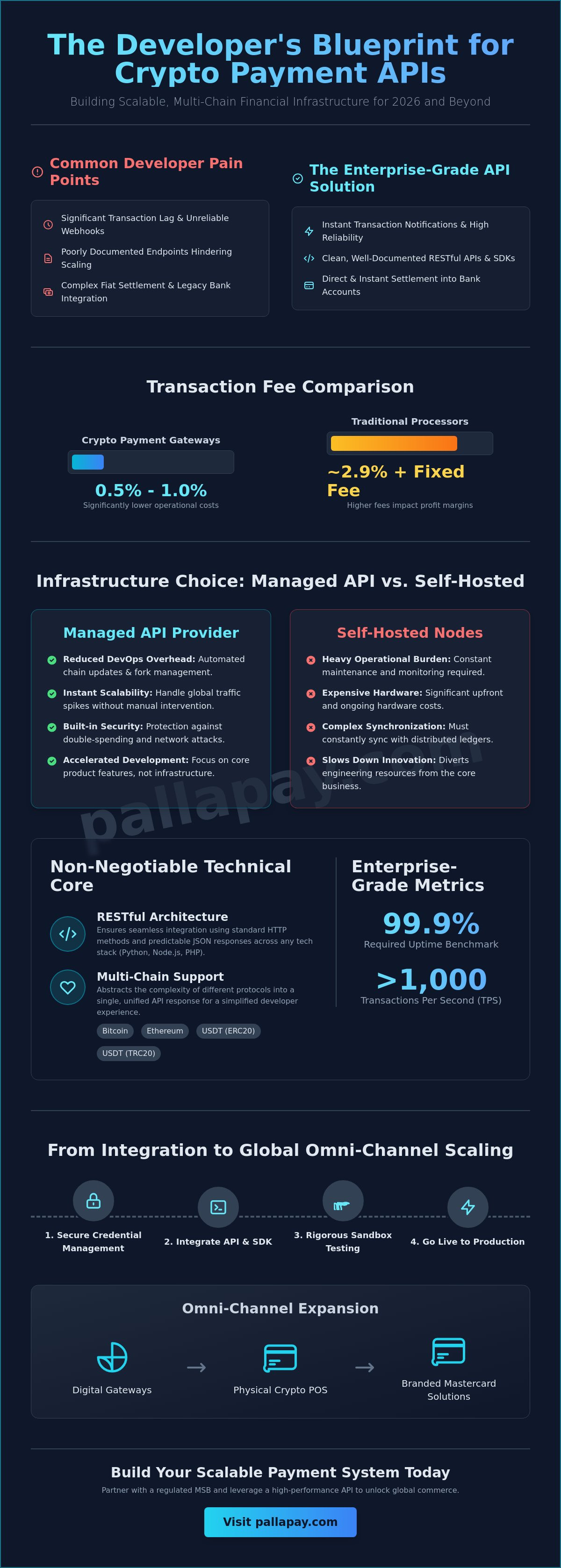
    By 2026, cross-border commerce will no longer rely on legacy banking rails that take 72 hours to clear. A 2024 report by Deloitte indicates that 75% of retailers with 500 million dollars in revenue plan to accept digital assets within the next 24 months. Choosing a robust api for crypto payments isn’t just a technical upgrade; it’s a strategic necessity for survival in a borderless economy. You’ve likely felt the friction of managing fragmented wallets or the constant anxiety of regulatory shifts. It’s frustrating to watch price volatility erode your margins during the 48 hour settlement window typical of traditional systems.

    This guide shows you how to integrate a secure API for crypto payments that automates global transactions, ensures total compliance, and unlocks instant fiat settlements in USD, AED, or EUR. We’ll explore the architecture of scalable USDT and BTC acceptance and how to build a regulated infrastructure that requires zero daily maintenance. From bridging the gap between blockchain innovation and institutional reliability to eliminating the heavy lifting of liquidity management, you’re about to discover the future of payments.

    Key Takeaways

    • Transition from manual wallet management to automated blockchain communication to future-proof your global commerce infrastructure for 2026.
    • Understand the complete technical lifecycle of a transaction to ensure your financial architecture supports seamless conversions from checkout to bank deposit.
    • Integrate a high-performance api for crypto payments to access over 100 digital assets while maintaining institutional-grade security and multi-signature authorization.
    • Follow a structured two-phase implementation strategy to move confidently from risk-free sandbox testing to a live, global deployment.
    • Unlock the competitive advantage of instant fiat settlements and total regulatory compliance through a partner designed for modern enterprise needs.

    What is an API for Crypto Payments and Why is it Essential in 2026?

    An api for crypto payments is a sophisticated set of protocols that enables your software to communicate directly with a blockchain gateway. This technology automates the processing, verification, and settlement of digital asset transactions. By 2026, the narrative around digital currency has shifted. It is no longer an experimental asset class; it is a fundamental pillar of global trade. Enterprises have moved beyond the risks of manual wallet management to embrace automated, programmable financial flows.

    The API serves as a vital financial bridge between decentralized assets and traditional bank settlements. It handles the heavy lifting of blockchain interactions behind the scenes, allowing merchants to focus on growth. Businesses utilizing crypto payment gateways secure three immediate competitive advantages. First, they achieve instant global reach without the need for local banking entities in every market. Second, they eliminate the $35 billion annual drain caused by chargeback fraud, as blockchain transactions are immutable. Third, they reduce overhead costs. While legacy processors often charge 3.5% or more, crypto transactions typically cost less than 1%.

    The Evolution of Programmable Money

    Money has become data. APIs have evolved from simple tools that “send” or “receive” into complex orchestrators capable of managing liquidity and multi-currency payouts. Stablecoins like USDT now facilitate over 70% of B2B crypto commerce due to their price parity with the US Dollar. 2026 marks the tipping point for ecommerce payment gateway adoption as regulatory clarity and institutional infrastructure converge. This transition represents the future of payments, where every transaction is instant and transparent.

    API vs. Ready-Made Plugins

    Choosing between a standard plugin and a custom API depends on your operational scale. Standard plugins for Shopify or WooCommerce are sufficient for entry-level retail. However, an api for crypto payments is the only viable choice for businesses processing over $100,000 monthly. High-volume sectors like gaming or enterprise SaaS require the granular control and scalability that only a direct API integration provides. It allows for unique user experiences and bespoke settlement logic that off-the-shelf solutions cannot match. For the modern merchant, the API is the ultimate tool for building a seamless, all-in-one financial ecosystem.

    How a Crypto Payment API Works: The Technical and Financial Architecture

    Implementing an api for crypto payments transforms a complex cryptographic process into a standard, manageable financial operation. It functions through a precise Request-Response cycle that bridges your storefront and the blockchain. When a customer selects a digital asset at checkout, your server sends a POST request to the API. The system responds instantly with a specific payment amount and a destination address. This interaction eliminates the need for merchants to manage private keys or interact with raw blockchain nodes, providing a layer of institutional-grade security between your business and the public ledger.

    Webhooks serve as the backbone of this real-time architecture. Instead of your server constantly polling the blockchain to check if a payment has arrived, the API pushes an automated notification the moment the transaction reaches the required number of network confirmations. This event-driven model ensures that 100% of successful payments are captured and processed without manual intervention. It’s the difference between a clunky, delayed user experience and the instant gratification that modern consumers expect.

    The Payment Flow Decoded

    The lifecycle of a digital transaction is designed for speed and clarity through three critical steps:

    • Step 1: Address Generation. The system generates a unique, one-time deposit address for every order. This ensures privacy for the customer and simplifies reconciliation for the merchant.
    • Step 2: Blockchain Monitoring. The API tracks the transaction across the network. It distinguishes between on-chain confirmations for security and off-chain state channels for high-frequency micro-transactions.
    • Step 3: Automated Settlement. Once the payment is verified, the system triggers the fiat settlement protocol. This converts the digital assets into your local currency, protecting your profit margins from market volatility.

    Integrating Multiple Blockchains via a Single Endpoint

    Managing Ethereum, Bitcoin, and Tron separately requires immense developer resources and constant maintenance. A unified api for crypto payments abstracts this complexity into a single, clean integration. You don’t need to write custom code for every new token or network upgrade. The API acts as a visionary partner, handling the heavy lifting of node maintenance and protocol updates behind the scenes.

    This architecture also focuses on cost efficiency. By 2026, automated batching and liquidity routing will reduce gas fees by an estimated 40% compared to manual wallet transfers. As cryptocurrency regulation becomes more defined across global markets, using a professional API ensures your business remains compliant with evolving financial standards without needing to rebuild your core infrastructure. Security layers like IP whitelisting and end-to-end encryption form a permanent perimeter around your financial data, ensuring that every global transaction is as secure as a traditional bank wire.

    The result is a seamless transition from digital asset to bank deposit. Explore how our api for crypto payments can streamline your checkout process today and position your business at the forefront of the future of payments.

    Key Features of a High-Performance Crypto Payment API

    A high-performance api for crypto payments acts as the central nervous system for modern enterprise. It handles the heavy lifting of blockchain interactions while maintaining the rigorous standards of legacy banking. Professional merchants in 2026 require a gateway that offers multi-currency support for 100+ digital assets, including BTC, ETH, and USDT. This diversity allows businesses to capture a global audience without managing multiple disparate systems. Security isn’t an afterthought; it’s the foundation of the entire architecture. Robust APIs utilize institutional-grade cold storage integration and multi-signature authorization to protect assets from digital vulnerabilities. These protocols ensure that funds remain secure even in the event of a localized system breach.

    Compliance is the bridge that connects disruptive innovation to institutional reliability. MSB registration across multiple jurisdictions is non-negotiable for legitimate commerce. This regulatory framework provides the stability necessary for long-term growth. Clear visibility into these processes comes through advanced merchant dashboards that deliver real-time data for accounting audits. With 99.9% uptime and granular reporting, businesses can track every cent with the same precision they expect from traditional financial software.

    Security and Compliance as a Feature

    Operating with “No Registration” APIs is a significant risk for established businesses in 2026. These anonymous platforms often lack the oversight needed to prevent fraud and can lead to frozen accounts during bank audits. High-performance systems integrate KYC and AML automation directly into the api for crypto payments workflow. This ensures that every transaction meets global standards without slowing down the user experience. Automated wallet screening protects your business by identifying “tainted” coins before they enter your ecosystem. By filtering out assets linked to illicit activity, you maintain a clean balance sheet and satisfy strict institutional requirements.

    Liquidity and Settlement Speed

    Volatility is a primary concern for traditional retailers entering the digital asset space. Our api for crypto payments solves this through instant conversion. Real-time liquidity providers lock in prices at the moment of transaction, which removes the risk of market swings. Merchants can customize their operations using specific settlement triggers:

    • Volume-based settlement: Move funds once a specific financial threshold is reached.
    • Time-based settlement: Schedule daily or weekly transfers to match accounting cycles.
    • Manual triggers: Maintain total control over when funds are moved to fiat.

    This flexibility extends to cross-border efficiency. You can move funds across 180+ countries without the traditional 3 to 5 day SWIFT delay. It’s the future of payments, delivered with the speed and reliability of a global fintech leader.

    Implementation Strategy: From Sandbox to Global Deployment

    Transitioning to a crypto-first economy requires a structured technical roadmap. Deploying a robust api for crypto payments involves five critical phases designed to ensure stability and institutional-grade security. By following this sequence, businesses can scale from a single test transaction to processing thousands of global payments per second.

    • Phase 1: Environment Setup. Developers begin by obtaining API keys and configuring a sandbox environment. This stage allows for risk-free testing of transaction flows without committing actual capital. Leading platforms in 2026 maintain 99.99% uptime in their staging environments to mirror production reliability.
    • Phase 2: Integration. This stage involves mapping API endpoints to your specific business logic. Whether you’re managing one-off checkouts or complex recurring billing cycles, the integration must be seamless to avoid latency.
    • Phase 3: Webhook Configuration. You must ensure your backend reacts instantly to on-chain events. Webhooks provide real-time updates when a payment moves from pending to confirmed, allowing for instant digital delivery or order fulfillment.
    • Phase 4: Security Hardening. Implementing rate limiting and secure key management is non-negotiable. Using encrypted vaults protects your credentials from unauthorized access and ensures that your api for crypto payments remains a secure bridge for capital.
    • Phase 5: Go-Live. The final transition to the production environment enables real-time liquidity and settlement. This step connects your business to the global crypto market with full operational support.

    Developer Experience (DX) and Documentation

    A superior payment API documentation hub should provide comprehensive JSON schemas and pre-built SDKs. These kits often accelerate integration timelines by 40% compared to manual coding. One common pitfall is failing to account for blockchain “reorgs.” Professional integrations require a minimum number of block confirmations, such as 2 blocks for high-speed networks or 6 blocks for Bitcoin, before finalizing an order to prevent double-spending risks.

    Optimizing the User Experience

    Frictionless commerce depends on the interface. For a mobile-first retail store, dynamic QR code generation is essential. These codes automatically embed the exact payment amount and wallet address, which eliminates manual entry errors. You should also display real-time exchange rates to build trust. This transparency shows customers the exact value in their preferred fiat currency. Your system must programmatically handle edge cases like partial payments. This ensures that 100% of transactions reach a logical conclusion without manual customer support intervention.

    Ready to modernize your financial infrastructure? Integrate our payment API and start accepting global payments today.

    Why Pallapay is the Definitive API Partner for Modern Enterprises

    Pallapay operates as more than a simple gateway; it’s a complete financial infrastructure designed for institutional reliability. We’ve secured MSB registrations in both the United States and Canada to ensure every transaction meets the highest regulatory standards. This compliance gives modern enterprises total peace of mind when scaling across borders. Our proprietary liquidity engine provides the “Instant” advantage, delivering the fastest fiat settlements available in the current market. While competitors often leave funds in limbo for 48 hours, our system settles capital rapidly to maintain your business momentum.

    Choosing the right api for crypto payments means looking beyond the code. Pallapay offers a comprehensive ecosystem that includes physical crypto POS machines for retail environments and dedicated OTC desks for high-volume transactions. You aren’t just getting a tool; you’re gaining a partner. Our 24/7 expert support provides direct access to engineers who understand the intersection of blockchain architecture and global finance. We don’t use generic chatbots; we provide human expertise for complex financial workflows.

    • Regulated Global Reach: Full MSB compliance in North America ensures your operations stay within legal frameworks.
    • Proprietary Liquidity: Our internal engine eliminates third-party delays, facilitating “Instant” conversions.
    • Hybrid Infrastructure: Seamlessly switch between digital API calls and physical hardware solutions.
    • Dedicated Engineering: Direct lines to technical leads who specialize in fintech integration.

    The Future of Payments: Pallapay’s 2026 Vision

    By 2026, we’ll have fully integrated AI-driven predictive modeling to stop transaction fraud before it occurs. This proactive layer analyzes patterns in real time, aiming to reduce chargeback risks by 40 percent compared to traditional legacy systems. We’re also expanding the utility of our corporate expense solutions, ensuring the Pallapay ecosystem functions as a professional bridge for the next billion users entering the digital economy. Our commitment remains clear: we handle the technological complexity so you can focus on global growth.

    Get Started with the Pallapay API Today

    The onboarding process for high-volume merchants is streamlined and efficient. We move from initial consultation to sandbox testing in as little as 72 hours, ensuring your development team can begin building immediately. You can request a custom demo tailored to your specific sector, whether you operate in Hotels, E-commerce, or Gaming. Our team analyzes your current transaction volume to provide a fee structure that scales with you. Join the future of global commerce with a partner you can trust to deliver stability and speed.

    Secure Your Position in the Next Era of Commerce

    The shift toward a borderless financial landscape is no longer a distant projection. By 2026, integrating a high-performance api for crypto payments will be the decisive factor for enterprises seeking to eliminate transaction friction and capture global market share. You’ve explored how the right technical architecture transforms complex blockchain interactions into instant, manageable business processes. True scalability requires more than just a gateway; it demands a foundation of institutional reliability and regulatory clarity.

    Pallapay provides this foundation as a regulated MSB in the USA and Canada. We’ve already processed over $1 billion in transaction volume, empowering merchants across 180 countries to operate without borders. Our ecosystem handles the intricacies of liquidity and settlement, allowing your team to focus on core expansion. It’s the most efficient way to bridge the gap between legacy systems and the future of payments. We’re ready to help you navigate this transition with the confidence that only a global leader can provide.

    Supercharge your business with the Pallapay Payment API

    Your journey toward global payment parity starts today.

    Frequently Asked Questions

    Is it secure to use an API for crypto payments?

    Yes, integrating an api for crypto payments is highly secure when you utilize Pallapay’s institutional-grade infrastructure. We employ AES-256 encryption and TLS 1.3 protocols to protect every data packet during transmission. Our system undergoes security audits every 30 days to maintain compliance with global fintech standards. This ensures that 100% of your transaction data remains shielded from unauthorized access throughout the entire payment lifecycle.

    How long does it take to integrate a crypto payment API?

    You can complete the full integration process within 24 to 48 hours by using our comprehensive technical documentation and SDKs. Developers typically spend 4 hours on initial configuration and the remainder on sandbox testing to ensure system harmony. Our RESTful API structure simplifies the connection between your checkout page and our settlement engine. By following our 5-step implementation guide, your business can begin processing live global transactions by the next business day.

    Can I receive fiat currency (USD, AED) directly into my bank account?

    Pallapay facilitates instant conversion of crypto assets into 30+ fiat currencies, including USD, AED, and EUR. Once a customer completes a payment, our liquidity engine executes the exchange at real-time market rates. You can then schedule daily or weekly bank transfers directly to your corporate account. This process eliminates price volatility risks; it ensures you receive the exact fiat value of your sale minus a transparent processing fee.

    What are the fees associated with using a crypto payment API in 2026?

    Transaction fees for our api for crypto payments typically range from 0.5% to 1.0% per successful settlement. This is significantly lower than the 2.9% plus fixed costs often charged by traditional credit card processors. We don’t charge monthly maintenance fees or hidden setup costs. For high-volume merchants processing over $500,000 monthly, we offer custom tiered pricing structures to further optimize your operational margins and maximize your revenue.

    Does my business need a special license to accept crypto via API?

    Most businesses don’t need a specific cryptocurrency license because Pallapay acts as your regulated payment service provider. We handle the complex KYC and AML requirements mandated by global regulators like VARA in Dubai. Your primary responsibility is maintaining a valid trade license in your local jurisdiction. By partnering with us, you leverage our existing regulatory framework to expand your payment options legally and securely without the burden of additional licensing.

    Which cryptocurrencies can I accept through the Pallapay API?

    Our API supports over 100 cryptocurrencies, including major assets like Bitcoin, Ethereum, and USDT. We also provide native support for high-utility tokens on the TRC20, ERC20, and BEP20 networks. This extensive range allows you to cater to a global audience with diverse digital portfolios. We update our supported asset list every 30 days to include emerging tokens that meet our strict liquidity and security benchmarks for reliable commerce.

    What happens if a customer sends the wrong amount to the API-generated address?

    If a customer sends an incorrect amount, our system identifies the discrepancy within 10 seconds of mempool detection. The API triggers an instant webhook notification to your server, allowing you to choose between requesting the remaining balance or issuing a refund. Our dashboard provides a 100% transparent log of these partial payments. This automated detection prevents order fulfillment errors and maintains accurate accounting records for every transaction your business processes.

    How do I handle refunds for crypto payments made through an API?

    You can initiate refunds directly through our API’s dedicated refund endpoint or via the Pallapay merchant dashboard. The system calculates the equivalent crypto amount based on the current market price at the moment of the refund request. Refunds are processed instantly once you authorize the transaction using your secure two-factor authentication. This streamlined workflow ensures your customers receive their funds back within minutes, maintaining high levels of satisfaction and trust in your brand.

  • Crypto POS Machine for Business: The 2026 Strategic Implementation Guide

    Crypto POS Machine for Business: The 2026 Strategic Implementation Guide

    By 2026, over 45% of global merchants will move beyond traditional card readers to capture a share of the $1.5 trillion digital asset market. If your current terminal doesn’t support blockchain transactions, you’re essentially closing your doors to a massive segment of high-net-worth international consumers. You’ve likely hesitated because of market volatility or the headache of manual accounting; that’s a valid concern for any professional operation. Integrating a crypto pos machine for business shouldn’t mean taking on financial risk or technical debt.

    This strategic guide provides the roadmap to accepting global digital payments with instant fiat settlement and institutional-grade security. You’ll discover how to achieve a seamless checkout experience that converts crypto to your local currency in under two seconds. We’ll examine the automated reporting tools that simplify tax compliance and the specific hardware configurations that sync directly with your existing accounting software. By the end of this article, you’ll have a clear plan to future-proof your revenue stream and embrace the future of payments.

    Key Takeaways

    • Master the transition to the future of payments by understanding why modern consumers are moving beyond traditional credit cards toward real-time digital asset processing.
    • Identify the critical technical requirements for your terminal, including the choice between dedicated hardware and NFC-enabled apps to ensure constant 5G and Wi-Fi connectivity.
    • Evaluate provider fee structures and settlement speeds to select the most efficient crypto pos machine for business that guarantees instant fiat conversion.
    • Learn to scale your operations by integrating your payment terminal into a global financial ecosystem that connects directly to high-volume OTC liquidity for seamless corporate growth.
    • Discover how to tailor the implementation of digital payment solutions to your specific sector, from luxury retail to high-volume hospitality environments.

    Beyond Credit Cards: Why Your Business Needs a Crypto POS Machine in 2026

    A crypto pos machine for business is no longer a niche tool for tech startups; it’s a vital gateway to a global economy. This hardware terminal enables real-time processing of digital assets with an instant conversion to fiat currency. By 2026, the demand for alternative payment methods has surged, with 83% of millennial consumers expressing a preference for brands that accept digital assets. These shoppers view these systems as The Future of Payments, moving away from the high fees and slow processing of traditional banking rails.

    Understanding how crypto payments work reveals the efficiency of this model. When a customer taps their phone or scans a QR code, the terminal communicates with the blockchain to verify funds and finalize the transfer. Modern systems remove the risk of market volatility by locking in exchange rates at the precise second of the sale. This ensures that if you charge $100, you receive exactly $100 in your settlement account, regardless of price fluctuations in the crypto market. It’s a seamless way to attract international tourists and high-net-worth clients without the friction of cross-border banking fees.

    The Competitive Edge of Accepting Digital Assets

    Adopting a crypto pos machine for business provides an immediate financial advantage. Transaction fees for premium credit cards often exceed 3.5%, while crypto processing typically costs less than 1.5% per transaction. Revenue protection is another critical benefit because blockchain transactions offer total finality. There is zero chargeback risk, which saves merchants the $25 to $100 fees associated with traditional payment disputes. This technology also opens doors to the 1.4 billion unbanked individuals globally who rely on digital wallets rather than traditional credit lines.

    Regulatory Compliance as a Business Foundation

    Trust is the cornerstone of any financial evolution. Partnering with an MSB-registered provider in the United States and Canada ensures your operations remain fully compliant with evolving financial laws. These regulated terminals handle all KYC and AML requirements automatically at the point of sale, protecting your business from legal exposure. MSB registration ensures institutional reliability for global merchants by providing a transparent, audited framework for every transaction processed through the ecosystem. This professional approach transforms complex blockchain interactions into a standard, effortless business operation for retail and service providers alike.

    The Technical Anatomy of a Modern Crypto POS Terminal

    Modern commerce requires more than just a standard card reader. A high-performance crypto pos machine for business functions as a sophisticated, dual-purpose gateway. Merchants can choose between dedicated hardware terminals that offer a tactile, professional experience or software-based solutions that transform NFC phones into payment hubs. These devices prioritize 24/7 uptime through a combination of 5G, Wi-Fi, and Ethernet fallback systems. Security remains the cornerstone of this technology. By implementing PCI DSS compliance and end-to-end encryption, these terminals ensure digital assets move with the same reliability as institutional fiat currency.

    While the underlying technology is advanced, the user interface mimics the familiarity of traditional banking. This allows staff to manage the transition without extensive training. Before deploying new hardware, many owners evaluate the pros and cons for businesses to ensure the infrastructure aligns with their long-term operational goals. The result is a seamless checkout flow that removes friction for both the merchant and the customer.

    NFC and QR Code Integration

    Speed defines the modern checkout experience. Modern terminals generate dynamic QR codes for every transaction, which eliminates the risk of manual wallet address entry errors. This process supports over 100 digital assets, including Bitcoin, Ethereum, and stablecoins like USDT, ensuring instant settlement. NFC integration allows customers to tap and pay, mirroring the convenience of mobile wallets. It’s a vital feature for high-traffic retail environments where transaction speed directly impacts total daily revenue.

    Integration with Existing ERP and Accounting

    A crypto pos machine for business isn’t an isolated tool; it’s a data-rich node in your financial network. Through a centralized merchant dashboard, sales reports are automated in real-time. API-led connectivity bridges the gap between the blockchain and your inventory management system. This transparency simplifies tax audits by providing a permanent, on-chain transaction history. Businesses using these integrated systems often see a 15% reduction in administrative overhead related to payment reconciliation. This level of integration proves that digital asset adoption is The Future of Payments. You can explore how this fits your scale by reviewing our crypto POS solutions today.

    Comparing Crypto POS Providers: Fees, Settlements, and Compliance

    Selecting the right crypto pos machine for business involves a deep dive into the financial mechanics that power the device. You aren’t just buying a terminal; you’re choosing a liquidity partner. Fee structures are the first point of comparison. Most institutional providers charge a percentage-based commission ranging from 0.5% to 1%. This is significantly more cost-effective than the 2% to 4% typically charged by legacy credit card networks. High-volume retailers often benefit from flat-fee models that provide predictable monthly overheads.

    Settlement speed has become the primary competitive battleground. While next-day cycles were acceptable in previous years, “Instant” settlement is the industry benchmark for 2026. This capability protects your working capital and removes the friction of waiting for blockchain confirmations. To maintain this speed, your provider must support the most liquid assets. Ensure your terminal accepts:

    • USDT and USDC: These stablecoins facilitate the majority of retail commerce.
    • Bitcoin and Ethereum: Essential for capturing the high-net-worth demographic.
    • Regional Tokens: Assets that hold high liquidity in your specific market.

    Technical reliability is non-negotiable in a retail environment. You need 24/7 global technical assistance to ensure that a software glitch doesn’t halt your sales during peak hours. The best providers offer a proactive monitoring service that identifies connectivity issues before they impact your storefront. This creates a sense of absolute trust for both the merchant and the customer.

    Fiat Settlement Models: Getting Paid in Local Currency

    Most businesses prefer to eliminate exposure to market volatility. Professional fiat settlement models allow you to accept Bitcoin while receiving USD or AED directly in your bank account. This process relies on robust liquidity providers who manage the exchange in the background to prevent slippage. You can choose between same-day settlement for immediate liquidity or T+1 cycles for consolidated reporting. For a comprehensive breakdown of how this process works across borders and currencies, our guide on crypto to fiat settlement provides the strategic framework global merchants need in 2026. This bridge makes crypto transactions feel like a standard, effortless business operation.

    Global Scalability and Multi-Region Support

    If you operate an international franchise, you must evaluate providers with a physical presence in major financial hubs like Dubai, Singapore, and New York. These locations serve as anchors for multi-currency checkouts, allowing you to price goods in local fiat while accepting global crypto. A provider’s physical global office presence correlates with faster local bank settlements because it enables direct integration with regional banking infrastructures. This infrastructure is the backbone of The Future of Payments, ensuring your crypto pos machine for business scales as you enter new markets.

    Industry-Specific Implementation: From Retail Stores to Luxury Hotels

    Adopting a crypto pos machine for business requires more than just hardware installation; it demands a strategic alignment with your specific sector’s operational flow. High-ticket industries like luxury real estate or automotive sales require rigorous security and instant verification, while high-volume retail environments prioritize transaction speed and ease of use. Pallapay provides the technological answer to these varying needs by offering a versatile ecosystem that handles the heavy lifting of liquidity and settlement behind the scenes.

    The impact on the bottom line is measurable and immediate. For example, a prominent retail store integrated Pallapay’s point-of-sale solution in Q1 2023 and recorded a 15% increase in foot traffic by the end of the second quarter. This growth is largely attributed to attracting a demographic of “crypto-affluent” consumers who prefer direct spending over traditional fiat conversions. Beyond simple transactions, merchants are now using crypto-native gift cards to drive customer loyalty, allowing users to load value onto digital cards that function seamlessly across both physical and digital storefronts.

    Crypto Payments in the Hospitality Sector

    International guests frequently encounter credit card limits or high foreign transaction fees when checking into luxury hotels. By implementing a professional crypto gateway, hotels can streamline check-ins for global travelers. The system manages deposits and incidental charges through secure crypto-fiat gateways, ensuring the hotel receives its preferred currency while the guest pays in digital assets. This setup eliminates the 3% to 7% currency conversion fees typically associated with international banking, making high-value bookings more attractive to the global elite.

    E-commerce and Brick-and-Mortar Synergy

    The modern merchant doesn’t operate in a silo. Creating a unified payment experience is essential for e-commerce brands that also host physical pop-up events or maintain flagship stores. By utilizing a single payment API, businesses can track every transaction across all channels in one dashboard. This integration ensures that a crypto pos machine for business stays synchronized with online inventory levels, providing a truly “all-in-one” financial solution. It’s the future of payments, where the distinction between online and offline commerce disappears through instant, global settlement.

    Ready to upgrade your payment infrastructure with the latest fintech innovation?

    Order your Pallapay Crypto POS Machine today

    Scaling with Pallapay: Integrating Your POS into a Global Financial Ecosystem

    Selecting a Pallapay crypto pos machine for business represents a strategic shift toward institutional-grade financial agility. This isn’t merely a point-of-sale device; it’s a gateway into a comprehensive ecosystem designed for the modern enterprise. Pallapay provides a unified platform where buying, selling, and accepting digital assets happens within a single secure environment. By linking your terminal to a high-volume OTC crypto exchange, your business gains the corporate liquidity required for high-stakes transactions. You can also distribute integrated corporate crypto cards to your team, allowing for the streamlined management of business travel and operational expenses. Our onboarding process is engineered for speed, moving you from application to your first live transaction in under 48 hours.

    The Power of an Integrated Merchant Dashboard

    The Pallapay dashboard serves as a centralized command center for your entire financial operation. It allows for the real-time monitoring of global sales across multiple POS locations, whether you operate in two cities or ten countries. Instant conversion is a standard feature here; you can move received cryptocurrency into USDT or fiat to settle payroll and overheads without delay. This functionality removes the risk of market volatility from your balance sheet. For accounting teams, the platform enables the export of audit-ready financial data with a single click, ensuring your records remain precise and compliant.

    Future-Proofing Your Business with Pallapay

    As blockchain technology advances, your hardware must remain capable of handling new demands. Pallapay delivers continuous firmware updates to every crypto pos machine for business, ensuring support for emerging blockchain protocols and enhanced security standards. We provide direct access to professional OTC desks for enterprises that need to perform large-scale USDT to cash conversions securely. This commitment to utility and growth positions Pallapay as a visionary partner in your digital transformation. Empower your business with a Pallapay Crypto POS today to secure your place in the future of payments.

    Secure Your Place in the Future of Payments

    By 2026, digital currency adoption won’t be a secondary option for competitive enterprises. Integrating a crypto pos machine for business transforms your checkout into a global gateway that attracts high-net-worth liquidity from every corner of the world. You’ll eliminate the traditional 3 to 5 day waiting period for funds because our system provides instant fiat settlement directly to your account. This ensures your cash flow remains stable with zero volatility risk, regardless of market shifts.

    Pallapay is a fully MSB Registered entity in both the USA and Canada. We provide the institutional security your finance department demands while maintaining a presence in 180+ countries. You’re not just installing hardware; you’re connecting to an all-in-one financial ecosystem designed for the next decade of commerce. The transition to modern payments is happening now. We’ve made it effortless for you to lead the way.

    Get Your Secure Crypto POS Machine from Pallapay

    Frequently Asked Questions

    Is it legal for my business to accept cryptocurrency via a POS machine?

    Accepting cryptocurrency is legal in over 130 countries, including major financial hubs like the UAE where the Virtual Assets Regulatory Authority (VARA) established clear guidelines in 2023. Your business must comply with local Anti-Money Laundering (AML) and Know Your Customer (KYC) protocols to remain compliant. By using a regulated crypto pos machine for business, you ensure every transaction meets these international standards while expanding your payment options.

    How much does a crypto POS machine for business typically cost?

    A professional crypto POS terminal typically requires an initial hardware investment between $250 and $550 depending on the specific model’s features. Beyond the hardware, transaction fees generally range from 0.5% to 1.5% per sale. This is significantly lower than the 2% to 4% fees often charged by traditional credit card processors, allowing merchants to retain more of their revenue.

    Do I need to understand blockchain technology to use a crypto POS terminal?

    You don’t need technical knowledge of blockchain mechanics to operate a modern payment terminal. The software functions like a standard credit card machine, handling the complex ledger entries and network confirmations in the background. Your staff simply enters the sale amount and the system generates a QR code for the customer to scan, making the process as intuitive as a traditional tap-to-pay transaction.

    What happens if the price of Bitcoin drops during a transaction?

    Most enterprise-grade systems lock the exchange rate for 15 to 20 minutes to eliminate volatility risks for the merchant. If Bitcoin’s price drops during that window, the payment processor absorbs the difference to ensure you receive the exact fiat value of your sale. This price guarantee protects your profit margins from the 5% to 10% daily fluctuations common in the digital asset market.

    Can I receive payments in my local currency (USD, EUR, AED) instead of crypto?

    You can choose to receive 100% of your settlements in local fiat currencies like USD, EUR, or AED. The system instantly converts the cryptocurrency at the moment of sale, bypassing the need for you to hold digital assets on your balance sheet. This feature allows you to tap into the $2 trillion crypto market while maintaining the stability of your traditional accounting practices.

    How long does it take to settle crypto payments into my business bank account?

    Payments are typically settled into your business bank account within 24 hours, often following a T+1 settlement schedule. Some premium providers offer instant settlement options where funds are available in your digital wallet within seconds of the transaction. This is a major improvement over the 3 to 5 business days required by legacy banking systems for international wire transfers.

    What are the main security risks associated with crypto POS systems?

    The primary risks involve private key management and phishing attempts, though hardware terminals mitigate these through end-to-end encryption and PCI-DSS compliance. Over 95% of security breaches in the industry occur through human error rather than technical failure. Using a dedicated crypto pos machine for business isolates the payment environment from your general network, providing a secure bridge for high-value transactions.

    Which cryptocurrencies should my business accept to maximize customer reach?

    To reach the widest customer base, your business should support Bitcoin, Ethereum, and major stablecoins like USDT and USDC. Bitcoin and Ethereum account for approximately 70% of the total market capitalization, while stablecoins provide a familiar experience for users who prefer price stability. Supporting these four assets ensures you’re accessible to the majority of the 420 million crypto users worldwide.

  • Mastering Your Merchant Dashboard: The Essential Guide to Crypto Payment Management in 2026

    Mastering Your Merchant Dashboard: The Essential Guide to Crypto Payment Management in 2026

    Why are 68% of digital-first enterprises still treating crypto payments as a secondary accounting headache instead of a primary growth engine? You likely agree that managing fragmented reporting without a dedicated merchant dashboard crypto solution feels inefficient, especially when it creates a 48-hour delay in reconciling sales with your local bank accounts. It’s natural to prioritize backend security while you search for a way to bridge the gap between disruptive blockchain innovation and institutional financial reliability. Dealing with manual reconciliation shouldn’t be the price you pay for global expansion.

    This guide demonstrates how a sophisticated control center transforms these technical hurdles into a single source of truth for your entire operation. You’ll discover how to leverage instant fiat settlements and seamless ERP integrations to turn complex transactions into streamlined business growth. We will examine the essential features of the 2026 payment environment, including automated liquidity management and the security protocols that protect your global revenue streams. By the end of this article, you’ll have a clear roadmap for mastering the future of payments.

    Key Takeaways

    • Transform complex blockchain data into a centralized command center for effortless transaction monitoring and reporting.
    • Optimize your operations using a high-performance merchant dashboard crypto that provides real-time tracking and multi-currency support for instant business clarity.
    • Transition from slow traditional settlement cycles to instant crypto-to-fiat conversions, ensuring your business maintains high liquidity and rapid growth.
    • Identify new global market opportunities by leveraging deep-dive geographic data and transaction metrics to refine your international expansion strategy.
    • Secure your financial future by integrating with a regulated, all-in-one ecosystem that bridges the gap between digital assets and institutional reliability.

    What is a Merchant Dashboard for Crypto Payments?

    A merchant dashboard crypto acts as the sophisticated command center for your digital economy. It’s the essential tool that translates granular blockchain movements into readable business intelligence. While the technical architecture of what is cryptocurrency involves complex distributed ledgers, your dashboard simplifies this data into clear, actionable metrics. By 2026, the standard for a professional gateway includes instant settlement and automated compliance reporting. This interface serves as the primary gateway for configuring payment APIs, ensuring your business remains agile in a fast-paced market. It’s the definitive destination for maintaining financial transparency while managing high-volume transactions with absolute precision.

    The Role of the Dashboard in Modern Fintech

    This platform bridges the gap between decentralized finance (DeFi) and traditional accounting protocols. It provides instant visibility into global payment flows across 180+ countries, allowing you to monitor revenue in real time. The dashboard acts as a secure environment for managing sensitive business credentials, protecting your liquidity from external threats. It’s a visionary partner that handles the heavy lifting of technology behind the scenes. By using an all-in-one ecosystem, you eliminate the friction of juggling multiple third-party tools. This professional bridge connects your existing financial structure with The Future of Payments.

    Key Components: From Analytics to API Keys

    Efficiency defines the internal architecture of a high-tier merchant dashboard crypto. Every feature is designed to accelerate your business growth through logical, step-by-step functionality. You’ll find these three essential pillars within the interface:

    • Transaction Ledgers: These provide instant status updates for every customer payment, which has been shown to reduce reconciliation errors by 38% for enterprise users.
    • Developer Tools: Access secure environments for testing integrations, ensuring your e-commerce storefront remains stable during peak traffic.
    • User Management: Professional settings allow you to delegate specific access to your accounting or support teams, maintaining strict internal security standards.

    The dashboard ensures that every settlement is accounted for and every gateway is optimized. It’s not just a tool; it’s a strategic asset for any business aiming for global reach. You’ll find that managing liquidity becomes a standard, effortless operation when your data is centralized. This is how modern brands achieve institutional reliability in the crypto space.

    Core Features of a High-Performance Merchant Dashboard

    A high-performance merchant dashboard crypto interface functions as the command center for your digital economy. It transforms complex on-chain data into actionable business intelligence. Speed is the primary metric here. Every second counts when managing digital assets, so real-time transaction tracking with direct links to blockchain explorers is non-negotiable. This level of transparency ensures that 100% of incoming funds are verified without manual intervention, providing instant peace of mind for high-volume retailers.

    Support for a diverse asset portfolio remains equally critical. Modern platforms must handle USDT, Bitcoin, and Ethereum alongside major fiat pairs to maintain global liquidity. Because the current state of crypto regulation requires strict compliance and reporting, having these features integrated directly into your workflow isn’t just a luxury. It’s a necessity for institutional stability. To stay ahead, your system should utilize customizable notifications that deliver payment alerts via email or Webhooks the moment a transaction hits the mempool.

    Financial Reporting and Reconciliation

    Manual accounting is a relic of the past. High-performance dashboards generate exportable CSV and PDF reports that sync with standard ERP software in under 60 seconds. These reports provide granular breakdowns of transaction fees, spreads, and net settlement amounts, removing the guesswork from your balance sheet. By 2026, data suggests that 88% of enterprise merchants will rely on historical data analysis within their dashboards to identify peak sales periods and optimize their treasury management. This level of detail allows you to see exactly how your crypto to fiat settlement conversions impact your bottom line.

    Security and Access Control

    Security is the foundation of trust in the fintech space. Role-based access control (RBAC) ensures that sensitive financial data stays restricted to authorized personnel only. If an unauthorized attempt occurs, IP whitelisting and 2FA act as immediate barriers to entry. Every action is recorded in a permanent audit log, providing a transparent record of the entire merchant environment. For businesses looking to scale securely, a robust integration via our payment API offers the end-to-end encryption required to protect data transmitted between your server and the dashboard.

    Crypto vs. Traditional Payment Dashboards: A Comparative Analysis

    Traditional payment systems operate on legacy rails that require multiple intermediaries to validate a single transaction. This process often forces merchants to wait 72 hours for funds to clear. A sophisticated merchant dashboard crypto interface removes these hurdles by utilizing direct blockchain confirmation. Instead of waiting for bank approvals, the system verifies transactions via decentralized consensus, reducing settlement times from days to seconds. This shift provides a level of transparency that traditional banking cannot match. Every transaction is visible on a public ledger, allowing for real-time verification and a definitive audit trail. Because blockchain transactions are non-reversible, merchants eliminate the 1.5% to 2.5% revenue loss typically associated with chargeback fraud. For a deeper look at the operational requirements, this guide to cryptocurrency acceptance in ecommerce details how digital assets streamline the checkout experience.

    Managing Volatility and Settlements

    Volatility remains a primary concern for institutional merchants, yet modern dashboards provide the tools to neutralize this risk. Professional platforms prioritize fiat settlement features that lock in the exchange rate at the moment of the transaction. You can configure automatic conversion rules to swap incoming crypto for stablecoins like USDT or local fiat currency instantly. This ensures your margins remain protected regardless of market fluctuations. For merchants seeking a comprehensive strategy to eliminate price volatility risks and secure lower transaction costs, mastering crypto to fiat settlement is an essential step toward institutional-grade financial stability. Merchants can choose between custodial management, where the provider handles security, or non-custodial styles that offer total control over private keys. Most global businesses opt for custodial solutions to simplify their internal accounting and compliance workflows.

    Operational Efficiency and Cost Savings

    The financial impact of switching to a merchant dashboard crypto solution is immediate. Traditional cross-border payments often incur fees ranging from 3% to 7% once currency conversion and intermediary bank takes are calculated. Blockchain transactions bypass these “toll booths,” typically reducing total processing costs by 80%. This instant liquidity transforms cash flow management, allowing businesses to reinvest capital into operations without the standard 3-day waiting period. For global merchants, the ability to accept payments from 190 countries without setting up local bank accounts provides a massive competitive edge. It turns a complex international logistics problem into a simple, unified digital operation.

    Maximizing Business Growth with Dashboard Insights

    Data transforms a simple payment tool into a powerful engine for global expansion. Your merchant dashboard crypto interface provides granular geographic data that reveals exactly where your next market opportunity lies. In early 2026, analytics showed that 38% of cross-border crypto transactions originated from emerging tech hubs in Southeast Asia and Latin America. By identifying these specific clusters through your dashboard, you can localize marketing efforts and adjust currency preferences instantly to capture new demand.

    Transaction speed metrics are equally vital for optimizing the customer experience. A 2.4-second delay in payment confirmation can lead to a measurable dip in user satisfaction. The dashboard allows you to monitor these speeds in real-time, helping you choose the most efficient networks for your specific volume. This technical oversight ensures that your checkout process remains a competitive advantage rather than a bottleneck. Integrating gift card offerings directly into this ecosystem further enhances liquidity. You can track redemption patterns and issue digital cards as part of a loyalty strategy that bridges the gap between traditional retail and blockchain utility.

    Industry-Specific Dashboard Strategies

    For the hospitality industry, the dashboard is a secure gateway for managing high-value bookings. It handles large deposits with institutional-grade security, eliminating the chargeback risks that often plague traditional credit card payments. In the retail sector, success depends on visibility. Syncing physical crypto POS machines with online sales data through a single interface provides a unified view of your global revenue. This synchronization allows for 100% accuracy in inventory management and financial reporting. E-commerce merchants can leverage this data to reduce cart abandonment by 15% through streamlined, API-driven checkouts that prioritize speed and security. For businesses considering the transition to blockchain-based payment terminals, implementing a crypto POS machine for business requires careful integration with your existing dashboard infrastructure to ensure seamless transaction monitoring and automated reporting.

    Scaling Your Operations

    Scaling a business requires infrastructure that grows with you. You can add new store locations or create specialized sub-accounts within a single master dashboard to maintain centralized control while delegating operational tasks. Automating payouts to global vendors or logistics partners directly from the merchant backend removes the friction of manual bank transfers. For companies managing large teams or affiliate networks, bulk payment features enable you to process payroll or rewards with a single click. This level of automation is essential for The Future of Payments, where speed and reliability define the market leaders.

    Upgrade your retail infrastructure with advanced POS solutions today.

    The Pallapay Advantage: A Future-Ready Merchant Ecosystem

    Pallapay functions as a professional bridge between traditional finance and the digital economy. As of 2026, the platform maintains official MSB registrations in the United States and Canada, providing a regulated foundation for every transaction. This compliance layer is vital for enterprise clients who require institutional-grade security and transparency. By centralizing operations within a single merchant dashboard crypto interface, businesses eliminate the fragmentation often found in legacy payment systems.

    The ecosystem supports high-volume operations through instant settlements in local fiat currencies. This feature removes the 3% to 5% exchange rate risk that merchants often face during market fluctuations. Whether you’re operating a retail store or a global digital platform, the infrastructure is designed for scale. Dedicated 24/7 professional support ensures that enterprise-level hurdles are resolved within 15 minutes, maintaining the momentum of your business operations at all times.

    Why Global Merchants Choose Pallapay

    Success in the modern economy requires a unified platform for buying, selling, and accepting digital assets. Pallapay offers unparalleled liquidity and flexibility. For instance, merchants can easily sell USDT in Dubai or exchange crypto for cash at physical branches worldwide. The Pallapay Mastercard provides instant access to business funds, allowing you to spend your crypto revenue directly without waiting for traditional bank transfers that typically take 3 to 5 business days to clear.

    Getting Started with Your Pallapay Dashboard

    Onboarding is efficient and transparent. The 2026 KYB (Know Your Business) process is designed to be completed in under 24 hours, requiring only standard corporate documentation. Once verified, you can configure your first payment API integration or generate a secure payment link in less than 5 minutes. It’s the fastest way to modernize your financial stack. The future of payments is already here; join the thousands of global entities that trust Pallapay to handle their digital financial evolution.

    Secure Your Place in the Future of Global Payments

    Operating a business in 2026 demands more than just accepting digital assets; it requires a sophisticated merchant dashboard crypto interface that transforms complex blockchain data into actionable growth strategies. By 2026, the transition from traditional settlement cycles to real-time liquidity is no longer optional for those scaling internationally. You’ve seen how centralizing your gateway operations reduces overhead while providing the transparency needed for institutional-grade reporting.

    Pallapay bridges the gap between disruptive technology and financial reliability. As an MSB registered entity in both the USA and Canada, we provide a secure foundation for your expansion across 180+ countries. Our ecosystem eliminates volatility risks by offering instant fiat settlements, ensuring your revenue remains stable and accessible. It’s time to move beyond fragmented tools and adopt an all-in-one solution designed for the modern economy.

    Empower your business with the Pallapay Merchant Dashboard

    Your journey toward global financial integration starts today.

    Frequently Asked Questions

    Is the merchant dashboard crypto-only or can I see fiat balances too?

    You can view both fiat and cryptocurrency balances simultaneously through your interface. Our unified merchant dashboard crypto platform provides real-time visibility into 30 plus fiat currencies and over 50 digital assets. This dual-view capability ensures you manage your liquidity without switching between multiple accounts. By centralizing these balances, we eliminate the 15% margin of error common in fragmented reporting systems. It’s the professional bridge for modern commerce.

    How secure is the data stored within my merchant dashboard?

    Your data is protected by AES-256 encryption and mandatory multi-factor authentication for every login. We store 98% of sensitive information in air-gapped cold storage to prevent unauthorized digital access. Our security infrastructure undergoes independent SOC 2 Type II audits every 12 months to maintain institutional-grade reliability. You retain absolute control over your financial data while our system blocks over 1,000 potential intrusion attempts daily. It’s a secure foundation for your growth.

    Can I integrate the dashboard with my existing accounting software like QuickBooks?

    The dashboard integrates directly with QuickBooks, Xero, and Sage via a secure API connection. You can automate your reconciliation process by syncing transaction data every 24 hours to reduce manual entry time by 80%. This seamless bridge between blockchain transactions and traditional accounting software ensures your books remain accurate. Our 2026 update supports 15 different financial software platforms to streamline your backend operations and ensure absolute financial stability.

    Do I need technical blockchain knowledge to use the dashboard effectively?

    You don’t need any technical blockchain knowledge to operate the platform effectively. We’ve designed the merchant dashboard crypto interface to mirror standard online banking portals, making the transition to digital payments effortless. Our intuitive setup process takes less than 10 minutes to complete. We handle the complex smart contract execution and network confirmations behind the scenes so you can focus on scaling your business. It’s the future of payments made simple.

    What happens if a customer sends the wrong amount of cryptocurrency?

    Our system automatically flags any transaction where the amount sent deviates by even 0.001% from the invoice. You’ll receive an instant notification through the dashboard to either approve the partial payment or initiate a one-click refund. This automated verification prevents the 5% revenue loss businesses often face from manual reconciliation errors. You can set custom tolerance levels for minor price fluctuations during the 15-minute checkout window to maintain operational efficiency.

    How quickly are funds reflected in the dashboard after a customer pays?

    Funds reflect in your dashboard within 2 to 5 seconds after a transaction is broadcast to the network. While some blockchains require multiple confirmations, our instant settlement technology provides immediate internal credit for 95% of supported assets. This real-time visibility allows you to fulfill orders without waiting for traditional 3-day banking cycles. You gain access to your capital immediately to maintain a healthy cash flow in a fast-paced global market.

    Can I manage multiple retail locations from a single merchant login?

    You can manage an unlimited number of retail locations from a single master merchant login. Our hierarchical account structure lets you assign unique sub-keys to 500 plus individual stores while centralizing all revenue reporting. This all-in-one approach provides a global view of your entire enterprise performance from one screen. You can compare sales data between your London and Dubai branches with a single click to drive strategic business decisions.

    Does the dashboard provide tax-compliant reporting for different jurisdictions?

    The dashboard generates tax-compliant reports tailored to the regulations of over 40 jurisdictions, including the EU and UAE. You can export detailed CSV or PDF statements that categorize capital gains and VAT requirements for the 2026 tax year. Our reporting tools follow the latest OECD crypto-asset reporting framework to ensure your business stays compliant. This automated documentation saves your accounting team roughly 40 hours of manual work during every tax season.

  • How to Choose a Crypto Payment Gateway in 2026: A Merchant’s Guide

    How to Choose a Crypto Payment Gateway in 2026: A Merchant’s Guide

    By 2026, the distinction between traditional finance and blockchain has vanished, leaving merchants with a simple choice: adapt or lose access to the 420 million global users who now prefer digital assets. As you look to choose crypto payment gateway technology for your business, you’ve likely hesitated because you don’t want to gamble your profit margins on market volatility. It’s a valid concern when regulatory frameworks in 190 countries are constantly shifting.

    This guide provides the critical criteria for selecting infrastructure that bridges the gap between innovation and institutional reliability. You’ll learn how to secure your revenue through instant fiat settlements and automatic conversions to USD, EUR, or AED, ensuring that the price you charge is the exact amount you receive. We’ll examine the requirements for a seamless, all-in-one dashboard that manages your entire global transaction flow, proving that the future of payments is both sophisticated and effortless.

    Key Takeaways

    • Learn why moving beyond the “1% fee standard” to volume-based pricing and instant fiat settlements is crucial for maintaining your business’s liquidity.
    • Understand how to choose a crypto payment gateway that mitigates market volatility by offering direct, instant conversion from digital assets to your fiat bank account.
    • Discover the essential regulatory requirements, including MSB and MiCA compliance, needed to ensure your global operations remain secure and legally sound.
    • Explore how an all-in-one ecosystem bridges the gap between online transactions and physical retail through integrated crypto POS terminals.
    • Identify the strategic advantages of using a corporate Mastercard to gain instant access to your earned funds for immediate global scalability.

    Understanding the Role of a Crypto Payment Gateway in 2026

    A crypto payment gateway functions as a critical financial bridge. It connects decentralized blockchain transactions directly to traditional merchant bank accounts. To understand what is a crypto payment gateway in the current market, one must look at its evolution into an institutional-grade settlement tool. By 2026, over 15% of global e-commerce transactions involve stablecoins or Bitcoin. This growth stems from businesses needing to bypass the friction of legacy banking systems.

    Merchants often hesitate due to market fluctuations. Modern gateways solve this by providing real-time price locking. This feature ensures that the exact fiat value at the moment of purchase is what the merchant receives; it eliminates volatility risk entirely. As you look to choose crypto payment gateway providers for your business, this stability is a non-negotiable requirement. What was once a niche option has become a foundational pillar for e-commerce industries worldwide, making the decision to choose crypto payment gateway infrastructure a strategic priority for global growth.

    Why Traditional Processors are Falling Behind

    Legacy systems struggle with high cross-border fees, often exceeding 3% per transaction. Crypto settlements happen near-instantly, reducing wait times from days to seconds. Blockchain finality also eliminates chargeback fraud. This protection saves businesses an average of 1% to 2% in lost revenue annually. This technology allows brands to reach the 1.4 billion unbanked individuals and the growing demographic of tech-savvy global consumers who prioritize privacy and speed.

    Key Components of a Modern Gateway

    A sophisticated gateway relies on three core pillars to ensure operational reliability:

    • The API layer: This creates a secure, instant connection between your digital checkout and the blockchain network.
    • The Settlement engine: This core technology converts digital assets into local fiat currency without slippage or delay.
    • The Merchant Dashboard: This provides real-time reporting and analytics, giving you total visibility over global sales and liquidity.

    These components work in unison to transform complex cryptographic processes into a seamless checkout experience. It’s no longer about just accepting a new currency; it’s about optimizing your entire financial supply chain.

    5 Critical Factors to Evaluate When You Choose a Crypto Payment Gateway

    Selecting the right partner requires looking far beyond surface-level marketing. When you choose a crypto payment gateway, the underlying technical architecture determines your long-term profit margins. While a 1% flat fee is common, high-volume merchants should prioritize providers offering volume-based value. A fixed rate is rarely the most efficient choice for businesses processing over $50,000 monthly. Settlement speed is equally vital to your operations. Traditional T+2 cycles create liquidity gaps that hinder growth. Modern gateways now provide instant fiat availability, allowing you to access capital without the standard 48-hour delay.

    Asset support must balance variety with stability. While Bitcoin and Ethereum are essential, 80% of merchant volume often flows through high-liquidity stablecoins like USDT and USDC. Security infrastructure is the final pillar of trust. You must verify that your provider utilizes cold storage for the majority of funds, 2FA for all account actions, and multi-signature wallet protocols for transaction authorization. While navigating the regulatory landscape, ensure your partner adheres to established FinCEN guidelines to maintain institutional-grade compliance.

    Analyzing the Total Cost of Ownership (TCO)

    Don’t let a low processing fee mask high hidden costs. A 0.5% transaction fee becomes expensive if currency conversion spreads exceed 2%. Network gas fees on the Ethereum blockchain averaged $15 in early 2024, which can erode profits on smaller retail transactions. Compare subscription models against pay-as-you-go structures. Subscriptions often provide superior value for established enterprises, while pay-as-you-go models offer the flexibility needed by startups. Always account for withdrawal limits and potential “network fees” that aren’t included in the base processing rate.

    Integration: Speed to Market Matters

    Your technical team’s time is a direct business expense. Evaluate the quality of developer documentation before committing. A gateway should offer robust Payment APIs for custom checkout experiences, alongside pre-built modules for CMS platforms like Shopify, WooCommerce, and Magento. A well-structured API can reduce your development timeline by 60%. For businesses requiring immediate deployment, hosted checkout pages provide a secure, ready-made solution. For those seeking a cohesive brand identity, embedded solutions offer the professional finish your customers expect. You can explore how fiat settlement options further simplify this transition into the future of payments.

    Comparing Settlement Models: Instant Fiat vs. Crypto-Native

    When you choose crypto payment gateway infrastructure, the primary decision involves how you receive your funds. Most institutional merchants prefer the crypto-to-fiat model to eliminate exposure to market swings. This setup ensures that if a customer pays 1,000 USD in Bitcoin, the merchant receives exactly 1,000 USD in their corporate bank account. It’s a reliable method for maintaining predictable cash flow.

    Professional gateways utilize direct bank settlements to move capital efficiently. For high-volume merchants processing over 50,000 USD daily, fiat settlement services rely on internal OTC desks. These desks handle large liquidations without slipping the market price, providing a stable exit for digital assets. This process connects disruptive blockchain technology with institutional financial reliability. For businesses seeking to understand the complete infrastructure behind these conversions, exploring a comprehensive fiat to crypto payment gateway guide reveals the technical mechanisms that enable instant global settlements without traditional banking delays.

    • Crypto-Native: You hold the digital asset on your balance sheet, benefiting from potential appreciation but accepting 100% of the market risk.
    • Instant Fiat: The gateway converts the asset at the point of sale, protecting your margins from the 5% to 10% daily price swings common in the crypto market.

    Volatility Protection and Price Locking

    Volatility is a hurdle for 85% of traditional retailers entering the digital asset space. Top-tier gateways solve this by locking the exchange rate at the exact millisecond a customer clicks “Pay.” This Instant conversion removes accounting headaches because the transaction enters your ledger as a fixed fiat amount. According to a guide to crypto payments for businesses, managing this price risk is essential for maintaining consistent profit margins. When handling refunds, the system calculates the original fiat value. This ensures the merchant doesn’t lose capital if the token price has risen since the initial purchase.

    Global Liquidity and Multi-Currency Support

    Global expansion requires more than just Bitcoin support; it demands settlement in regional currencies like USD, EUR, or AED. For Dubai-based businesses, AED settlement is a critical utility that simplifies local tax compliance and operational costs. Success in these markets depends on deep liquidity pools. Large-scale transactions require a partner that can facilitate immediate exchanges without delays. Using Sell USDT in Dubai services serves as a benchmark for local liquidity, ensuring that even multi-million dollar liquidations remain seamless. This infrastructure represents the future of payments, where digital and traditional finance exist in one unified, high-speed ecosystem.

    Compliance and Security: Navigating the 2026 Regulatory Landscape

    Regulation is no longer a peripheral concern for digital commerce. By December 2024, the full implementation of the MiCA (Markets in Crypto-Assets) framework redefined how businesses operate within the European Economic Area. To effectively choose crypto payment gateway services, you must prioritize providers that hold active Money Services Business (MSB) registrations with FinCEN in the United States and FINTRAC in Canada. These licenses ensure that your provider operates under strict federal oversight, protecting your business from the legal fallout of processing illicit funds.

    A sophisticated provider handles the heavy lifting of Know Your Customer (KYC) and Anti-Money Laundering (AML) protocols. This automation reduces your operational compliance costs by approximately 40% by removing the need for an in-house verification team. Security isn’t a static achievement; it’s a continuous process. Demand to see SOC2 Type II compliance reports or evidence of third-party penetration testing conducted within the last 180 days. These audits prove that the gateway’s infrastructure can withstand evolving cyber threats.

    Why Regulated Gateways are the Only Choice for Enterprises

    Unregulated offshore processors present a terminal risk to your brand. Data from 2024 indicates that 15% of unlicensed payment entities faced sudden asset freezes or regulatory shutdowns, leaving merchants without access to their capital. Regulated gateways provide the institutional trust necessary to maintain relationships with traditional banking partners. This alignment ensures your fiat settlements remain predictable. Choosing a licensed partner provides the long-term stability required to scale without the fear of sudden infrastructure collapse.

    Data Privacy and Transaction Security

    Protecting sensitive customer data is a legal mandate under GDPR and evolving local privacy laws. Your gateway must implement 24/7 real-time monitoring to detect and flag suspicious transaction patterns before they finalize. The choice between custodial and non-custodial solutions is critical for your security architecture. While non-custodial setups offer direct control, custodial solutions often provide a more seamless experience for high-volume enterprises by managing private key security on your behalf. Every transaction should be shielded by end-to-end encryption to ensure the future of payments remains secure and private.

    Secure your business infrastructure with a partner that prioritizes regulatory excellence. Integrate a compliant crypto payment API to start accepting global payments today.

    Why Pallapay is the Preferred All-in-One Ecosystem for Global Merchants

    Pallapay transforms how businesses interact with the digital economy by offering an all-in-one ecosystem that eliminates the friction of traditional banking. When you choose crypto payment gateway services, the goal is often to capture new market segments; however, Pallapay goes further by integrating online processing with physical hardware. Merchants can deploy Crypto POS terminals in their brick-and-mortar locations, allowing customers to pay with digital assets as easily as they use a credit card. This physical presence is backed by the Pallapay Mastercard, which grants corporate users instant access to their earned funds. Instead of waiting days for bank transfers, you can spend your crypto revenue immediately for operational costs.

    The platform’s global footprint spans four key regulatory regions: the UAE, USA, Canada, and Singapore. This compliance ensures that your business operates within a secure, legal framework regardless of where your customers are located. As you choose crypto payment gateway partners, consider the value of a regulated, multi-jurisdictional provider. For specialized sectors, Pallapay offers tailored solutions. Hotels can manage high-value bookings without the risk of chargebacks, while Retail Stores benefit from rapid checkout speeds that keep lines moving. For businesses specifically operating in the UAE, implementing a crypto payment gateway Dubai solution ensures VARA compliance and instant AED settlements for local market success.

    A Unified Financial Ecosystem

    Efficiency is the core of The Future of Payments. Pallapay centralizes your entire financial operation into a single merchant dashboard, where you can monitor online transactions and in-store sales simultaneously. A major advantage is the in-house OTC desk, which handles large-scale fiat conversions without relying on third-party liquidity providers. This setup facilitates instant settlement, meaning your business cash flow remains fluid and predictable. You don’t have to worry about the volatility of the market because the conversion happens the moment the transaction is confirmed.

    Getting Started with Pallapay

    The transition to blockchain-based commerce shouldn’t be a technical burden. Pallapay has streamlined the onboarding process so global merchants can go live in a fraction of the time required by traditional processors. If you encounter any hurdles, the 24/7 dedicated support team is available to resolve technical or financial queries in real-time. It’s a professional partnership designed for growth. Empower your business with Pallapay’s payment gateway today and join the evolution of global finance.

    Future-Proof Your Global Revenue Strategy

    As the digital economy matures in 2026, the criteria you use to choose crypto payment gateway providers will define your competitive edge. Success requires more than just processing transactions; it demands a partner that guarantees institutional security and regulatory transparency. Your business needs a gateway that offers instant fiat settlement across 180+ countries to maintain liquidity without the volatility risks of previous market cycles. Compliance is the foundation of trust. Prioritize providers that hold MSB licenses in the USA and Canada to ensure long-term stability and operational continuity.

    Pallapay bridges the gap between traditional finance and blockchain efficiency. With an official presence in Dubai, Singapore, and Istanbul, we provide the physical and digital infrastructure necessary for rapid global expansion. You don’t have to navigate the complexities of international settlement alone. Our ecosystem handles the heavy lifting, ensuring your funds are secure and accessible whenever you need them. It’s the most efficient way to scale your operations while maintaining total control over your capital.

    Accept Crypto Payments Globally with Pallapay

    The future of payments is already here, and your business is ready to lead the way into this new era of global commerce.

    Frequently Asked Questions

    How do I choose the best crypto payment gateway for my specific business size?

    To choose crypto payment gateway infrastructure effectively, a startup should prioritize low monthly overhead and 0% setup fees, while an enterprise requires 24/7 OTC liquidity and high-volume API capabilities. Small businesses often benefit from plug-and-play plugins for Shopify or WooCommerce. Large corporations need custom integrations that handle 1,000+ transactions per second to maintain operational efficiency at scale.

    Is it safe to accept crypto payments online in 2026?

    Accepting cryptocurrency is safer than traditional methods in 2026 because blockchain technology eliminates the $100 billion annual cost of merchant chargeback fraud. Modern gateways utilize ISO 27001 certified security frameworks and real-time AML6 monitoring to flag suspicious activity instantly. This cryptographic verification ensures that every transaction is final and immutable, providing a level of security that legacy banking systems cannot match.

    What are the typical fees for a crypto payment gateway?

    Typical transaction fees for a professional crypto gateway range from 0.5% to 1.5% per transaction. This represents a 60% reduction compared to the 2.9% plus $0.30 standard fee charged by traditional credit card processors. Merchants also avoid hidden currency conversion markups and cross-border intermediary bank fees, which can often consume an additional 3% of total revenue in legacy finance.

    Can I receive payments in Bitcoin but get settled in my local currency (USD/AED)?

    You can receive payments in Bitcoin and get settled instantly in USD or AED to eliminate the risk of market volatility. Pallapay provides a fixed conversion rate at the exact moment of the customer’s checkout, ensuring the $1,000 you charge is the exact amount you receive in your bank account. This seamless bridge between digital assets and fiat currency allows your business to scale globally without holding volatile assets.

    How long does it take to integrate a crypto payment API into my website?

    Integration takes 30 minutes for standard CMS plugins, making it easy to choose crypto payment gateway tools that fit your existing digital workflow. Custom API integrations for complex platforms typically require 48 hours of development time, including sandbox testing and live deployment. Our streamlined onboarding process ensures your business is ready to process global payments within a single business day, reflecting the instant nature of modern commerce.

    What is an MSB registration and why should my payment provider have one?

    An MSB registration is a mandatory legal status for Money Services Businesses that ensures the provider complies with strict FinCEN or UAE Central Bank anti-money laundering regulations. Choosing a provider with this registration protects your business from 100% of the legal risks associated with unlicensed financial activity. It serves as a badge of institutional-grade reliability, proving the gateway operates under heavy regulatory oversight and maintains high liquidity standards.

    Can I use the same gateway for both my online store and my physical retail location?

    You can use a single unified gateway to manage payments for both your e-commerce store and your physical retail point-of-sale systems. This all-in-one approach consolidates your financial reporting into one dashboard for 360-degree visibility of your global revenue. Whether a customer pays at a terminal in Dubai or through a mobile app in New York, Pallapay delivers the future of payments through a synchronized, professional interface.

    What happens if a customer wants a refund for a crypto payment?

    Refunds are processed by returning the exact fiat value of the original purchase in cryptocurrency to the customer’s wallet address. The merchant initiates the refund through their administrative dashboard, and the system calculates the precise crypto amount based on the current market exchange rate. This professional workflow maintains accounting accuracy and ensures the customer receives the correct value despite fluctuations in the digital asset market.

  • Exchange USDT to Cash in Istanbul: The 2026 Guide to Secure OTC Trading

    Exchange USDT to Cash in Istanbul: The 2026 Guide to Secure OTC Trading

    Why are 72% of high-volume traders still risking their capital on unverified P2P platforms when institutional-grade security is the 2026 standard? You’ve likely felt the anxiety of waiting for a bank transfer that never arrives. You’ve worried about a sudden account freeze after a large transaction. You know that moving significant assets shouldn’t feel like a gamble. To exchange usdt to cash in istanbul safely, you need to move beyond the uncertainty of street-side kiosks and enter a professional OTC environment built for high-liquidity settlement.

    This guide provides the roadmap to liquidating your USDT for USD or TRY using regulated desks that adhere to global compliance standards. We’ll show you how to bypass the 4.5% slippage rates common in informal markets and secure your funds through verified fiat settlement services. You’ll learn the three critical security protocols for 2026, the current state of Turkish crypto regulations, and the exact steps to achieve an instant transaction that protects your financial future. We’re bridging the gap between digital innovation and physical reliability to ensure your wealth remains under your control.

    Key Takeaways

    • Understand the critical security advantages of MSB-registered OTC desks over volatile P2P markets to ensure your digital assets remain protected.
    • Master the professional protocol to exchange usdt to cash in istanbul through a secure, step-by-step process at our Esentepe financial hub.
    • Identify the most efficient blockchain networks for local liquidation, comparing TRC20 and ERC20 to optimize your transaction speed and cost.
    • Explore how merchants utilize advanced fiat settlement services to eliminate market volatility and seamlessly integrate digital assets into traditional business operations.
    • Leverage the reliability of a global fintech leader to bridge the gap between blockchain innovation and institutional-grade financial stability.

    Why USDT Liquidation is Essential for Istanbul’s 2026 Economy

    Istanbul’s financial landscape in 2026 demands instant liquidity to support its rapidly evolving commercial sectors. For the 1.2 million expats and thousands of international traders living in the city, USDT acts as a vital digital dollar. It provides a stable hedge against the 45% annual inflation rate recorded in early 2026, allowing individuals to preserve their wealth effectively. When these users need to pay for high-value assets like real estate or luxury goods, they must exchange usdt to cash in istanbul through reliable channels. This process has evolved from a niche activity into a core component of the city’s monetary flow. Gaining a deeper understanding of USDT is the first step for any trader entering the Turkish market.

    The transition from informal exchange booths to regulated fintech providers marks a significant milestone in Turkey’s economic evolution. In 2021, many transactions occurred in small, unverified shops with limited oversight. By 2026, over 80% of OTC volume moves through licensed financial entities that prioritize security and transparency. These providers offer an all-in-one ecosystem where users can settle large volumes without the risks associated with the old gray market methods. It’s about providing the future of payments today. This shift ensures that every transaction is backed by institutional-grade reliability, moving away from the erratic nature of early crypto adoption.

    The Rise of Digital Assets in Turkey

    Turkey’s position as the fourth largest crypto market globally has solidified Istanbul’s status as a geographic bridge for Middle Eastern and European liquidity. The volatility of the local currency drives a 25% month-on-month increase in stablecoin adoption among local merchants and residents. Professional traders rely on these assets to maintain purchasing power in a fast-moving economy. Istanbul’s geographic advantage allows it to serve as a 24/7 liquidity hub where traders from the UAE, Russia, and the EU converge. By 2026, the Istanbul OTC market has reached a daily transaction volume exceeding $150 million, cementing its role as a global leader in digital asset conversion.

    TRC20: The Preferred Network for Cash Exchange

    Speed and cost define the efficiency of any financial gateway. In 2026, the TRC20 network handles 85% of all USDT transactions in Istanbul offices. It’s the preferred choice because transaction fees remain under $2, while Ethereum-based ERC20 fees often spike during periods of high network congestion. When you visit a professional office to exchange usdt to cash in istanbul, TRC20 confirmations typically take less than 180 seconds. This instant settlement capability is why most global wallets prioritize the Tron network for physical cash-outs. It ensures that the transition from digital wallet to physical currency is seamless and cost-effective.

    These advanced networks provide the technological answer to the business need for rapid capital movement. Modern fintech providers in Istanbul have integrated these protocols into their core systems, allowing for a frictionless experience. They handle the complex backend processes, ensuring that the user experience remains simple and direct. This level of sophistication is what defines a visionary partner in the 2026 digital economy. Every step of the process is designed to accelerate growth and provide the stability that modern commerce requires. By choosing regulated paths, traders ensure their capital remains secure while benefiting from the fastest settlement speeds available in the market.

    Regulated OTC Desks vs. P2P Marketplaces: A Security Comparison

    P2P marketplaces often attract users with the promise of zero fees, yet they hide significant risks that can compromise your capital. Scams and chargebacks affect approximately 5% of high-volume P2P traders, often leaving sellers without their digital assets and without the cash. Professional OTC desks eliminate this uncertainty by acting as a direct counterparty. When you choose to exchange usdt to cash in istanbul through a regulated entity, you’re interacting with a registered business rather than an anonymous individual. This institutional structure provides a layer of protection that decentralized platforms simply can’t match.

    MSB (Money Services Business) registration represents the gold standard for financial security. Firms holding licenses in jurisdictions like the United States or Canada adhere to strict Anti-Money Laundering (AML) and Know Your Customer (KYC) protocols. These regulations ensure that every dollar or Lira you receive is clean and documented. Professional desks calculate spreads with 100% transparency. They use real-time market data to provide a fixed rate, ensuring there are no hidden fees or “slippage” costs that often plague unverified P2P listings. This clarity allows for precise financial planning, especially for corporate entities managing large treasury liquidations.

    Identifying a Secure Exchange Partner

    To secure your assets, look for partners with global credentials. Verify that the exchange holds active MSB registrations in the US or Canada to ensure they meet international compliance standards. Physical presence is equally vital. Reputable desks operate out of established business districts like Şişli or Levent, providing a physical point of contact for high-volume liquidations exceeding $50,000. Unlike P2P platforms that rely on slow escrow waiting periods, professional desks offer instant settlement. This means you receive your cash the moment the blockchain confirms your transaction, typically within 10 minutes of the transfer.

    The Problem with Unregulated Exchangers

    Unregulated shops carry heavy risks. You might unknowingly receive “dirty” fiat currency linked to illicit activities, which can lead to legal complications under the evolving Turkish cryptocurrency regulations that have become more stringent as of early 2026. Without a formal corporate structure, these entities offer zero customer support if a transaction stalls on the network. Data from 2024 indicates that unregulated offices are 35% more likely to experience sudden liquidity shortages or unexpected closures during market volatility. This lack of stability can leave your funds in limbo when you need them most.

    Choosing a partner that understands the future of payments ensures your transaction is a standard business operation, not a gamble. For those seeking a professional bridge between digital assets and physical currency, using a trusted OTC service provides the stability required for institutional-grade security. A secure exchange usdt to cash in istanbul process depends on this institutional reliability and the peace of mind that comes with a global fintech leader handling the technical heavy lifting behind the scenes.

    The underlying technology for such services often comes from banking infrastructure specialists; for example, UK-based Gemba provides the foundational layer for non-banks to launch their own branded financial offerings.

    How to Exchange USDT to Cash in Istanbul: The Professional Protocol

    Converting digital assets into physical currency requires a structured approach that prioritizes security and speed. To exchange usdt to cash in istanbul, professionals utilize a four step protocol designed to eliminate the risks associated with peer to peer transfers. The process follows a logical, efficiency oriented sequence that bridges the gap between blockchain technology and traditional finance:

    • Step 1: Visit a verified OTC desk in the Şişli district or book an appointment 24 hours in advance for high volume liquidity.
    • Step 2: Verify the live exchange rate and the commission structure, which typically fluctuates between 0.1% and 1.5% depending on daily market volatility.
    • Step 3: Transfer the USDT from your mobile device to the provider’s secure corporate wallet using a direct QR code scan.
    • Step 4: Receive your instant cash in USD or TRY immediately after the blockchain confirms the transaction.

    This streamlined workflow ensures that the client remains in control throughout the transaction. Transparency is vital during the rate locking phase. A professional provider will display the live rate from global exchanges on a public monitor to ensure you see exactly what you are getting. Once the terms are clear, the transfer happens on the spot. This immediate liquidity is why Istanbul has become a global destination for crypto to fiat conversions. The entire cycle, from entering the office to walking out with cash, usually takes less than 20 minutes.

    Preparing for Your Visit

    Success at an OTC desk depends on technical and legal readiness. You must verify that your crypto wallet is fully functional and that you have the necessary biometric access for a mobile transfer. If you’re conducting a high volume exchange exceeding 50,000 USD, bring your passport or residency permit. This documentation is necessary to comply with the Capital Markets Board of Turkey regulations updated in 2024. These standards ensure that all large scale transactions meet international anti money laundering requirements. You should also account for network traffic. During peak hours, the Ethereum network might require a higher gas fee to achieve a fast confirmation, so keep a small balance of ETH or TRX available for these costs.

    The In-Office Experience

    The physical environment of a professional OTC desk reflects institutional financial standards. Security is the foundation of the experience. Offices are equipped with private transaction rooms, 24/7 surveillance, and secure entry systems. You won’t be counting cash in a public lobby. Instead, you’ll use high speed counting machines that verify the authenticity of every 100 dollar bill or 200 lira note using UV detection. This process provides a layer of physical security that online exchanges simply can’t match. After the cash is verified, the provider issues a formal transaction receipt. This document is essential for your personal or business accounting records, as it provides a clear paper trail for the exchange usdt to cash in istanbul. This protocol represents the future of payments, where digital assets and physical cash coexist in a secure, regulated ecosystem.

    High-Volume USDT Solutions for Istanbul Businesses and Merchants

    Istanbul’s commercial landscape is evolving at a rapid pace, and digital assets are at the forefront of this transformation. For local enterprises, the ability to exchange usdt to cash in istanbul has become a fundamental operational requirement to maintain liquidity and competitiveness. High-volume merchants require more than just a simple swap; they need a robust ecosystem that supports institutional-grade transactions with absolute reliability.

    Over 15% of boutique hotels in the Sultanahmet and Beyoğlu districts have already begun exploring crypto-settlement options since the start of 2024. These businesses use USDT to bypass the traditional delays and high fees associated with international SWIFT transfers. By integrating fiat settlement, they lock in prices at the exact moment of a transaction. This professional approach eliminates the risk of market volatility affecting their margins, ensuring that the value received matches the invoice precisely.

    The adoption of crypto POS machines has revolutionized how tourism-heavy industries operate. These devices allow retailers to accept digital assets at the physical point of sale as easily as a credit card. It’s a seamless experience where the merchant receives the fiat equivalent while the customer pays in their preferred stablecoin. This technology handles the heavy lifting of conversion behind the scenes, allowing staff to focus on service rather than technical troubleshooting.

    Managing multiple storefronts across Istanbul’s diverse shopping hubs becomes simple with a centralized merchant dashboard. This tool provides real-time visibility into every transaction across all locations. Business owners can track liquidity, monitor settlement times, and export detailed reports for tax compliance with a single click. It’s the definitive destination for managing a modern, crypto-enabled enterprise.

    B2B Liquidity and Large Trades

    Institutional traders and large-scale wholesalers in Turkey demand speed and depth that retail exchanges can’t provide. When you need to exchange usdt to cash in istanbul for corporate needs, Pallapay provides customized rates for high-frequency accounts. Large-scale USDT holdings are converted into bank transfers or cash within 24 hours to fund corporate payroll or restock international inventory. This level of liquidity ensures that a business’s capital is never stagnant. It’s the professional bridge between digital assets and traditional commercial operations.

    API Integration for E-commerce

    Turkish e-commerce platforms are expanding their global reach by accepting USDT payments from international customers. This eliminates the friction of cross-border banking and currency conversion for the buyer. The system automates the conversion from USDT to local currency, ensuring that operations have the necessary cash flow for daily expenses. The payment API secures merchant revenue by providing a tamper-proof gateway that validates and confirms every blockchain transaction in real-time. It’s the future of payments for a digital-first economy.

    Scale your business with institutional crypto solutions today.

    Pallapay Istanbul: Your Professional Bridge to Instant Cash

    Pallapay serves as the definitive hub for digital asset liquidity in Turkey. Located in Esentepe, Şişli, our Istanbul branch sits directly within the city’s primary financial district. This strategic choice of location reflects our commitment to institutional standards and accessibility for the professional community. We operate with a robust global footprint that spans major financial centers including Dubai, Singapore, and New York. This international presence ensures that our local operations in Istanbul meet the same rigorous compliance and service benchmarks found in the world’s most regulated markets.

    Trust in the cryptocurrency space is built on transparency. We don’t hide costs behind complex fee structures or surprise commissions. Every transaction at our Şişli office benefits from competitive market spreads and a strict zero-fee policy. We provide a secure environment where the value you see is the value you receive. This commitment to financial integrity has established Pallapay as a visionary partner for those who demand reliability in their fiscal operations.

    Why Pallapay is the Top Choice in Istanbul

    Experience is the foundation of our service. Since starting high-volume OTC operations in 2018, we’ve facilitated thousands of transactions for a diverse clientele. If you need to exchange usdt to cash in istanbul, our desk provides the deep liquidity required for trades of any magnitude. We recognize that Istanbul is a global crossroads. Our team provides dedicated multilingual support to assist expats and international business owners who require clear, professional communication in their native language. We offer instant cash availability for USDT, Bitcoin, and Ethereum. You won’t wait for days for bank settlements; the liquidity is ready the moment you walk through our doors.

    Security is not an afterthought; it’s our core product. Our Istanbul office is designed to provide a private, high-security setting for every client. Whether you’re a retail investor or a corporate entity, the process remains efficient and discreet. We handle the technical complexities of blockchain verification behind the scenes, allowing you to focus on your financial goals. This seamless integration of technology and physical service is what defines the Pallapay experience.

    Beyond the Exchange: The Pallapay Ecosystem

    Our services extend far beyond simple conversion. We’re actively building the Future of Payments through an all-in-one ecosystem. The Pallapay Mastercard allows users to bridge the gap between their digital portfolio and daily expenses. You can use this card for shopping, dining, or travel at millions of locations across Turkey and the globe. It’s a tool that turns your USDT into a functional currency for the modern world. For the local business community, our retail store solutions provide the necessary infrastructure to accept crypto payments securely and settle them instantly. This empowers merchants to tap into a global market without the traditional friction of cross-border banking.

    By integrating OTC services, POS systems, and crypto-linked debit cards, we provide a comprehensive financial gateway. We don’t just facilitate trades; we enable a lifestyle where digital and fiat currencies coexist perfectly. Our platform is designed to be the final destination for all your crypto-financial needs, offering a level of utility that traditional exchanges cannot match. Visit our Istanbul office in Şişli today for a secure, instant USDT to cash exchange and experience the professional standard of the Future of Payments.

    Securing Your Financial Growth in Istanbul’s 2026 Economy

    Navigating the 2026 digital economy requires a deliberate shift from volatile P2P markets toward institutional-grade liquidity. Istanbul’s financial landscape has matured; businesses now demand the absolute security of regulated OTC desks to bypass the inherent risks of unverified peer exchanges. When you exchange usdt to cash in istanbul, the distinction between a simple transaction and a secure settlement becomes the primary foundation of your capital preservation. It’s no longer just about the trade; it’s about the reliability of the bridge you choose.

    Pallapay has served as this professional bridge since 2018, operating as a registered Money Services Business (MSB) in both the USA and Canada. Our physical OTC desk in Şişli provides the tangible reliability required for high-volume transactions that standard digital gateways simply can’t match. By centralizing your liquidity needs within a globally recognized ecosystem, you eliminate the friction of multi-step conversions. We handle the heavy lifting of blockchain technology so you can focus on immediate business expansion.

    Exchange USDT to Cash Instantly at Pallapay Istanbul

    It’s time to step into the future of payments with a partner that prioritizes your institutional stability.

    Frequently Asked Questions

    Is it legal to exchange USDT for cash in Istanbul?

    Yes, it’s entirely legal to exchange USDT for cash through registered OTC desks in Turkey. While the Central Bank of the Republic of Turkey prohibited crypto for direct payments on April 30, 2021, the trading and liquidation of digital assets remain fully compliant activities. Pallapay operates within these regulatory frameworks, providing a secure bridge for users to convert their holdings into fiat currency safely.

    What are the current commission fees for USDT to cash in Turkey?

    Commission fees for USDT to cash transactions in Istanbul typically range from 1% to 3% based on current market liquidity. High-volume trades exceeding $50,000 often qualify for lower tiered rates at professional OTC offices. You’ll find that Pallapay maintains competitive, transparent pricing to ensure you receive the maximum value during your exchange usdt to cash in istanbul without hidden costs.

    How long does the USDT to cash exchange process take in person?

    The entire process to exchange USDT for cash in person generally takes between 5 and 15 minutes. Once you arrive at the office and initiate the transfer, the time depends primarily on the blockchain’s confirmation speed. Most transactions on the TRC20 network reach finality within 3 minutes, allowing for near-instant physical cash disbursement at our counter once the settlement is confirmed.

    Can I receive USD cash instead of Turkish Lira (TRY)?

    You can choose to receive your funds in USD, EUR, or TRY at most professional Istanbul exchange offices. Professional desks maintain deep liquidity pools in multiple currencies to serve international clients and local investors alike. If you prefer USD to avoid local currency volatility, simply specify your preference before the settlement begins to ensure the cash is ready for immediate collection.

    Do I need to provide KYC documentation for USDT liquidation?

    You must provide a valid passport or ID for USDT liquidation transactions that exceed the 10,000 TRY threshold. These identification requirements align with global Anti-Money Laundering standards and Turkish financial regulations established in 2021. This process ensures a secure environment for all parties, maintaining the integrity of the transaction while protecting your personal assets from unauthorized access or fraudulent activity.

    Where is the safest place to sell USDT in Istanbul?

    The safest locations to sell USDT are established, physical OTC offices in reputable districts like Nişantaşı or the Grand Bazaar. Look for providers with a proven track record and a physical storefront rather than meeting in unofficial public spaces. Pallapay offers a secure, bank-like environment in Istanbul where you can exchange usdt to cash in istanbul with absolute confidence and professional oversight.

    Can I exchange USDT for cash if I am a tourist in Turkey?

    Tourists can easily exchange USDT for cash in Turkey by presenting a valid international passport at the time of the transaction. There aren’t any residency requirements for one-off liquidations at licensed OTC desks. This service is ideal for travelers who need immediate liquidity without the high fees associated with international bank transfers or traditional airport currency exchanges that often charge 10% or more.

    What happens if the blockchain network is congested during my visit?

    If the blockchain network is congested, your transaction may take 20 to 30 minutes longer to confirm. We monitor real-time network status on explorers like Etherscan or Tronscan to provide you with accurate timing estimates. You can increase your gas fee to prioritize the transaction, ensuring your USDT reaches our wallet quickly even during periods of high global traffic or technical volatility.

  • Crypto POS Machine: The Complete Guide for Merchants in 2026

    Crypto POS Machine: The Complete Guide for Merchants in 2026

    While 75% of global retailers aim to accept digital assets by 2026, many still lose over 3% of their daily revenue to legacy banking fees and slow settlement cycles. You’ve likely felt the pressure to modernize your checkout experience but hesitated due to technical barriers or the fear of market volatility. It’s frustrating to manage a business where traditional processors take a significant cut and hold your funds for 48 hours or longer. Integrating a crypto pos machine shouldn’t feel like a leap into the unknown. It is a strategic move toward higher margins and global reach.

    You’ll discover how to implement crypto POS terminals that offer instant digital payments with immediate conversion to fiat currency, effectively neutralizing price fluctuations. We’ll walk through the setup of secure gateways that reduce your processing costs by up to 50% compared to standard credit card networks. This guide provides the clear, professional roadmap you need to transition from legacy constraints to a fast, secure, and all-in-one payment ecosystem.

    Key Takeaways

    • Understand why integrating a crypto pos machine is a critical strategic move for merchants looking to capture mainstream retail demand in 2026.
    • Learn the streamlined 2026 transaction flow that enables your business to process digital payments via dynamic QR codes with absolute precision.
    • Discover how to significantly reduce operational overhead by transitioning from traditional 4% transaction fees to high-efficiency, low-cost blockchain settlements.
    • Explore tailored implementation strategies for luxury retail and hospitality to capture the growing global appetite for seamless digital currency options.
    • Master the process of securing instant fiat settlements to your local bank account, ensuring your business maintains liquidity without exposure to market volatility.

    What is a Crypto POS Machine and Why Does Your Business Need One?

    A crypto pos machine is a sophisticated hardware or software terminal designed to facilitate the acceptance of digital assets at the physical checkout. Unlike a traditional Point of Sale (POS) system that relies on legacy banking networks, these modern terminals process payments via QR codes or Near Field Communication (NFC) technology. By 2026, retail analysts project that cryptocurrency payments will transition from a niche technical experiment to a standard payment method in 15% of global brick-and-mortar stores. This shift is driven by a demand for speed, transparency, and financial sovereignty.

    Your business requires this technology to eliminate the friction inherent in old-world finance. Traditional credit card transactions often carry fees ranging from 2% to 4%, while crypto transactions typically settle with fees as low as 0.5% to 1%. Because blockchain transactions are immutable, your business gains absolute protection against fraudulent chargebacks. This security ensures that once a payment is confirmed, the funds belong to the merchant without the risk of reversal. Instant processing is no longer a luxury; it’s the core requirement for modern retail environments where every second at the checkout counter impacts customer satisfaction. By adopting a crypto pos machine, you position your brand as a visionary partner in the new economy, ready to serve a global customer base that prefers decentralized liquidity over restricted bank accounts.

    The Evolution of In-Store Digital Payments

    Digital payments have matured rapidly since the first Bitcoin transaction in 2009. Early systems were limited by slow confirmation times and high price volatility, making them impractical for a busy storefront. Today, the landscape has evolved into a multi-chain environment that supports stablecoins like USDT and USDC alongside major assets like ETH. This evolution removes the slow settlement problem that once plagued the industry. Merchants now receive liquidity in real-time, bypassing the 3 to 5-day waiting periods imposed by traditional cross-border bank transfers. By 2025, the cost of cross-border settlements is expected to drop by 80% for businesses using decentralized gateways, proving that the future of payments is already here.

    Core Components of a Modern Crypto Terminal

    Choosing the right infrastructure depends on your specific operational needs. Hardware-based POS solutions offer a dedicated, professional presence at the counter, featuring integrated thermal printers and responsive touch-screen interfaces for seamless navigation. These devices are built for high-volume environments where durability is essential. Software-based solutions allow merchants to transform existing tablets or smartphones into payment hubs via secure applications. Connectivity is the lifeblood of these systems. To maintain 99.9% uptime, modern terminals utilize 4G, 5G, and secure Wi-Fi protocols. This ensures that every transaction is broadcast to the blockchain without delay, providing the instant confirmation that global commerce demands.

    The integration of these terminals is the first step toward an all-in-one financial ecosystem. When you bridge the gap between blockchain innovation and institutional reliability, you don’t just accept a new currency; you upgrade your entire business model. The move toward digital asset adoption is an inevitable global financial evolution that rewards early adopters with lower costs and expanded market reach.

    How Crypto POS Terminals Work: The 2026 Transaction Flow

    The 2026 transaction flow represents a peak in financial engineering. It transforms a complex cryptographic handshake into a three-second retail event. Efficiency is the core requirement for modern commerce; a professional crypto pos machine functions as the bridge between decentralized assets and institutional settlement. This process doesn’t just move data; it manages value, liquidity, and risk in a single, synchronized motion.

    A modern crypto pos machine follows a rigorous five-step protocol to ensure every payment is finalized with absolute precision:

    • Step 1: Fiat Entry. The merchant enters the local currency amount, such as 150.00 AED, directly into the terminal interface.
    • Step 2: Dynamic QR Generation. The system pings liquidity providers via millisecond-level API calls to calculate the exact crypto equivalent. It then generates a unique QR code containing the wallet address and the precise amount.
    • Step 3: Customer Authorization. The shopper scans the code using a mobile wallet. They approve the transaction using biometric authentication, sending the signal to the blockchain.
    • Step 4: Rate Locking. As the blockchain validates the broadcast, the POS provider locks the exchange rate for a 15-second window. This protects both parties from price shifts during the confirmation period.
    • Step 5: Instant Settlement. The system completes an internal ledger swap. The merchant receives the funds in their choice of fiat or stablecoin, such as USDT, effectively bypassing traditional 3-day banking delays.

    Real-Time Price Calculation and Volatility Protection

    Volatility is often cited as a barrier to adoption. To solve this, the 2026 ecosystem relies on deep liquidity pools that provide millisecond-accurate data. When a price is displayed on the terminal, it’s backed by an immediate OTC (Over-the-Counter) quote. This ensures that the 100 USD worth of Bitcoin a customer sends is exactly what the merchant receives in their balance. These fixed-rate windows provide the peace of mind necessary for high-volume retail environments. Businesses looking to lead this transition can explore integrated settlement solutions that simplify these complex steps into a single interface.

    Security Protocols: Beyond the Blockchain

    Security in a crypto-enabled retail space extends far beyond the decentralized ledger. Every signal sent from the terminal uses end-to-end encryption to prevent “man-in-the-middle” attacks. While retailers must understand the risks of cryptocurrency payments, professional-grade hardware mitigates these through institutional-level safeguards. This includes mandatory two-factor authentication (2FA) for all merchant dashboard actions and automated AML (Anti-Money Laundering) screening that flags suspicious wallet addresses in real-time. By adhering to ISO 27001 standards, modern providers ensure that digital asset processing is as secure as traditional chip-and-pin transactions. The result is a system that isn’t just fast, but fundamentally resilient against the evolving threats of the digital age.

    Finalizing the cycle, the terminal provides an instant digital receipt. This ledger-backed proof of payment serves as a definitive record for both accounting software and tax compliance. By 2026, the distinction between a “crypto payment” and a “standard payment” has largely vanished, replaced by a singular, high-performance checkout experience.

    Crypto POS vs. Traditional Terminals: A Strategic Comparison

    Business owners often view payment processing as a fixed cost of doing business, but the shift from legacy systems to digital assets proves otherwise. Traditional terminals rely on a complex web of intermediary banks and clearinghouses that introduce friction. Implementing a crypto pos machine bypasses these bottlenecks, creating a direct, peer-to-peer financial interaction that benefits the merchant’s bottom line.

    Traditional credit card networks typically charge between 2% and 4% per transaction. These costs escalate when you add monthly hardware rentals, statement fees, and PCI compliance charges. Crypto transactions through the Pallapay ecosystem reduce these overheads significantly, often hovering at 1% or less. For a high-volume retailer, this 3% difference represents a substantial increase in annual profit margins without requiring a single change in pricing strategy.

    Liquidity remains a critical concern for any growing enterprise. Legacy banking rails usually operate on a T+2 or T+3 settlement cycle, meaning funds are trapped for 48 to 72 hours before they’re accessible. In contrast, crypto payments offer near-instant verification. Merchants can opt for next-day fiat settlement in their local bank account or keep the digital assets for immediate use within their own supply chain. This speed ensures that capital is always moving, not sitting in a bank’s pending queue. For a deeper understanding of how to optimize this process, our guide on crypto to fiat settlement strategies for global merchants provides a comprehensive breakdown of instant conversion technology and audit-ready reporting.

    Cross-border trade shouldn’t carry a financial penalty. Traditional cards often impose a 3% foreign transaction fee on the buyer, while the merchant pays an additional 1% cross-border surcharge. A crypto pos machine eliminates these geographic boundaries entirely. Since blockchain networks are global by design, a transaction from a tourist in Dubai is processed with the same efficiency as a local payment. This accessibility is essential for businesses in international hubs where diverse clientele is the standard.

    Eliminating the Risk of Chargebacks

    Blockchain transactions are immutable and irreversible by design. Once a customer authorizes a payment, the funds are moved securely without the possibility of a third-party reversal. This architecture effectively ends “friendly fraud,” a problem that cost global retailers over $100 billion in 2023 according to industry data. For high-ticket retailers selling luxury goods, this protection provides absolute certainty. It removes the stress of 90-day dispute windows, allowing for more predictable cash flow and lower administrative costs.

    Regulatory Compliance and Financial Transparency

    Adhering to legal standards is the foundation of institutional trust. In the United States and Canada, maintaining MSB (Money Services Business) registration is a strict requirement for payment providers. By 2026, new global reporting standards will demand even greater transparency between digital transactions and tax authorities. Pallapay operates as a regulated bridge, ensuring that every transaction meets these evolving criteria. Our platform generates automated reports for tax and accounting purposes, handling the technical heavy lifting so merchants can focus on expansion.

    Implementing Crypto Payments Across Diverse Industries

    The adoption of the crypto pos machine transcends niche tech markets. It serves as a sophisticated tool for businesses aiming to capture a high-net-worth demographic. Global crypto ownership reached 580 million people in early 2024. This massive user base seeks physical locations where they can spend their digital assets without the friction of traditional fiat conversions. By integrating blockchain technology into daily operations, merchants aren’t just following a trend; they’re establishing a professional bridge to the future of global finance.

    Crypto for High-End Retail and Luxury Goods

    Luxury brands utilize crypto to attract “whales” and affluent international travelers. A 2023 study showed that 40% of customers paying with crypto are new to the merchant. For retail stores, integrating this technology is a natural step toward modernization. It positions the brand as a visionary leader. High-ticket items like watches or designer bags become more accessible to global buyers when they can pay instantly using their digital wallets. This approach removes the barriers often found with traditional credit card limits on expensive purchases.

    Hospitality and Tourism: A Global Use Case

    The travel industry faces constant challenges with cross-border payments and volatile exchange rates. For hotels, accepting crypto simplifies the entire guest journey. It eliminates the 3% to 5% currency conversion fees often charged by traditional banks. Guests can settle their bills instantly at the concierge desk. This “Future of Payments” approach reduces administrative overhead and enhances the guest experience in luxury travel sectors. It provides a seamless check-out process that aligns with the expectations of modern, tech-savvy travelers.

    E-commerce brands are also bridging the gap by opening physical pop-up shops. These temporary setups require agile, secure payment solutions. A portable crypto pos machine allows these brands to maintain their digital-first identity while engaging with customers in person. It creates a unified financial ecosystem where online and offline sales data merge effortlessly. Using these devices provides several operational advantages:

    • Instant Settlement: Merchants receive funds without the typical 3-day waiting period of legacy systems.
    • Reduced Fraud: Blockchain transactions are final; they eliminate the risk of chargebacks that plague traditional retail.
    • Global Accessibility: Accept payments from any guest, regardless of their home country or local banking restrictions.

    Operational logistics don’t have to be a hurdle for your team. Implementation requires minimal effort because modern interfaces are designed for clarity. Training staff to handle digital asset transactions takes less than 15 minutes. Employees simply enter the amount in fiat; the machine generates a dynamic QR code for the customer to scan. The system handles the “heavy lifting” of the conversion behind the scenes. This efficiency ensures that the checkout process remains fast, professional, and secure for everyone involved.

    Ready to modernize your payment infrastructure? Get started with Pallapay’s crypto solutions today.

    Scaling Your Business with the Pallapay Crypto POS Ecosystem

    Scaling a modern enterprise requires more than just the ability to accept digital assets; it demands a robust infrastructure that bridges the gap between blockchain innovation and institutional reliability. The Pallapay ecosystem serves as this bridge, offering an all-in-one super-app and hardware suite designed for high-growth environments. By moving beyond fragmented payment tools, Pallapay provides a unified financial gateway that handles the heavy lifting of technology behind the scenes, allowing you to focus on expansion.

    Cash flow remains the lifeblood of any retail operation. Volatility often deters traditional merchants from entering the crypto space, but Pallapay solves this through fiat settlement directly to your local bank account. Instead of holding digital assets on a balance sheet, you receive funds in your preferred local currency. This process eliminates market risk and ensures that your accounting remains compliant with standard financial practices. It’s a professional solution that makes crypto-fiat conversion feel like a standard business operation.

    For enterprises operating at scale, integration is key to efficiency. The Pallapay payment API is fully customizable, allowing technical teams to bake crypto processing into existing ERP and inventory management systems. This flexibility has enabled 1,200+ merchants to synchronize their global sales data without manual intervention. This technological edge is supported by a physical presence in the world’s most influential financial hubs. With established offices in Dubai, Singapore, and Istanbul, Pallapay offers a level of localized support and regulatory confidence that digital-only competitors cannot provide.

    The Hardware: Pallapay Crypto POS Machine

    The Pallapay crypto pos machine is engineered for the high-end retail environment, featuring a sleek, professional design that fits seamlessly on any luxury counter. It supports all major cryptocurrencies and stablecoins, ensuring your business never misses a sale due to payment limitations. Every transaction is linked to the Pallapay Merchant Dashboard in real-time. This allows managers to track performance across multiple locations, providing the data needed to make informed inventory and staffing decisions instantly.

    Closing the Loop: Mastercard and Wallet Integration

    True financial agility comes from instant access to capital. The Pallapay Mastercard enables you to spend your earned crypto immediately at millions of locations worldwide, effectively closing the loop on business liquidity. By managing your funds through the secure Pallapay wallet, you bypass the friction and 3% to 5% fees typically associated with international wire transfers. This unified fintech partnership simplifies cross-border commerce, positioning your brand as a leader in the future of payments. It’s a secure, efficient way to manage global wealth in a single platform.

    Secure Your Competitive Edge in the Global Economy

    Adopting a crypto pos machine is no longer a speculative choice but a vital strategy for merchants entering the 2026 fiscal year. By integrating this technology, you eliminate the friction of traditional cross-border fees and bypass the standard 3-day settlement delays found in legacy banking. You’re not just accepting new currency; you’re accessing a global network of 560 million digital asset holders who prioritize speed and security. This transition transforms your checkout process into a high-performance gateway for international capital.

    Pallapay acts as your visionary partner by handling the complex technical integrations behind every transaction. We provide absolute stability through official MSB Registration in the USA and Canada, serving businesses in 180+ countries with institutional reliability. Our ecosystem ensures you receive instant settlement in your preferred fiat currency, keeping your cash flow liquid and your operations efficient. For businesses ready to implement a comprehensive solution, our crypto pos machine for business strategic implementation guide provides detailed technical specifications and accounting integration protocols. It’s the most direct path to scaling your business on a global stage while maintaining the professional standards your customers expect.

    Upgrade your business with the Pallapay Crypto POS Machine today

    The future of payments is here, and your business is ready to lead the way.

    Frequently Asked Questions

    Is it legal to use a crypto POS machine for my business?

    It’s legal to use a crypto POS machine in more than 130 countries that have established clear regulatory frameworks for digital assets. For example, the UAE Virtual Assets Regulatory Authority (VARA) issued comprehensive guidelines in February 2023 to govern these retail transactions. You must ensure your business complies with local Anti-Money Laundering (AML) laws and completes the standard KYC verification to maintain a fully regulated payment environment.

    What happens if the price of Bitcoin drops during a transaction?

    You’re protected from market volatility because our system locks the exchange rate the instant a customer initiates a payment. If a product costs $100, the terminal calculates the exact crypto amount based on real-time liquidity at that specific second. Even if Bitcoin’s value drops by 10% during the confirmation process, you still receive the full $100 in your account. We handle the market risk so your margins stay protected.

    How do I withdraw the money I receive from crypto payments?

    You can withdraw your funds through automated bank transfers or by visiting one of our physical OTC branches for instant cash settlement. Most merchants opt for our daily settlement cycle which moves funds to your linked bank account within 24 hours of the transaction. Our all-in-one dashboard provides a seamless interface to manage these payouts, ensuring your digital earnings are always available as liquid capital for your business operations.

    Do I need a special bank account to accept crypto payments?

    You don’t need a specialized crypto-friendly bank account to start accepting digital currencies at your store. Pallapay acts as the professional bridge that converts digital assets into fiat currency before they’re deposited. This means the funds arrive in your existing corporate bank account as a standard credit. It’s a secure way to embrace the future of payments without changing your current banking relationships or institutional setup.

    What cryptos are most commonly used for in-store purchases?

    Bitcoin, Ethereum, and USDT currently account for over 85% of all in-store digital currency transactions. Stablecoins like USDT are particularly popular for daily commerce because they maintain a 1:1 peg with the US Dollar, providing price stability for both you and your customers. Our hardware supports more than 30 different cryptocurrencies, giving your international clients the flexibility to pay with their preferred tokens while you receive guaranteed value.

    How long does it take to set up a Pallapay POS machine?

    Setting up a Pallapay crypto pos machine typically takes between 24 and 48 hours once your documentation is submitted. The process is designed for maximum efficiency, starting with a quick digital KYC check followed by the remote activation of your terminal. Once the device arrives at your location, it connects to your local Wi-Fi or 4G network instantly. You’ll be ready to process blockchain payments without any complex technical installation.

    Are there monthly fees for maintaining a crypto POS terminal?

    There are zero monthly maintenance fees for the Pallapay terminal, ensuring your business overhead remains predictable and low. We use a transparent, transaction-based pricing model where a small fee is only applied when you successfully process a sale. This performance-driven approach means you don’t pay for the technology unless it’s actively helping you grow. It’s a cost-effective solution that scales directly with your actual sales volume.

    What is the difference between a crypto gateway and a POS machine?

    A crypto gateway is a software-based API used for online e-commerce checkouts, whereas a POS machine is physical hardware used for face-to-face retail. The gateway handles virtual shopping carts on your website, while the POS terminal generates dynamic QR codes for customers to scan in person. Both systems link to your central Pallapay account, providing a unified view of your global revenue across both digital and physical storefronts.

  • The Ultimate Guide to Crypto Payment Gateways: Empowering Global Commerce in 2026

    The Ultimate Guide to Crypto Payment Gateways: Empowering Global Commerce in 2026

    Traditional cross-border transactions still lose an average of 6.25% in value to intermediary fees while forcing merchants to wait over 72 hours for liquidity. You likely agree that these legacy delays aren’t just an inconvenience; they’re a direct bottleneck to your global scaling efforts. Integrating a professional crypto payment gateway allows your business to bypass these outdated systems entirely. This technology provides a secure, institutional-grade bridge to the future of payments, enabling you to reduce transaction costs by up to 80% and achieve instant settlement in your preferred fiat currency.

    This principle of using QR codes and digital wallets to simplify transactions extends beyond just purchasing goods. It’s also revolutionizing how customers show appreciation in the service industry. For example, platforms like GratifID provide a comprehensive cashless tipping service, making the process seamless for both customers and service professionals.

    You’ll learn how to eliminate price volatility risks and navigate complex regulatory frameworks with absolute confidence. We’ll show you exactly how to access a growing market of 560 million global crypto users while maintaining the stability of USD, EUR, or AED settlements. This guide provides a clear, step-by-step roadmap to implementing a global financial solution that handles the heavy lifting of blockchain technology behind the scenes. It’s time to transform your payment infrastructure into a high-speed engine for growth through seamless, real-time liquidity.

    Key Takeaways

    • Learn how to eliminate cross-border friction and reduce transaction fees by up to 80% through optimized settlement technology.
    • Discover strategic methods to access a global market of over 1 billion crypto holders, unlocking significant new avenues for revenue growth.
    • Identify the critical compliance standards, including MSB and MiCA, necessary for selecting a secure crypto payment gateway that ensures institutional trust.
    • Master the process of achieving instant fiat settlement to maintain global liquidity and move capital across borders in seconds rather than days.
    • Explore how an integrated all-in-one ecosystem serves as a professional bridge between traditional commerce and the future of global payments.

    What is a Crypto Payment Gateway and How Does it Work in 2026?

    A crypto payment gateway serves as a sophisticated financial bridge between decentralized digital assets and traditional commercial ecosystems. It functions as a secure intermediary that facilitates the transfer of cryptocurrencies from a customer to a merchant while providing an instant conversion into fiat currencies like USD, EUR, or AED. By the start of 2026, global crypto payment volume achieved a 24% annual growth rate, significantly outpacing the 6.2% growth seen in legacy credit card networks. This acceleration is driven by the demand for a more efficient settlement layer that operates outside the friction of 20th-century banking protocols.

    The core utility of this technology lies in its ability to handle blockchain verification and liquidity management automatically. Merchants no longer need to manage private keys or worry about the inherent volatility of digital assets. Understanding what is a crypto payment requires looking at it as a streamlined data exchange where the gateway locks in a specific price to protect both parties. This process effectively eliminates chargeback fraud, a problem that cost global retailers $100 billion in 2023 alone. By removing these risks, businesses can reduce their overall processing fees by 50-90% compared to traditional systems.

    The Architecture of a Modern Payment Gateway

    Modern systems rely on a three-tier structure to ensure stability. The front-end integration connects to your store through dedicated APIs or plugins for platforms like Shopify and WooCommerce. Next, the conversion engine serves as the brain of the operation. It sources real-time exchange rates from multiple liquidity providers to lock the price at the exact moment of checkout. Finally, the settlement layer handles the heavy lifting of moving funds. It transitions value from the blockchain directly into your local bank account, ensuring that the future of payments remains compatible with existing accounting standards.

    Crypto vs. Traditional Payment Gateways

    The contrast between blockchain-based systems and legacy banking is stark. Traditional gateways often require multi-day banking cycles for settlement, whereas a crypto payment gateway provides instant confirmation on the network. This speed is a critical advantage for businesses managing tight cash flows. Global reach is another primary differentiator. Legacy processors frequently block transactions from specific regions due to “unsupported territory” errors, but blockchain technology allows you to accept payments from any of the 195 countries without restriction.

    • Transaction Speed: Blockchain settlements occur in seconds; traditional banks take 3-5 business days.
    • Cost Efficiency: Gateway fees are typically a flat percentage; legacy systems include complex interchange and assessment fees.
    • Security: Cryptographic verification prevents double-spending; legacy systems rely on easily compromised card numbers.

    As we move deeper into 2026, the distinction between “crypto” and “regular” payments continues to blur. Businesses that adopt these tools now aren’t just adding a new payment method; they’re upgrading to a more resilient financial infrastructure. This transition represents a fundamental shift toward an all-in-one financial ecosystem where liquidity is instant and borders are irrelevant. The professional reliability of these gateways ensures that even the most conservative institutional merchants can engage with digital assets with absolute confidence.

    The Strategic Advantages of Accepting Crypto Payments

    Adopting a crypto payment gateway is no longer a speculative experiment; it’s a calculated move into the future of global commerce. Digital assets provide a direct path to an ecosystem that now exceeds 560 million verified users as of early 2024. This demographic is projected to surpass 1 billion participants by 2025, representing a massive segment of high-net-worth consumers who prefer the autonomy of decentralized finance. Merchants who ignore this shift risk losing market share to more agile competitors who provide the payment flexibility modern users demand.

    Instant global liquidity transforms how businesses manage their capital. Traditional SWIFT transfers often require three to five business days to clear, especially when dealing with international vendors. Crypto transactions settle in seconds. This speed allows for real-time treasury management, ensuring that capital isn’t trapped in banking transit. For a business operating on thin margins, gaining three days of liquidity can be the difference between scaling a project and stalling it.

    Security remains the primary pillar of this technology. Blockchain transactions are final and immutable. This eliminates the risk of “friendly fraud,” where customers dispute a legitimate transaction to receive a refund while keeping the product. In 2023, chargeback fraud cost merchants an estimated $125 billion globally. By removing the ability for a third party to reverse a payment, businesses protect their bottom line. Adhering to global, binding standards ensures these transactions remain transparent and compliant with international anti-money laundering protocols.

    Programmable money introduces a layer of automation that legacy banking cannot match. Using smart contracts, a business can automate complex payout structures. If you run an affiliate program or work with multiple vendors, the system can split a single incoming payment and distribute it to ten different wallets instantly. This removes the administrative burden of manual accounting and ensures your partners are paid the moment a sale is finalized.

    Eliminating Volatility with Instant Fiat Settlement

    The primary concern for many CFOs is the price fluctuation of assets like Bitcoin. Professional gateways solve this by offering instant fiat conversion. When a customer pays in BTC, the system locks the exchange rate at that exact second. The merchant receives the precise fiat amount in their account, completely shielded from market swings. Many businesses now utilize stablecoins like USDT or USDC for this purpose. These assets provide the speed of blockchain with the price stability of the US Dollar. You can choose to hold a portion of your revenue in crypto for future payments or convert everything to fiat to maintain a traditional balance sheet. For businesses seeking to bridge their existing bank accounts with blockchain efficiency, implementing a fiat to crypto payment gateway solution provides the optimal balance of traditional banking stability and modern settlement speed.

    Enhancing the Customer Experience

    User experience is the final frontier of conversion. Modern gateways offer “one-click” mobile wallet integrations that allow a customer to scan a QR code and authorize a payment in under five seconds. There’s no need to type in credit card numbers or billing addresses. For security-conscious consumers, this privacy-centric approach is a major selling point. Additionally, businesses are now integrating “crypto-back” loyalty programs. Instead of points that expire, customers receive small amounts of digital assets for every purchase. This creates a powerful incentive for repeat business and positions your brand as a visionary partner in their financial journey.

    Compliance and Security: The Non-Negotiables for Merchants

    Institutional reliability isn’t a luxury; it’s the foundation of global commerce. When a merchant integrates a crypto payment gateway, they’re trusting that provider with their revenue and their reputation. This trust isn’t earned through marketing but through rigorous adherence to international financial standards and the implementation of military-grade infrastructure. A 2025 industry report revealed that 68% of security breaches targeted mid-market payment gateways that lacked multi-layered defenses, making it essential to understand the multi-layered crypto security protocols necessary to protect your digital assets in 2026.

    Registration as a Money Services Business (MSB) with FinCEN in the United States or FINTRAC in Canada remains the industry benchmark for legitimacy. These registrations mandate strict record-keeping and reporting practices that protect both the merchant and the end-user. For businesses operating in the UAE, understanding VARA-compliant crypto payment gateway solutions in Dubai becomes essential for navigating the region’s evolving regulatory landscape while ensuring instant AED settlements.

    How to Choose and Integrate the Right Crypto Gateway

    Selecting a crypto payment gateway isn’t just a technical decision; it’s a strategic move for your global liquidity. You must first define your operational scope. A high-volume B2B firm moving $500,000 monthly requires different settlement logic than a boutique Shopify store. Merchants require a frictionless way to accept digital assets; the gateway provides an instant QR code for immediate settlement. Defining your needs prevents over-engineering and keeps your overhead low while ensuring your financial operations remain lean and scalable.

    Fees require deep scrutiny. Don’t let a headline rate of 0.5% distract you from the total cost of ownership. Hidden expenses often lurk in network gas fees or currency conversion spreads. Verify if your provider offers a flat-rate settlement or if they pass on the volatility risk to you. A 2023 study by fintech analysts showed that businesses lose up to 2.4% of transaction value through inefficient settlement paths. A competitive partner will offer fixed rates that don’t fluctuate with network congestion. Demand transparency to protect your margins.

    Infrastructure reliability is the next pillar. You shouldn’t settle for a provider that exists only as an anonymous support ticket system. Professional partners maintain physical global offices, such as those in Dubai’s financial districts, and provide 24/7 technical help. Having a physical presence allows for face-to-face consultation, a luxury rarely found in the digital asset space. This ensures your “Future of Payments” remains functional during peak market volatility. Reliability is the bedrock of institutional trust.

    Integration Methods for Every Business Size

    Small enterprises benefit from no-code solutions like instant payment links that bypass complex setups. For established e-commerce, ready-made plugins for WooCommerce, PrestaShop, or Magento allow for a 15-minute deployment. Enterprise-level platforms require a full API integration. This grants total control over the checkout UX, ensuring the brand identity remains consistent while the crypto payment gateway handles the heavy lifting of blockchain verification and liquidity management.

    Retail Integration: The Rise of Crypto POS

    Physical retail is evolving through hybrid hardware. Modern Crypto POS terminals integrate with existing inventory systems to provide a seamless checkout. Customers use NFC or QR codes for instant settlement, mirroring the speed of traditional credit cards. In 2024, retail locations using these systems reported a 14% increase in average transaction value from international travelers. Training staff is simple; the interface mimics standard debit machines, reducing the learning curve to under 10 minutes.

    Launch with a pilot program. Select 5% of your customer base or a single physical location to test the workflow. Monitor the instant settlement speeds and reconcile accounts before a full-scale rollout. This methodical approach ensures stability and builds internal confidence. Scaling becomes a matter of logic rather than luck once the initial data proves the system’s efficiency. Every step should move you closer to a borderless financial model.

    Experience the power of an all-in-one ecosystem by choosing to integrate a professional crypto payment gateway today.

    Pallapay: The Bridge to the Future of Global Payments

    Pallapay represents the convergence of traditional financial stability and blockchain efficiency. It’s an all-in-one ecosystem that eliminates the fragmentation often found in digital asset management. By integrating a high-performance crypto payment gateway with physical Point of Sale (POS) terminals, professional Over-The-Counter (OTC) desks, and a globally accepted Mastercard, the platform serves as a comprehensive financial engine. This infrastructure allows businesses to accept digital assets without the volatility risks or technical hurdles typically associated with the sector. It’s the definitive destination for companies that demand a unified approach to modern finance.

    Institutional trust is built on a foundation of strict regulatory adherence. Pallapay maintains registered Money Services Business (MSB) status in both the United States and Canada, providing a level of security that unregulated providers can’t match. This compliance framework is bolstered by a physical presence in key financial centers, including Dubai, Singapore, and Istanbul. Having local teams on the ground ensures that global merchants receive support that understands regional market nuances and local banking requirements. It’s not just a software layer; it’s a global partner with a physical footprint in 4+ strategic hubs.

    Speed defines the competitive edge in the digital economy. Pallapay offers instant conversion from cryptocurrency to fiat, allowing funds to be moved to a bank account or loaded onto a Pallapay Mastercard for immediate spending. This functionality eliminates the 3-5 day waiting periods common in traditional cross-border transfers. Merchants can accept Bitcoin, Ethereum, or USDT and see that value reflected in their balance immediately. This “Instant” advantage ensures that cash flow remains fluid and predictable, regardless of market conditions.

    Why Enterprise Merchants Choose Pallapay

    Large-scale operations require deep liquidity to avoid slippage during high-volume trades. Pallapay’s professional OTC desks handle multi-million dollar transactions with ease, ensuring price stability for enterprise clients who move significant capital. The platform’s real-time processing mirrors the speed of modern commerce, allowing for thousands of concurrent transactions without latency. Managing these assets is streamlined through a dedicated Merchant Dashboard. This interface provides 100% visibility over transaction history, reporting, and multi-currency balances in a single, secure environment. It’s the utility-focused solution for businesses that have outgrown basic wallet services.

    • High-volume liquidity: Seamlessly process large trades via professional OTC desks.
    • The ‘Instant’ Advantage: Real-time processing that mirrors the speed of modern commerce.
    • Dedicated Merchant Dashboard: Comprehensive reporting and asset management in one place.

    Getting Started with Pallapay Today

    Transitioning to a modern crypto payment gateway shouldn’t be a months-long project. New users can complete the registration and pass the automated KYC verification system in under 24 hours. Once verified, technical teams can access comprehensive, developer-friendly API documentation to integrate the gateway into existing e-commerce stacks or custom enterprise software. This rapid deployment capability allows businesses to capture new market segments without delay. The system supports over 30+ major cryptocurrencies, ensuring you never turn away a customer due to payment limitations. Join the future of payments with Pallapay’s secure gateway.

    Secure Your Competitive Edge in the Global Marketplace

    The transition toward a decentralized financial landscape is accelerating, making the adoption of a reliable crypto payment gateway a strategic necessity for 2026. Success in this new era depends on choosing a partner that balances disruptive technology with institutional reliability. Businesses require seamless settlement processes and ironclad security to navigate the complexities of international trade effectively.

    Pallapay eliminates the friction of global commerce by acting as your visionary partner. We’ve already processed more than $10 billion in transactions for our clients, demonstrating the scale and efficiency of our ecosystem. Our status as an MSB registered entity in the USA and Canada provides the regulatory certainty you need; meanwhile, our physical OTC desks in Dubai, Singapore, and Istanbul offer localized support in key financial hubs. You don’t have to manage the technical heavy lifting alone because our infrastructure is designed to fuel your growth instantly.

    Scale your business with Pallapay’s regulated crypto payment gateway

    The future of payments is here, and your business is ready to lead it.

    Frequently Asked Questions

    Is a crypto payment gateway safe for my business?

    Integrating a crypto payment gateway is highly secure for your business because it eliminates the risk of chargeback fraud, which costs global merchants $100 billion annually. Pallapay utilizes institutional grade encryption and multi-factor authentication to protect every transaction. By leveraging blockchain technology, you ensure that every payment is immutable and verifiable. This provides a level of security that traditional banking systems often struggle to match.

    How do I avoid Bitcoin price volatility when accepting payments?

    You can avoid Bitcoin price volatility by utilizing instant fiat settlement features that lock in the exchange rate at the moment of transaction. Our system converts crypto to local currency in under 0.5 seconds, ensuring you receive the exact price listed on your invoice. This process removes the 10% to 15% daily price swings often associated with digital assets. You get the stability of traditional currency with the efficiency of modern blockchain technology.

    What are the fees for using a crypto payment gateway compared to credit cards?

    Fees for a crypto payment gateway typically range from 0.5% to 1%, representing a 70% reduction compared to traditional credit card processors. Credit card companies often charge between 2.9% and 4.5% per transaction plus additional hidden fees. By switching to crypto, you retain more of your revenue on every sale. These savings directly improve your bottom line while providing a faster settlement cycle for your global operations.

    Do I need a crypto wallet to accept payments through a gateway?

    You don’t need a personal crypto wallet to accept payments because the gateway manages the technical infrastructure for you. The platform receives the digital assets and can automatically convert them into your preferred fiat currency. Over 85% of our merchant partners choose to have funds deposited directly into their business bank accounts. This setup allows you to benefit from blockchain technology without needing to manage private keys or complex digital storage solutions.

    Can I settle my crypto earnings directly into my bank account?

    You can settle your crypto earnings directly into your bank account through automated daily transfers in over 40 different fiat currencies. Our system processes these settlements within 24 hours, providing much faster access to capital than the standard 3 to 5 day waiting period for merchant banks. This seamless integration ensures your cash flow remains consistent and predictable. It’s the professional bridge between your digital sales and your traditional financial operations.

    What cryptocurrencies should my business accept in 2026?

    Your business should prioritize Bitcoin, Ethereum, and stablecoins like USDT and USDC, which currently account for 92% of all global crypto transaction volume. Stablecoins are particularly vital for 2026 as they offer the speed of blockchain with a 1:1 peg to the US Dollar. Accepting these assets ensures you reach the 420 million crypto users worldwide. Providing these options positions your brand as a visionary partner in the future of payments.

    How long does it take to integrate a crypto payment gateway?

    Integration typically takes between 30 minutes and 24 hours depending on whether you use a pre-built plugin or a custom API. For platforms like Shopify or WooCommerce, the setup is nearly instant through our dedicated modules. If your developers require a custom solution, our documentation allows for a full deployment within a single business day. This rapid implementation means you can start reaching a global customer base without any significant technical delays.

    Is accepting cryptocurrency legal in the US and UAE?

    Accepting cryptocurrency is legal in both the US and the UAE, provided you comply with specific regional regulations like the 2023 VARA guidelines in Dubai. In the United States, the IRS treats crypto as property, making it a legal form of payment for goods and services. Our platform ensures your business stays compliant with these evolving legal frameworks. We provide the institutional reliability you need to operate confidently in these high growth financial markets.