Why would a professional trader wait three days for a wire transfer to clear when the XAU/USD market moves in seconds? You’re likely tired of seeing your potential profits eroded by banking slippage and the excessive fees associated with traditional market entry. It’s frustrating when the inherent volatility of unpegged cryptocurrencies makes them unreliable as collateral for your most critical positions. Many sophisticated investors now choose to buy usdt for forex trading to bypass these legacy bottlenecks and secure immediate liquidity.
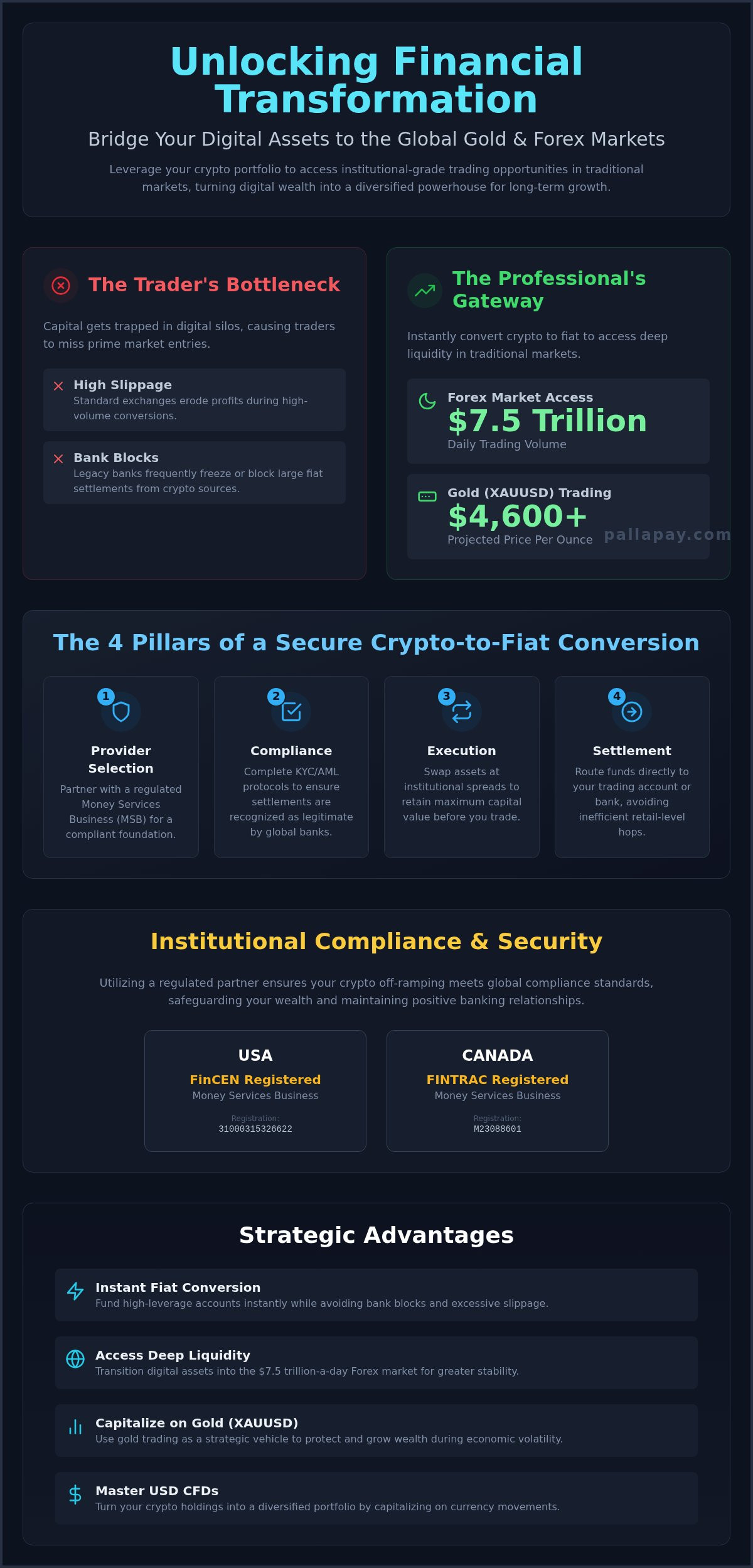
This article reveals how USDT has evolved into the premier engine for professional Forex trading and Gold CFDs, enabling a total transformation of your financial strategy. You’ll discover the specific mechanics of USDT-paired Forex trades and learn how to leverage Gold CFDs for robust portfolio diversification. We’ll examine the operational shift toward real-time settlement and how this technology bridges the gap between traditional finance and modern efficiency. By the end, you’ll understand why Tether’s $183.3 billion market capitalization represents more than just a stablecoin; it’s the foundation for a more agile trading future in a world where gold has surpassed $4,600 per ounce.
Key Takeaways
- Learn how USDT serves as the primary liquidity bridge in 2026, allowing traders to bypass traditional banking delays and access global currency markets instantly.
- Discover why professional investors choose to buy usdt for forex trading to secure millisecond execution speeds and maintain stable collateral for high-leverage positions.
- Understand the mechanics of XAU/USD trading with USDT, enabling 24/7 exposure to gold markets without the friction of legacy commodity brokers.
- Explore the institutional advantages of using regulated OTC desks to convert cash to digital assets, ensuring secure and compliant entry into the global CFD ecosystem.
- Identify how stablecoin-integrated B2B settlements are transforming large-scale capital movement by reducing settlement times from days to mere minutes.
What is USDT? The 2026 Standard for Professional Market Stability
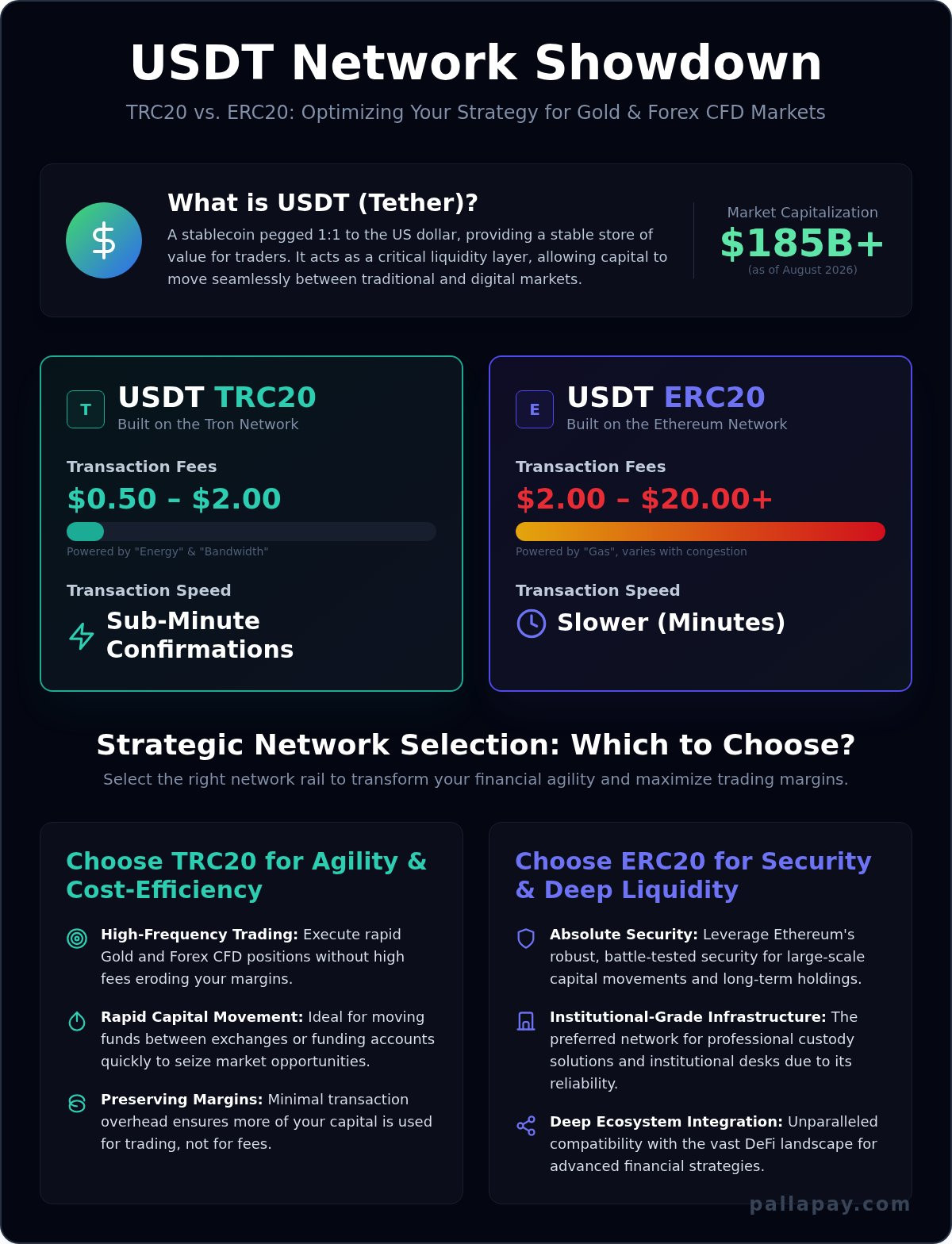
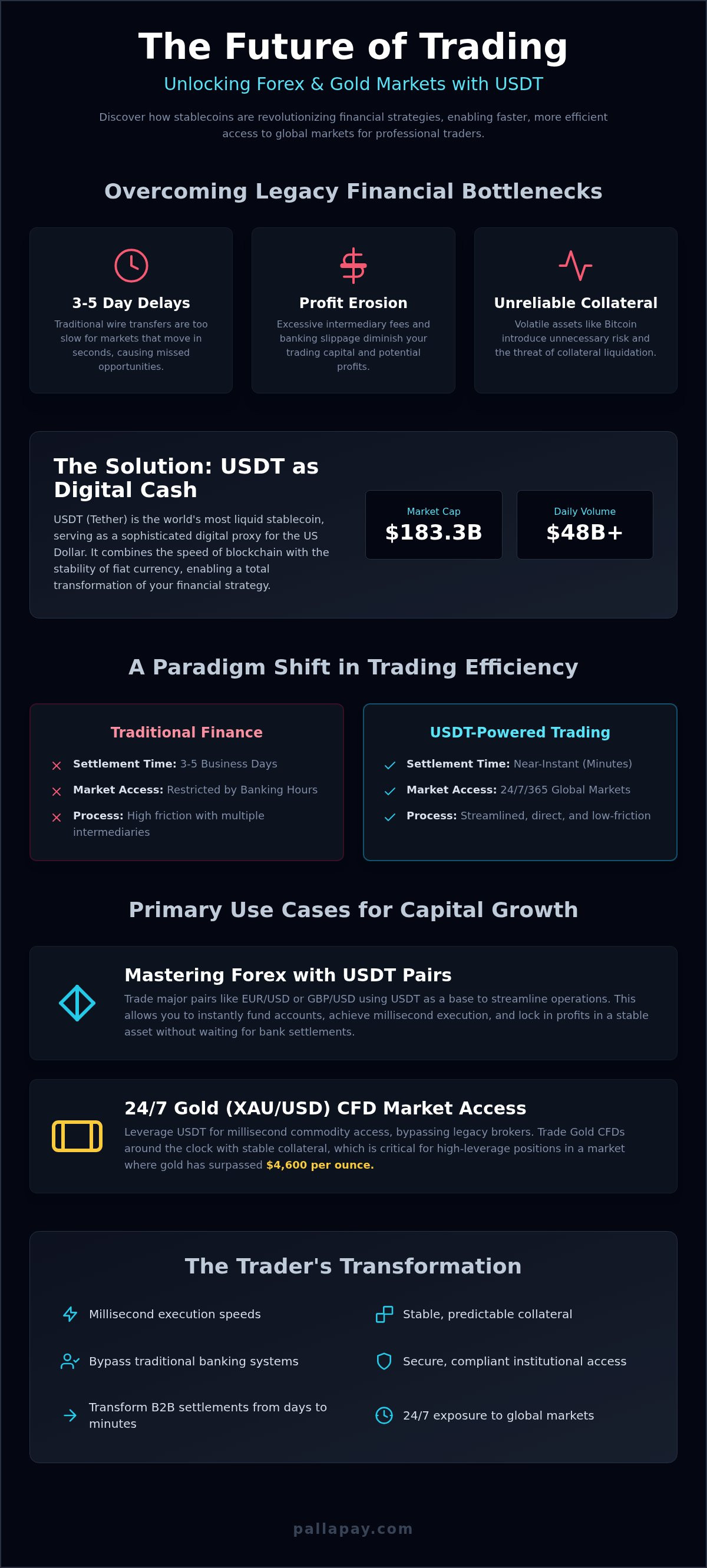
USDT represents the world’s most liquid stablecoin, serving as a sophisticated digital proxy for the US Dollar within the global financial ecosystem. It functions as “digital cash,” providing the rapid settlement capabilities of blockchain technology without the price swings typical of other digital assets. Professional traders utilize this stability to move capital across borders instantly, bypassing the three-to-five-day delays inherent in traditional banking systems. By maintaining a 1:1 peg with the dollar, it offers a reliable unit of account for complex international transactions.
For those who choose to buy usdt for forex trading, the asset provides a level of reliability that Bitcoin or Ethereum cannot match. Volatile cryptocurrencies introduce unnecessary risk when used for account funding, as your collateral value could drop before you even place a trade. By managing capital through a secure Pallapay Wallet, you ensure your purchasing power remains intact while waiting for the perfect market entry. Tether (USDT) has become the definitive standard for this operational flow, bridging the gap between traditional fiat and the decentralized future.
Why Stability Matters in Professional Trading
Margin trading requires absolute precision. When you use volatile assets as collateral, you face the constant threat of “collateral liquidation” if the value of your margin asset drops independently of your trade. USDT eliminates this variable, allowing for predictability in margin requirements for high-leverage positions. This stability is particularly critical when trading Gold CFDs or major Forex pairs where even small price movements are amplified. USDT acts as the essential non-volatile bridge for modern CFD markets.
The Evolution of Tether in 2026
The financial landscape has matured significantly. As of September 2026, USDT’s market capitalization has climbed to $183.3 billion, backed by deep liquidity that supports institutional-grade volume. Regulatory advancements, including the full implementation of MiCA in the European Union, have shifted the perception of USDT from a speculative tool to a regulated institutional choice. Daily trading volumes now regularly exceed $48.09 billion, ensuring that large-scale traders can enter or exit positions without impacting the market price. Traders now view it as an active utility rather than a passive holding. This evolution allows for seamless integration into Forex brokerage environments, where it facilitates millisecond-level execution and immediate capital re-allocation across diverse global markets.
USDT Use Cases in Forex and CFD Trading: Accelerating Capital Growth
The global marketplace operates on a 24/7 cycle, yet traditional financial institutions still adhere to rigid banking hours and settlement windows. This discrepancy often forces traders to miss time-sensitive opportunities in the currency and commodity markets. When you buy usdt for forex trading, you effectively decouple your capital from the limitations of legacy systems like SWIFT or SEPA. This transition allows for near-instant funding of brokerage accounts, ensuring that your liquidity is always positioned where it can generate the highest return. By bypassing traditional intermediary fees, you retain a larger portion of your trading capital to fuel long-term financial growth.
The integration of stablecoins into professional trading environments is no longer a niche practice. Recent analysis regarding stablecoin financial stability by the Federal Reserve underscores how these assets are becoming foundational to modern market infrastructure. For the individual trader, this means USDT serves as the primary liquidity pair for USD-based markets, offering a secure and transparent way to manage high-volume CFD positions without the friction of currency conversion at every step.
Mastering Forex with USDT Pairs
Trading major pairs such as EUR/USD or GBP/USD using USDT as the base currency provides a streamlined operational flow. It allows you to realize profits in a stable asset immediately, locking in gains without waiting for a bank to process your withdrawal. This speed is essential for scalp traders and day traders who require high turnover of their capital. Sophisticated participants often integrate the Pallapay Payment API to automate these transfers, ensuring that their trading bots or manual strategies are always backed by real-time liquidity.
The Mechanics of CFD Trading
Contracts for Difference (CFDs) allow you to speculate on price movements without owning the underlying asset, providing a powerful tool for capital acceleration through leverage. In this digital era, managing margin requirements becomes significantly more efficient when using USDT. Because the asset is pegged to the dollar, your margin calculations remain consistent, preventing the “margin creep” that occurs when using volatile cryptocurrencies as collateral. USDT eliminates the ‘weekend gap’ in traditional Forex funding because blockchain networks remain fully operational while global banking centers are closed. This continuous accessibility allows you to manage your risk and adjust your leverage at any hour of the day. For those looking to transition their gains into usable liquidity, exploring a professional crypto off-ramp can provide the final link in a successful trading cycle.
Gold Trading (XAU/USD): Leveraging USDT for Millisecond Commodity Access
Gold remains the ultimate safe haven for professional portfolios, especially given that central banks purchased a net 345 tonnes in the first half of 2026. While traditional investors struggle with physical delivery and high insurance premiums, professional traders use USDT to access synthetic gold exposure via CFDs. This approach provides millisecond precision for entering and exiting positions, a necessity when the price of gold has seen significant movements, reaching approximately $4,638 per ounce as of late August 2026. The shift toward digital settlement means you can react to global news cycles instantly rather than waiting for the next business day.
Integrating gold into a digital strategy allows for superior portfolio diversification. By balancing the high-growth potential of currency markets with the stability of precious metals, you create a more resilient financial foundation. The ability to buy usdt for forex trading and then instantly reallocate those funds into XAU/USD positions ensures that your capital never sits idle. This strategy has become increasingly popular as central banks in China, India, and Turkey continue their de-dollarization efforts, providing structural support for gold’s long-term value.
Why Trade Gold with USDT?
Traditional bullion dealers often charge high spreads and recurring storage fees that eat into your margins. Trading Gold CFDs settled in USDT eliminates these overheads while providing the same exposure to price action. When you realize profits from a successful EUR/USD or GBP/USD trade, you can instantly hedge those gains into gold to protect against sudden dollar weakness. This digital format offers a psychological advantage, as it feels as liquid as cash while retaining the value-retention properties of a hard asset. XAU/USDT perpetual contracts allow for 24/7 trading with leverage, which is a significant upgrade over traditional gold futures that have set expiry dates and limited trading hours.
XAU/USD Technical Integration
Understanding the relationship between the US Dollar and gold is vital. Since USDT is pegged to the dollar, the XAU/USDT pairing closely tracks the traditional XAU/USD spot price. During periods of high commodity volatility, such as the geopolitical shifts seen in 2026, managing risk requires immediate liquidity. Traders can use Pallapay’s fiat settlement solutions to lock in gold profits directly into local currency. This ensures that a successful trade in the commodities market translates into tangible, real-world wealth without the delays of traditional banking off-ramps. This seamless flow from commodity gain to fiat liquidity is a cornerstone of modern financial transformation.
Beyond the Trade: Institutional Utility and Cross-Border B2B Settlements
USDT’s utility extends far beyond individual brokerage accounts. While many professionals buy usdt for forex trading, institutional entities use it to move large capital blocks across borders in minutes. This speed bypasses the traditional multi-day settlement cycles inherent in correspondent banking. It provides vital liquidity to emerging markets where local currencies often face high inflation or restricted access to USD. Globalized remote workforces also benefit, as companies use the asset to issue salary payments without the friction of international wire fees.
USDT for Global Merchants
Retailers and e-commerce platforms are increasingly adopting USDT for its stability and immediate finality. Unlike credit card transactions, blockchain-based settlements eliminate chargeback risks entirely. Businesses in e-commerce industries find that this reduces operational overhead and fraud loss. High-end hotels also use USDT for international bookings, ensuring that funds are secured instantly regardless of the guest’s home country banking restrictions. This shift toward stablecoin payments reflects a broader move toward a more efficient, borderless commercial landscape.
Institutional Liquidity and OTC Desks
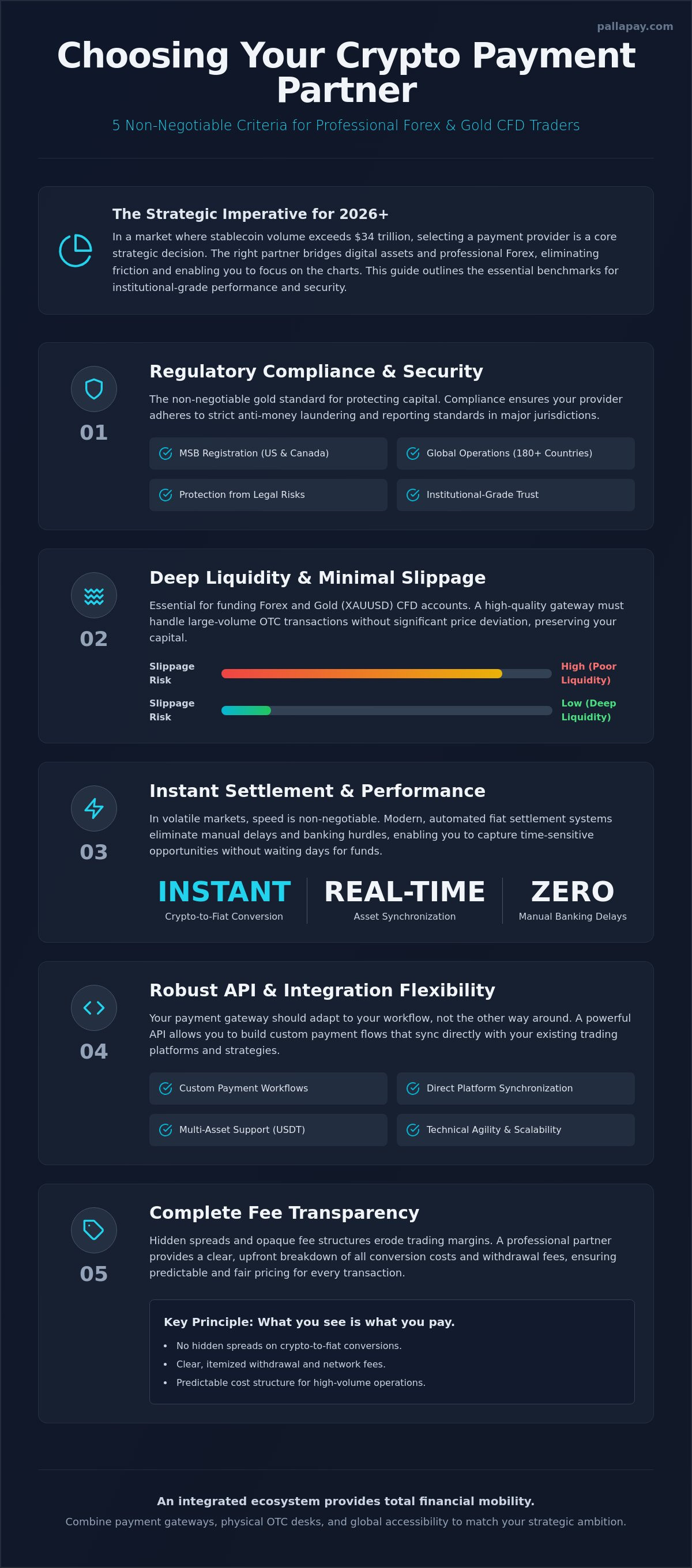
Moving millions of dollars requires a sophisticated approach to avoid slippage or market impact. High-net-worth individuals and corporate entities rely on Over-the-Counter (OTC) desks to facilitate these high-volume transitions. Working with a regulated MSB provider in the US or Canada ensures that these large-scale operations remain compliant and secure. USDT has effectively become the lubricant of global digital trade, providing a frictionless medium for value exchange. This institutional-grade infrastructure is what allows professional traders to buy usdt for forex trading with the confidence that deep liquidity is always available. To experience professional-grade liquidity and secure settlement, exchange USDT through a regulated OTC platform today.
The Path to Financial Transformation: Accessing USDT via Pallapay OTC
The journey toward financial transformation concludes with a secure, high-speed gateway to the markets. While many retail platforms offer limited entry points, professional investors choose to buy usdt for forex trading via institutional OTC desks to ensure they have the necessary depth of liquidity. This professional experience bridges the gap between physical wealth and digital opportunity, allowing you to fund your strategies with precision. The ability to move from cash to a funded trading account in a single session is what separates modern traders from those still tethered to legacy banking delays. This agility is vital whether you are trading your own capital or participating in specialized programs; you can learn more about Reverse Trading to see how they provide unique opportunities for traders to explore unconventional account challenges.
The physical OTC experience provides a level of service that purely digital applications can’t match. High-volume traders often prefer this method because it handles large capital blocks without the slippage or restrictive daily limits found on standard exchanges. You can visit a secure OTC location, complete a streamlined verification, and see your USDT arrive in your wallet in minutes. This immediate liquidity is what allows for the millisecond execution in Gold CFDs and major currency pairs. When it’s time to realize your gains, the Pallapay Off-Ramp service ensures your trading profits return to your bank or pocket with the same speed and security. This closed-loop system provides the agility needed to thrive in a 24/7 global economy.
A Secure Ecosystem for Your Assets
Operating within a regulated environment is non-negotiable for serious market participants. Pallapay is a regulated MSB in the USA and Canada, ensuring that every transaction meets rigorous institutional standards. This commitment to compliance provides the absolute trust and stability required to manage large-scale collateral for high-leverage positions. For a deeper look at maintaining your edge, our Crypto Security Guide offers the technical insights needed to protect your digital assets in the 2026 landscape. It’s a comprehensive resource for those who prioritize safety as much as growth.
By choosing a partner that understands both the mechanics of commerce and the innovation of the blockchain, you position yourself at the forefront of the global economy. The Pallapay ecosystem serves as the definitive destination for your technical needs, from initial purchase to final settlement. It’s time to move beyond the limitations of traditional finance. Join the evolution of finance and start your trading journey today.
Securing Your Competitive Edge in the Global Marketplace
The integration of USDT into your trading strategy represents more than a technical upgrade; it’s a fundamental shift toward operational autonomy. By leveraging the speed of blockchain settlement, you eliminate the friction of legacy banking and secure millisecond execution for both Forex pairs and Gold CFDs. This agile approach ensures your capital is always positioned to capture volatility in the XAU/USD market without the burden of traditional storage fees or wire delays. Professional investors often choose to buy usdt for forex trading to maintain a constant state of market readiness while protecting their collateral from the volatility of unpegged assets.
Success in modern commerce requires a partner that bridges the gap between digital innovation and institutional reliability. As a regulated MSB in the USA and Canada, Pallapay provides the secure infrastructure needed for high-volume transactions across 180+ countries globally. Our institutional-grade OTC desks are designed to handle complex capital movements with absolute discretion and speed. It’s time to take control of your financial evolution and trade with the confidence of a global industry leader.
Start your financial transformation: Buy USDT with Cash at Pallapay and experience the future of professional trading today.
Frequently Asked Questions
What are the most common USDT use cases for professional traders in 2026?
Professional traders primarily use USDT as a high-speed settlement layer for international currency markets and as stable collateral for leveraged positions. In 2026, it serves as the definitive bridge for moving capital between diverse asset classes like XAU/USD and major fiat pairs. Traders often choose to buy usdt for forex trading to ensure they can enter and exit positions without the multi-day delays associated with legacy banking systems.
Can I use USDT to trade Forex and Gold CFDs directly on major platforms?
Yes, a growing number of institutional and retail brokers like TradingPRO now accept USDT for deposits, withdrawals, and direct margin collateral. This integration allows you to trade EUR/USD or Gold CFDs with millisecond precision. By using USDT, you avoid the friction of converting between multiple fiat currencies, which is a transformative advantage for those managing diversified global portfolios. It simplifies the operational flow, making it easier to lock in profits from commodity price movements.
How does USDT facilitate cross-border payments for global businesses?
USDT facilitates cross-border payments by providing a blockchain-based alternative to the traditional SWIFT network. Global businesses use it to move large capital blocks in minutes rather than days, significantly improving cash flow management. This is particularly useful for B2B settlements in emerging markets where local currency volatility is high. By utilizing a stable digital asset, companies can ensure the value of their transfer remains consistent from the moment of dispatch to the final receipt.
Is it possible to buy USDT with cash through a regulated MSB provider?
Yes, professional traders can buy usdt for forex trading using cash through regulated Money Services Business (MSB) providers like Pallapay. This process typically occurs at a physical OTC desk where high-volume transactions are handled with institutional-grade security. Operating under official registrations in the United States and Canada, these providers ensure that every cash-to-crypto conversion is fully compliant with global financial regulations. This method is preferred by individuals who require immediate liquidity for their trading accounts.
What are the advantages of using USDT over traditional bank transfers for trading?
The primary advantages include 24/7 market access and near-instant settlement speeds that traditional banks cannot match. Bank transfers often involve intermediary fees and lengthy processing windows that can cause traders to miss critical market entries in the XAU/USD sector. USDT eliminates the “weekend gap” in funding, allowing you to rebalance your portfolio at any hour. This continuous availability provides a significant competitive edge in the fast-paced environment of modern CFD and Forex markets.
How do I convert my USDT trading profits back into cash instantly?
You can convert trading profits back into cash instantly by utilizing a professional crypto off-ramp or visiting an OTC exchange desk. Regulated providers allow for the immediate liquidation of digital assets into local currency, ensuring your gains are accessible for real-world use. For those who require ongoing liquidity, products like the Pallapay Mastercard offer a seamless way to spend USDT profits directly at millions of retail locations globally, bypassing the need for traditional bank withdrawals.
Why is USDT preferred for high-leverage CFD trading compared to Bitcoin?
USDT is preferred because its 1:1 peg to the US Dollar provides a stable unit of account for margin requirements. When you use Bitcoin as collateral, a sudden drop in its price can trigger a margin call even if your actual trade is performing well. This “collateral risk” is eliminated when using a stablecoin. Professional traders rely on this predictability to manage high-leverage positions in Forex and Gold markets without worrying about the volatility of their underlying funding asset.
Is USDT a safe asset for long-term financial planning and market collateral?
USDT has matured into a reliable institutional asset, supported by a market capitalization that exceeded $183 billion in late 2026. Its integration with regulated MSB infrastructure and widespread adoption by global brokers makes it a secure choice for market collateral. While no asset is without risk, the transparency provided by modern regulatory frameworks like MiCA has bolstered its position as a safe haven for traders. It serves as a dependable foundation for long-term financial strategies and portfolio diversification.
Disclaimer
The information provided on this website and blog is for general informational and educational purposes only and does not constitute financial, investment, legal, tax, or other professional advice.
Cryptocurrency and digital asset services may be subject to regulatory restrictions in certain jurisdictions. Users are solely responsible for ensuring compliance with applicable local laws and regulations before using any products or services mentioned on this website.
PallaPay does not guarantee the accuracy, completeness, or timeliness of any information published and accepts no liability for any loss or damages arising from reliance on the content. Any opinions expressed are those of the respective authors and may change without notice.
Certain services, features, or products referenced may be provided through third-party partners, licensed entities, or affiliated service providers subject to separate terms and regulatory approvals. Availability of services may vary by country or region.
This website may contain references to digital assets, virtual currencies, or blockchain-related services that are not available to residents of certain jurisdictions, including where prohibited by law. Nothing on this website constitutes an offer, solicitation, or recommendation to buy or sell any financial instrument or virtual asset.