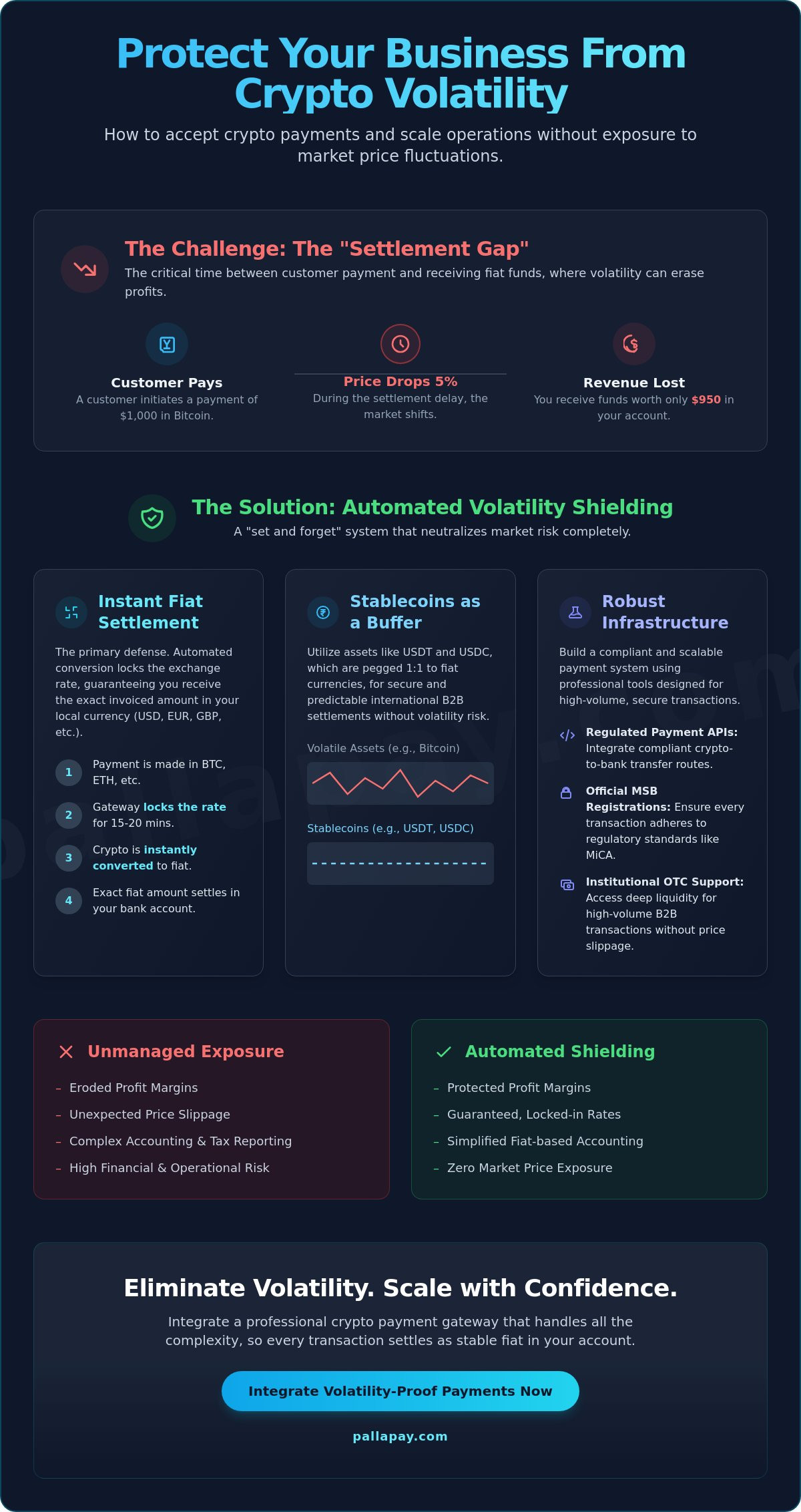
Tag: Risk Management

  • Institutional Crypto Trading Solutions: The 2026 Guide to Multi-Asset Digital Infrastructure

    Institutional Crypto Trading Solutions: The 2026 Guide to Multi-Asset Digital Infrastructure

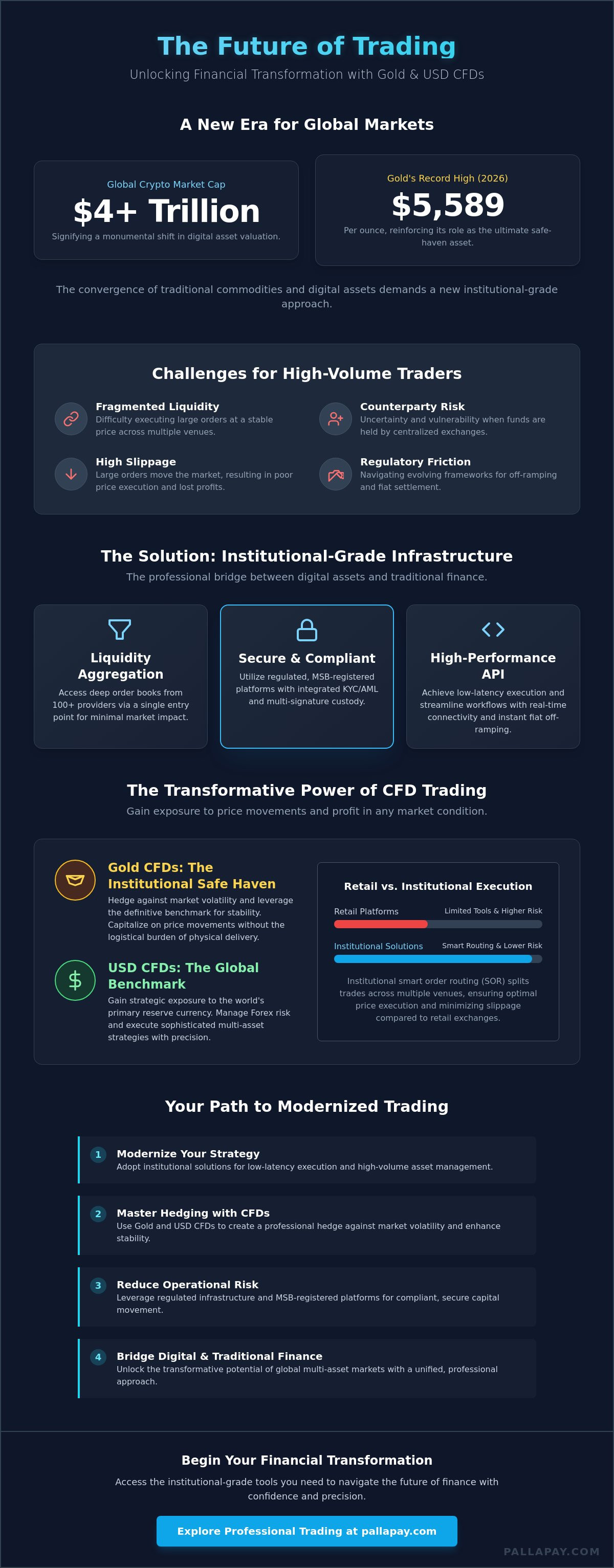
    With gold reaching an unprecedented $5,589 per ounce in early 2026, the financial world has entered an era where traditional commodities and digital assets are no longer separate entities. You’ve likely noticed that while the global crypto market cap has surged past $4 trillion, the underlying infrastructure for high-volume investors hasn’t always kept pace. Fragmented liquidity across retail-focused venues and the constant shadow of counterparty risk make it difficult to execute at scale. This is why sophisticated institutional crypto trading solutions are now the essential foundation for any serious portfolio, offering the security and depth required for modern commerce.

    It’s understandable to feel frustrated by the friction involved in off-ramping high volumes or the uncertainty of evolving regulatory frameworks. You deserve a system that treats digital assets with the same precision as the established Forex market. This guide will show you how to leverage institutional-grade infrastructure to unify your access to global liquidity and master CFD trading in Gold and USD. We’ll explore the mechanics of compliant fiat settlement and advanced risk management, demonstrating how a multi-asset approach can fundamentally transform your financial trajectory in this inevitable global evolution.

    Key Takeaways

    • Modernize your strategy by adopting institutional crypto trading solutions that prioritize low-latency execution and high-volume digital asset management.
    • Master the use of Gold and USD CFDs to create a professional hedge against market volatility and enhance your portfolio’s stability.
    • Reduce operational vulnerabilities by leveraging regulated infrastructure and MSB-registered platforms to ensure compliant, secure capital movement.
    • Streamline your workflow using high-performance APIs for real-time connectivity and robust off-ramping tools for instant fiat conversion.
    • Bridge the gap between traditional finance and digital innovation to unlock the transformative potential of global multi-asset markets.

    What Are Institutional Crypto Trading Solutions in 2026?

    Institutional trading in 2026 is defined by precision. It’s no longer about simply holding assets; it’s about high-volume, low-latency execution backed by infrastructure that mirrors traditional prime brokerage. As the global market cap exceeds $4 trillion, the demand for sophisticated institutional crypto trading solutions has moved beyond the experimental phase into a requirement for corporate treasury management. This shift represents a transition from basic spot trading to complex, multi-layered digital asset strategies. These strategies can change a professional’s financial life by providing access to global liquidity and advanced instruments like gold and USD CFDs that were once difficult to manage at scale.

    Trust in this environment is built on regulatory transparency. For high-volume firms, working with a partner that holds Money Services Business (MSB) registrations in the United States and Canada is a non-negotiable standard. These registrations provide a secure framework for capital, ensuring that every transaction adheres to strict financial oversight. Major industry players, such as the Digital Currency Group, have historically paved the way for this institutional entry, highlighting the need for a professional bridge between established financial practices and decentralized markets.

    The Core Components of Institutional Infrastructure

    The architecture of a professional trading environment relies on three pillars. First, liquidity aggregation is vital. Institutions need to access over 100 liquidity providers through a single entry point to ensure deep books and minimal market impact. Second, secure custody utilizing multi-signature protocols and cold storage is essential for protecting corporate assets. Finally, a compliance-first design ensures that KYC and AML protocols are integrated directly into the workflow. This meets global standards without sacrificing the speed required for real-time Forex and commodity trading.

    Why Retail Exchanges Fall Short for High-Volume Firms

    Retail-focused platforms often struggle with significant slippage during large orders. Professional firms require smart order routing (SOR) to split trades across multiple venues, achieving the best possible price execution. Additionally, the traditional exchange model often requires surrendering control of funds to a centralized entity, creating unnecessary counterparty risk. In 2026, the institutional sector has decisively moved toward non-custodial execution models that allow firms to maintain sovereign control over their assets until the moment of trade. This evolution ensures that liquidity remains accessible and secure, especially when utilizing a professional crypto off-ramp to settle gains into fiat currencies like USD.

    The Transformative Potential of Gold and USD CFD Trading

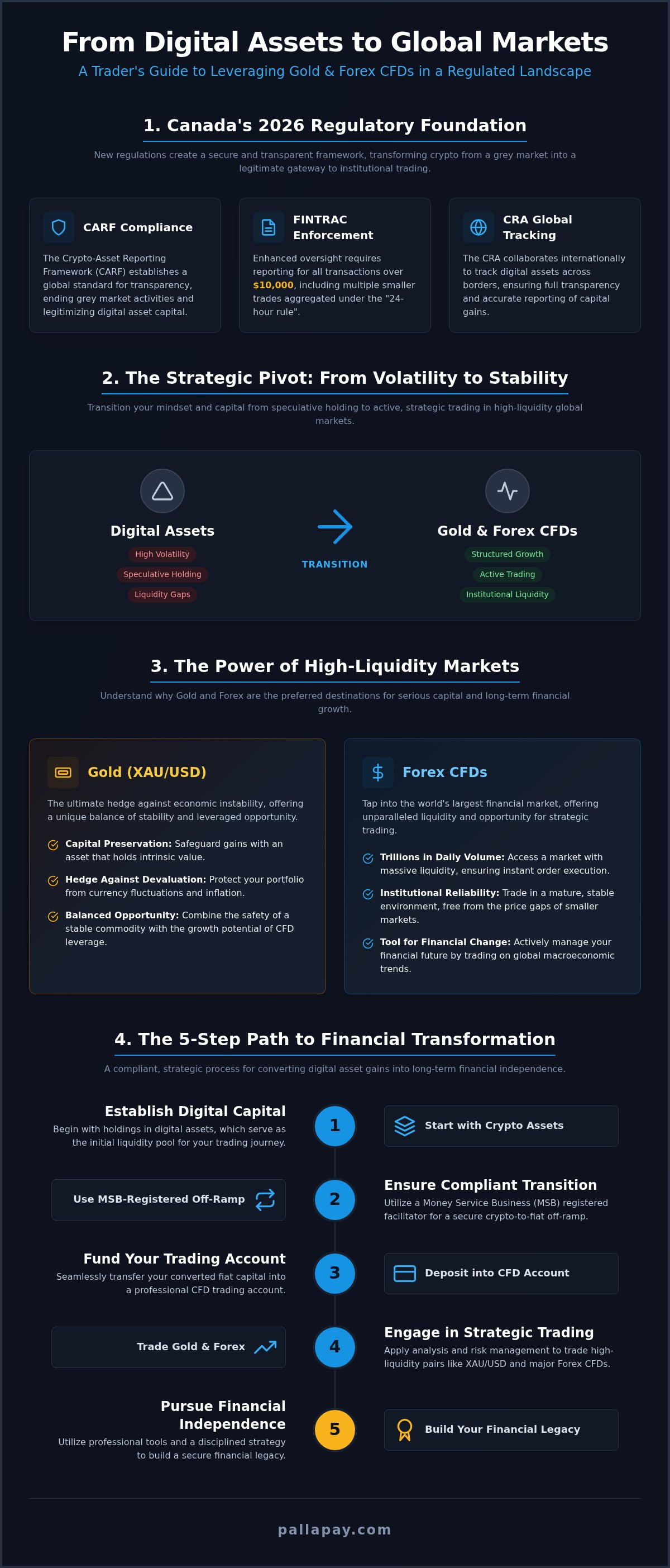
    The integration of traditional commodities and fiat currencies into digital asset portfolios marks a significant evolution in how high-volume investors manage risk. While the first section of this guide established the necessity of robust infrastructure, the true power of institutional crypto trading solutions lies in their ability to facilitate multi-asset strategies. By incorporating Contract for Difference (CFD) trading, firms can move beyond the passive “holding” phase and enter a period of active, strategic capital management. This shift doesn’t just protect capital; it fundamentally alters an entity’s financial trajectory by allowing for profit generation in both rising and falling markets.

    Adopting these instruments requires a sophisticated understanding of market psychology. Institutional players are increasingly moving away from the volatility of unhedged digital assets toward the stability of regulated markets. As researchers at the Brookings Institution emphasize the need to Strengthen the Regulation of Crypto-Assets, the use of CFDs provides a professional bridge. These tools allow investors to gain exposure to price movements without the logistical burden of physical delivery or the security risks associated with unregulated retail exchanges.

    Gold CFDs: The Institutional Safe Haven

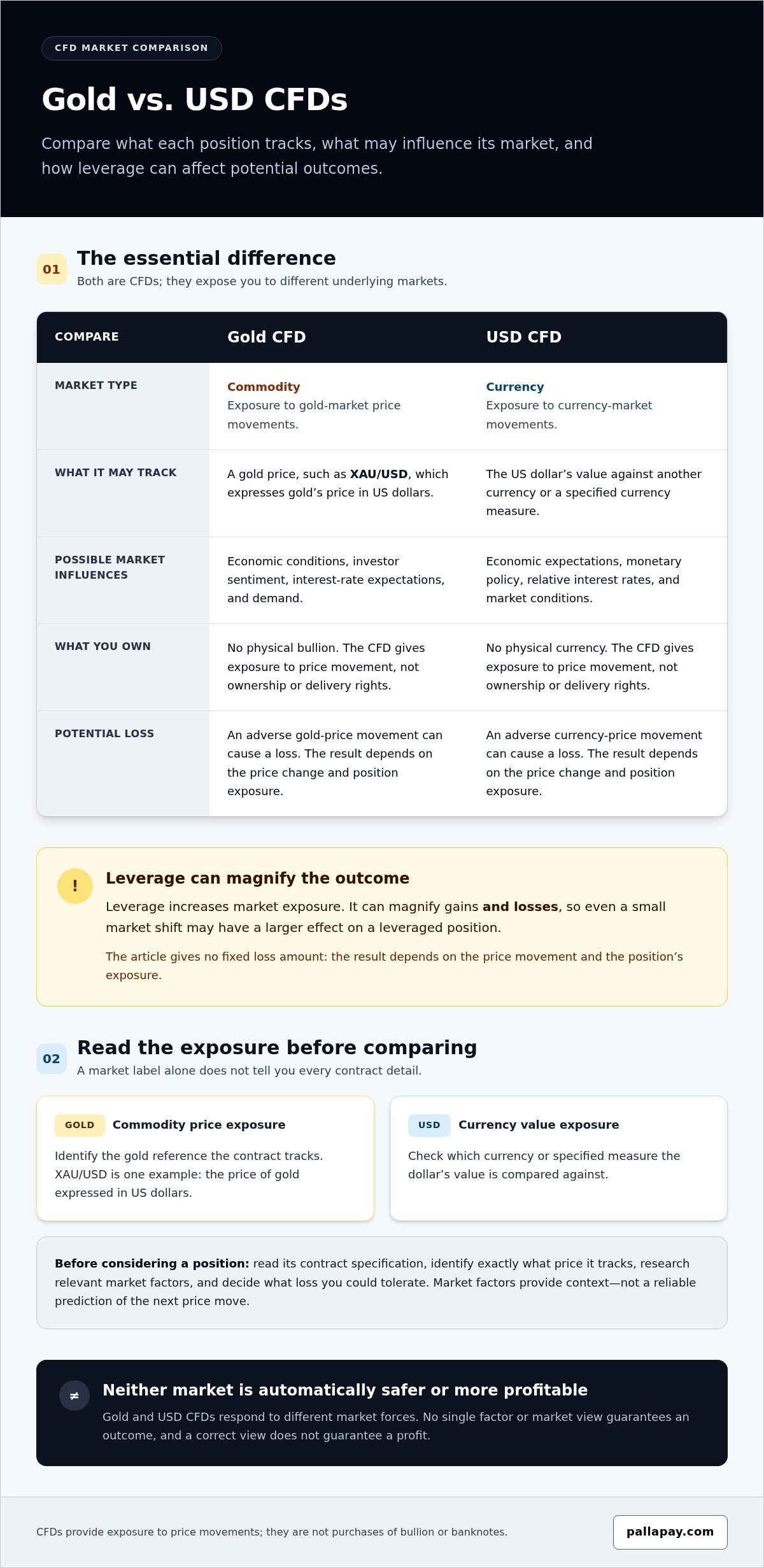
    Gold remains the definitive benchmark for stability, especially after reaching its record high of $5,589 per ounce in early 2026. Trading XAU/USD through CFDs allows institutions to maximize capital efficiency through leverage. You can maintain a significant market position while only committing a fraction of the total trade value as margin. Integrating gold signals into a crypto-centric strategy provides a natural hedge. When digital markets face downward pressure, gold often acts as a counter-cyclical anchor, preserving the overall value of the portfolio.

    Forex and USD Markets: Navigating Global Volatility

    The US Dollar remains the pivot point for global liquidity. Institutional Forex strategies frequently focus on the divergence between USD strength and digital asset performance. When the dollar strengthens, crypto pairs often see increased volatility; trading USD CFDs allows you to capitalize on these macro-economic shifts. Utilizing professional Forex signals enables disciplined execution, ensuring that entries and exits are based on data rather than sentiment. This level of precision is what transforms standard trading into a life-changing financial operation. For those looking to streamline these transitions, utilizing a professional fiat settlement system ensures that gains are captured and moved with institutional speed.

    Addressing Institutional Barriers: Security and Compliance

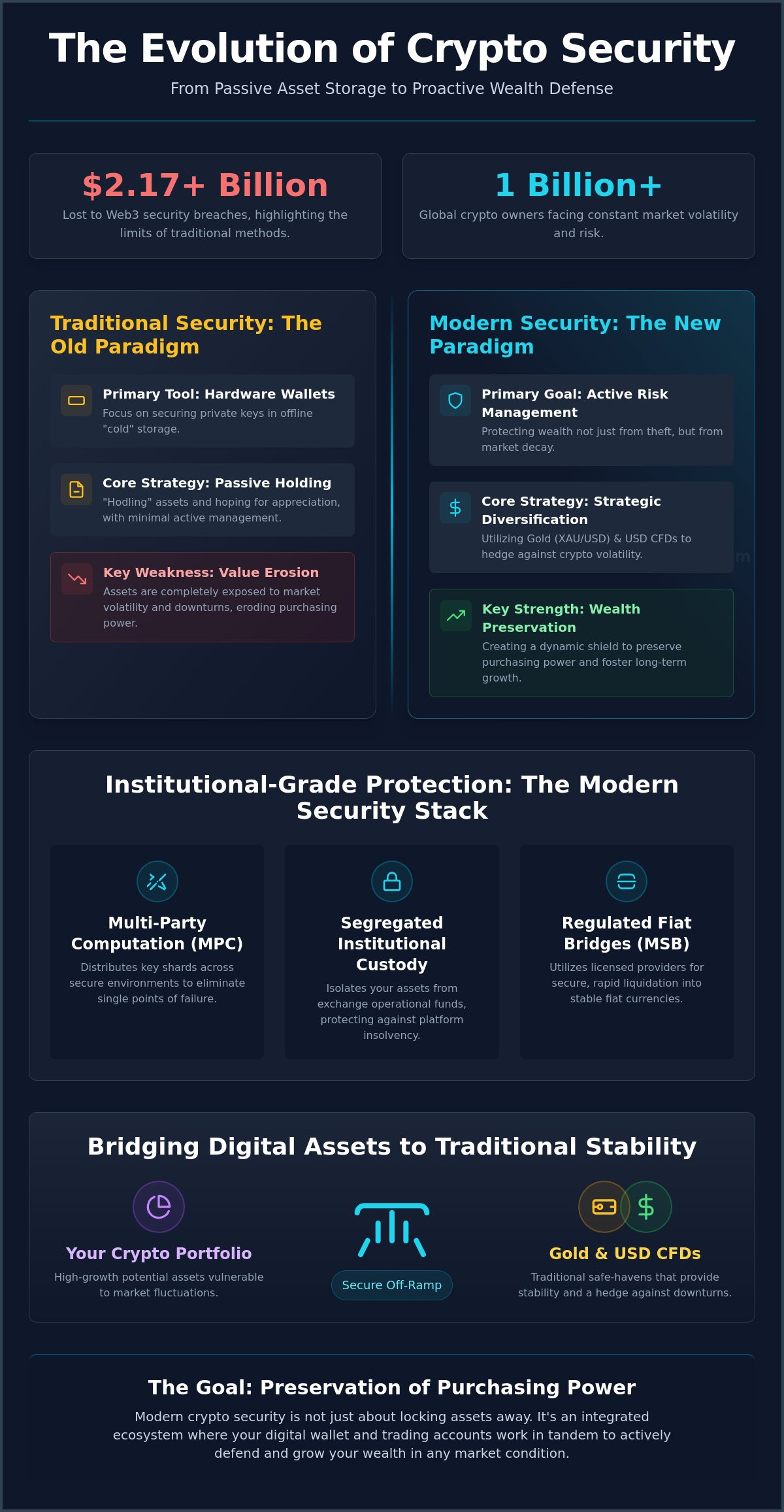
    Counterparty risk remains a significant hurdle for high-volume firms. Unlike retail platforms that often require traders to surrender complete control of their funds, professional institutional crypto trading solutions prioritize asset sovereignty. This shift is essential for those who manage large-scale portfolios across multiple asset classes. Security isn’t just about encryption; it’s about the legal and operational framework that protects your capital during every stage of the trade. By adopting an institutional perspective on crypto allocation, firms can better understand how to integrate these assets into a broader risk management strategy. Ensuring asset safety with professional crypto security is the first step in creating a sustainable trading environment.

    Real-time risk management is the backbone of this security. You need the ability to monitor P&L across spot, futures, and CFDs from a single interface to prevent data fragmentation. When you’re trading high-volume Gold and USD pairs alongside digital assets, even a small delay in reporting can lead to significant slippage or missed opportunities. Professional infrastructure solves this by providing a unified view of all open positions, allowing for immediate adjustments based on market volatility.

    The MSB Advantage: Why Regulation is Non-Negotiable

    Trust is the currency of the institutional world. Holding Money Services Business (MSB) registrations with FinCEN in the United States and FINTRAC in Canada provides a necessary layer of accountability. These designations ensure that the provider operates under strict federal oversight, offering a “safe harbor” for institutional capital. This regulatory alignment creates a transparent audit trail that’s vital for satisfying shareholders and external auditors. Regulatory compliance accelerates institutional adoption by establishing clear boundaries and professional standards for digital commerce. It bridges the gap between the speed of innovation and the reliability of established financial law.

    Advanced Custody and Settlement Protocols

    Managing liquidity efficiently requires more than just secure storage. It demands the ability to move capital without unnecessary delays. The industry is moving toward hybrid models that combine the cryptographic speed of digital assets with the settlement reliability of traditional finance. Streamlining operations with fiat settlement solutions reduces capital lock-up, allowing firms to redeploy their gains almost instantly. By minimizing the time funds spend in transit, you can maintain a higher level of capital efficiency and responsiveness to market shifts. This level of operational maturity is what truly distinguishes professional infrastructure from retail-grade services.

    Institutional Crypto Trading Solutions: The 2026 Guide to Multi-Asset Digital Infrastructure

    Strategic Implementation: API Integration and Off-Ramping

    Executing institutional crypto trading solutions requires a technical stack that bridges digital asset management with legacy banking systems. It’s not enough to have a secure wallet; you need a system that automates the entire lifecycle from price discovery to final bank settlement. High-performance REST and WebSocket APIs provide the necessary real-time connectivity, allowing your systems to interact with global liquidity pools with minimal latency. By using the Payment API for seamless institutional workflows, firms can integrate these complex processes directly into their existing financial software. This level of technical integration changes a professional’s financial life by removing the manual bottlenecks that typically prevent scaling in high-stakes environments.

    Automation is the key to maintaining a competitive edge. When your infrastructure handles the background processes of order routing and compliance checks, you’re free to focus on the macro-economic shifts that drive the Gold and USD markets. This strategic implementation ensures that your firm isn’t just reacting to the market but is positioned to capitalize on it with professional precision.

    Building the Tech Stack: OEMS and API Connectivity

    Speed is the primary differentiator in the competitive CFD and Forex markets. Milliseconds can be the difference between a profitable entry and a costly slippage event, particularly when trading highly liquid pairs like XAU/USD. Modern Order Management Systems (OMS) must connect to aggregated liquidity to ensure deep books are always available. Professional firms often customize white-label GUIs for their internal trading desks, providing a specialized interface that focuses on the data points most relevant to their specific strategies. In the XAU/USD market, price action is often driven by macro-economic data releases that happen in fractions of a second. Low-latency execution isn’t just a luxury; it’s the foundation of a successful Forex strategy that protects your capital from unnecessary exposure.

    The Path to Liquidity: High-Volume Off-Ramping

    While many platforms excel at entry, few provide a reliable path for large-scale exits. The ability to convert digital gains into usable fiat currency is a critical component of institutional excellence. Navigating the complexities of high-volume withdrawals requires a partner that understands both the cryptographic and the traditional banking hurdles. Optimizing the crypto off-ramp for corporate needs ensures that gains from Gold and USD CFD trading are moved securely to bank accounts without the delays often associated with retail-focused exchanges. This transition is further supported by a physical OTC presence that offers a level of personal service and cash settlement options that purely digital competitors often lack. To begin automating your firm’s digital asset lifecycle, explore our comprehensive API for Crypto Payments to see how we facilitate real-time global settlement.

    Pallapay: A Professional Bridge for Institutional Trading

    Pallapay serves as the definitive facilitator for global firms navigating the complexities of multi-asset digital operations. While the previous sections of this guide highlighted the technical and regulatory requirements of 2026, the practical application of these strategies requires a partner that bridges the gap between innovation and reliability. By providing a comprehensive suite of institutional crypto trading solutions, Pallapay enables high-volume investors to execute with the confidence of a global industry leader. Our infrastructure is built on the foundation of trust, supported by active MSB registrations with FinCEN in the United States and FINTRAC in Canada, ensuring that every transaction meets the highest standards of financial oversight.

    Institutional excellence requires more than just a digital interface; it demands a physical and operational presence that can handle the scale of modern commerce. Exploring the OTC crypto exchange for high-volume trades reveals how our specialized desks manage deep liquidity without the slippage risks found on retail venues. This is particularly vital when trading high-value commodities like Gold, which reached a historic $5,589 per ounce in early 2026. To complement this, the Pallapay Mastercard offers a professional tool for immediate liquidity, allowing firms to manage corporate spend directly from their digital asset balances with zero friction.

    Comprehensive Ecosystem for Global Firms

    The strength of our platform lies in the synergy between our physical OTC desks, POS infrastructure, and online gateways. We serve over 180 countries, prioritizing the speed and stability required for real-time Forex and commodity execution. Our ecosystem handles the underlying mechanics of settlement and compliance so your firm can focus entirely on strategic growth. Whether you’re utilizing our API for Crypto Payments or managing a diverse portfolio of USD CFDs, the process feels like a standard, effortless business operation. We take care of the background complexities, ensuring that your capital remains mobile and secure across all global venues.

    Empowering Your Financial Evolution

    Trading Gold, Forex, and Crypto through a unified infrastructure has the potential to fundamentally transform an entity’s financial trajectory. It’s no longer about passive exposure; it’s about active, disciplined execution in a market that never sleeps. By mastering the mechanics of CFD trading and leveraging institutional-grade tools, you can turn market volatility into a strategic advantage. This evolution is not just a trend but a permanent shift in the global financial landscape. We invite you to establish an institutional partnership that provides the security, liquidity, and professional bridge your firm requires to thrive. The integration of traditional assets and digital infrastructure is the essential foundation of an inevitable global evolution in digital commerce.

    Leading the Multi-Asset Financial Evolution

    The transition toward professional infrastructure is a requirement for those aiming to protect and grow capital in 2026. Integrating Gold and USD CFDs provides a vital hedge against digital volatility while unlocking sophisticated avenues for profit. Mastering these global markets demands institutional crypto trading solutions that offer the speed, security, and depth necessary for high-volume execution. You’ve seen how the right technical stack can bridge the gap between traditional reliability and modern innovation.

    Pallapay acts as your strategic partner in this journey. We’re MSB registered in the USA and Canada, serving over 180 countries with a comprehensive ecosystem that includes integrated Mastercard and physical OTC desk support. We handle the complex mechanics of compliance and settlement so you can focus on your firm’s growth. It’s time to secure your institutional future with Pallapay’s professional trading ecosystem. Embracing this level of precision will fundamentally transform your financial trajectory in an increasingly digital world.

    Frequently Asked Questions

    What makes a trading solution truly institutional-grade?

    Institutional-grade solutions are defined by high-volume capacity, low-latency execution, and non-custodial security frameworks. Unlike retail platforms, these systems provide deep liquidity aggregation and advanced smart order routing to prevent slippage. They incorporate robust compliance protocols and audit trails; this ensures that every transaction meets the standards required by corporate treasuries and global regulators. This infrastructure is the essential bridge for firms looking to integrate digital assets into a professional financial strategy.

    How do Gold CFDs differ from physical gold for institutional investors?

    Gold CFDs allow investors to trade price movements without the logistical burden of physical storage, insurance, or transport. They offer superior capital efficiency through leverage, enabling firms to maintain significant market positions with a smaller margin commitment. While physical gold is a long-term reserve, CFDs are dynamic tools for active hedging and speculation. This flexibility is what transforms a standard commodity allocation into a high-performance component of a modern multi-asset portfolio.

    Why is MSB registration important for crypto trading platforms?

    MSB registration with agencies like FinCEN and FINTRAC provides a safe harbor by ensuring the platform operates under federal financial oversight. This designation is vital for institutional crypto trading solutions because it guarantees a transparent audit trail and adherence to strict AML/KYC protocols. For corporate participants, this regulatory alignment mitigates legal risks and builds the necessary trust for moving large-scale capital between digital and traditional fiat markets.

    Can institutional platforms handle both crypto and traditional Forex trading?

    Yes, modern infrastructure is designed to unify digital assets with traditional Forex markets through a single interface. This integration allows traders to execute USD CFD strategies alongside crypto positions, capitalizing on macro-economic shifts and currency divergences. By managing these assets within one ecosystem, firms reduce data fragmentation and improve risk management. This multi-asset approach is a core driver of the financial evolution seen in the 2026 landscape.

    What is the benefit of using an OTC desk for high-volume crypto trades?

    OTC desks facilitate large-scale transactions off the public order books to minimize market impact and price slippage. This private execution is critical for institutions moving millions in digital assets; it ensures a fixed price and personalized service. Beyond digital speed, professional OTC providers often offer physical desk support and cash settlement options. This fills a significant gap left by purely digital retail-focused exchanges that cannot handle physical logistics.

    How does a crypto off-ramp facilitate institutional liquidity?

    A crypto off-ramp provides the technical and legal pathway for converting digital gains into usable fiat currency like USD. It streamlines the transition from blockchain-based assets to traditional bank accounts, reducing capital lock-up periods. For high-volume firms, a robust off-ramp ensures that liquidity is always accessible for corporate operations or reinvestment. This process is essential for maintaining the momentum required in fast-paced global commerce where cash flow is king.

    Is it possible to automate institutional trading via API?

    Automation is a standard feature of professional trading, achieved through high-performance REST and WebSocket APIs. These tools allow institutional systems to automate the entire trade lifecycle, from real-time price discovery to final settlement. By removing manual bottlenecks, APIs enable low-latency execution in the Forex and Gold markets where milliseconds matter. This technical integration allows firms to scale their operations while maintaining precise control over every execution they perform.

    What security measures are essential for corporate crypto wallets?

    Corporate security requires multi-signature protocols and hardware-based cold storage to eliminate single points of failure. These systems ensure that no single individual can authorize a high-volume transfer, providing a necessary layer of internal control. Additionally, institutional wallets should be integrated with real-time monitoring and compliance-first architecture. This combination of cryptographic safety and procedural oversight is the only way to protect significant digital holdings in a professional and reliable environment.

    Disclaimer

    The information provided on this website and blog is for general informational and educational purposes only and does not constitute financial, investment, legal, tax, or other professional advice.
    Cryptocurrency and digital asset services may be subject to regulatory restrictions in certain jurisdictions. Users are solely responsible for ensuring compliance with applicable local laws and regulations before using any products or services mentioned on this website.
    PallaPay does not guarantee the accuracy, completeness, or timeliness of any information published and accepts no liability for any loss or damages arising from reliance on the content. Any opinions expressed are those of the respective authors and may change without notice.
    Certain services, features, or products referenced may be provided through third-party partners, licensed entities, or affiliated service providers subject to separate terms and regulatory approvals. Availability of services may vary by country or region.
    This website may contain references to digital assets, virtual currencies, or blockchain-related services that are not available to residents of certain jurisdictions, including where prohibited by law. Nothing on this website constitutes an offer, solicitation, or recommendation to buy or sell any financial instrument or virtual asset.

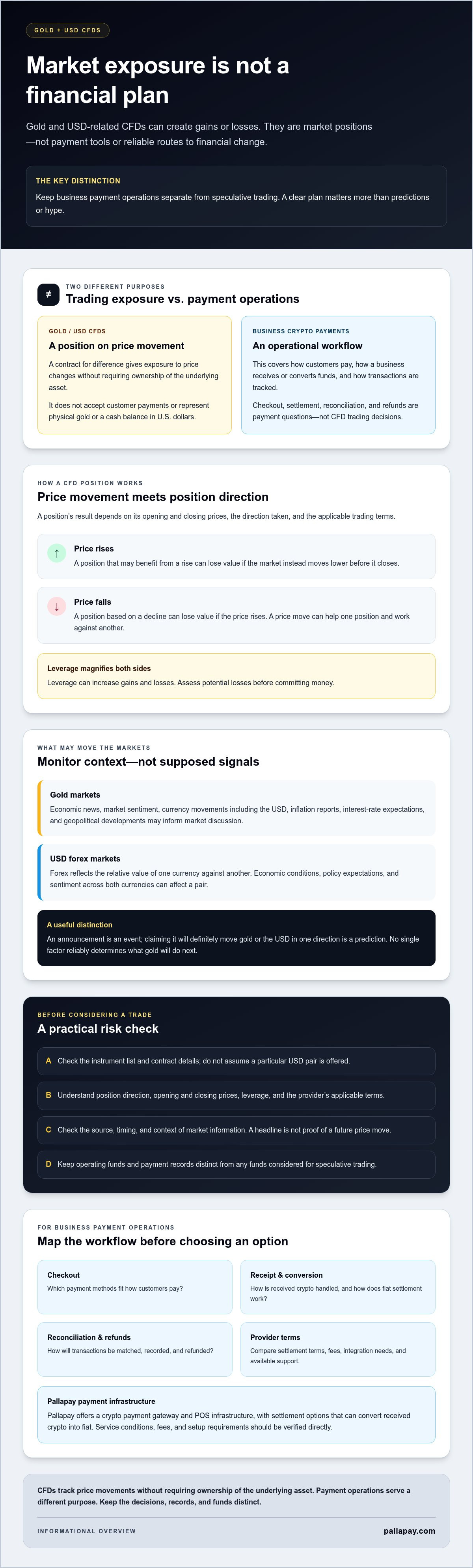
  • Protecting Business From Crypto Volatility: The 2026 Strategic Guide

    Protecting Business From Crypto Volatility: The 2026 Strategic Guide

    In 2026, market price swings are no longer an acceptable excuse for stagnant business growth. While Bitcoin fluctuates between $77,000 and $80,000, many leaders remain hesitant because they fear a sudden crash could erase their operational margins. You’re right to be cautious; manual exchange processes are slow and regulatory deadlines like the July 1 MiCA cutoff in the EU add layers of complexity. However, protecting business from crypto volatility has evolved from a complex hedging strategy into a standard, automated utility.

    You don’t have to be a market speculator to benefit from the $4 trillion digital asset economy. This article explains how to accept payments and scale your operations without ever being exposed to market price fluctuations. We’ll explore the transition to a set and forget payment system that utilizes instant conversion to local currency and regulated settlement routes. By the end of this guide, you’ll understand how to integrate a crypto payment gateway that handles the technical background processes, ensuring every transaction settles as stable fiat in your account.

    Key Takeaways

    • Identify and close the settlement gap by neutralizing the time delay between customer payment and fiat receipt.
    • Utilize automated fiat conversion to lock in real-time exchange rates, ensuring your profit margins remain unaffected by sudden market shifts.
    • Deploy stablecoins like USDT and USDC as strategic buffers to facilitate secure and predictable international B2B settlements.
    • Build a resilient infrastructure for protecting business from crypto volatility by integrating regulated payment APIs with official MSB registrations.
    • Scale your operations with institutional-grade OTC support and crypto-to-bank transfer routes designed for compliant, high-volume shielding.

    What is Crypto Volatility and Why Does it Challenge Modern Business?

    Crypto volatility represents the rapid, often unpredictable price fluctuations of digital assets over condensed timeframes. For a trader, these swings are an opportunity for profit; for a business owner, they represent an operational threat. To understand What is Cryptocurrency and its inherent behavior, one must recognize that price action is driven by market sentiment and liquidity rather than traditional quarterly earnings. While a 5% daily move is standard in digital markets, it can be catastrophic for a company operating on thin margins.

    The primary challenge for merchants lies in the “Settlement Gap.” This is the critical window between the moment a customer initiates a payment and the moment the business receives usable funds in their bank account. If the asset value drops during this interval, the merchant effectively loses revenue before the transaction even clears. Protecting business from crypto volatility requires closing this gap through automated fiat settlement systems that provide an immediate hedge against market movement.

    The Hidden Costs of Unmanaged Fluctuations

    Unmanaged exposure erodes profit margins, especially during high-velocity sell-offs where prices can drop faster than manual exchange processes can clear. Beyond direct losses, accounting teams face significant complexities when the value of an asset shifts between the time an invoice is issued and the final audit. Price slippage occurs when the final execution price of a trade differs from the requested price due to market movement or insufficient liquidity, often resulting in unexpected costs for high-ticket B2B transactions. These friction points turn a modern payment method into a financial liability without the right shielding tools.

    Why 2026 Market Dynamics Require a Proactive Stance

    By mid-2026, the landscape has shifted due to massive institutional participation and maturing regulatory frameworks. With Bitcoin trading between $77,000 and $80,000 as of May 2026, and the scheduled launch of CME Group’s Bitcoin Volatility futures on June 1, price movements have become more sophisticated and faster. Liquidity now plays a dual role; deep liquidity can stabilize prices, yet global economic shifts can trigger rapid business-day swings that catch unprepared merchants off guard. Protecting business from crypto volatility is no longer about avoiding digital assets, but about using professional infrastructure to neutralize their erratic nature. Modern commerce demands a proactive stance where volatility is managed as a technical variable rather than a financial risk.

    The Mechanics of Instant Fiat Settlement: Your Primary Defense

    Relying on manual trading to manage digital assets is a high-stakes gamble that few corporations can afford. Protecting business from crypto volatility becomes a seamless background process through the implementation of instant fiat settlement. A professional gateway functions as a sophisticated buffer; it locks the exchange rate for a specific transaction window, typically between 15 and 20 minutes. This lock-in ensures that the amount of local currency you expect is exactly what arrives in your treasury, regardless of market movements during the confirmation process.

    The technological engine behind this is fiat settlement, which facilitates the automated conversion of assets like Bitcoin or Ethereum into USD, EUR, GBP, or CNY. This process removes the need for your company to hold volatile assets on its balance sheet. By choosing instant settlement over batch processing, you maintain superior cash flow and avoid the risk of overnight price drops that frequently plague unshielded accounts. It’s the difference between managing a currency and managing a risk.

    Eliminating Exchange Rate Risk at the Point of Sale

    Gateways calculate real-time spreads by connecting to institutional liquidity providers. These providers guarantee the locked price, absorbing the market risk so your business doesn’t have to. This automated workflow eliminates the human error and delay associated with manual trading. It’s a strategic shift from speculative uncertainty to operational stability. Businesses looking to automate this transition often integrate a crypto payment API to synchronize sales with financial records in real-time.

    Streamlining Accounting and Tax Compliance

    Receiving fiat directly simplifies VAT and corporate tax reporting significantly. It establishes a clear 1:1 ratio between the invoice amount and the settled bank deposit, which is essential for audit transparency. When you settle directly to bank accounts, you bypass the friction of digital asset custody.

    • Direct fiat settlement removes the need for complex capital gains calculations on every individual sale.
    • It allows for seamless integration with standard ERP systems, ensuring your books remain balanced without manual intervention.
    • Financial teams can treat these transactions as standard bank transfers rather than digital asset movements, reducing the training required for staff.

    This approach turns a disruptive technology into a standard, effortless business operation. By removing the volatility variable, you focus on growth while the gateway handles the underlying mechanics of currency conversion.

    Stablecoins: Using USDT and USDC as a Strategic Buffer

    While instant fiat conversion is the premier defense for retail transactions, many B2B operations require a more flexible medium for holding digital value. Stablecoins are digital assets pegged 1:1 to traditional currencies like the US Dollar, combining the borderless efficiency of blockchain with the price predictability of fiat. By utilizing these assets, you create a strategic layer for protecting business from crypto volatility without needing to exit the digital ecosystem entirely. As of March 2026, USDT maintains its position as a primary liquidity tool with a market capitalization of approximately $183.6 billion, while USDC has grown to $75.3 billion, largely due to its alignment with the GENIUS Act in the United States and MiCA regulations in Europe.

    The operational utility of stablecoins relies on a reliable transition between digital and traditional finance. Converting these assets into bank transfers or physical cash is handled through professional off-ramp services, which act as a vital bridge for global liquidity. This infrastructure allows a business to accept USDT from an international client and move it into a corporate bank account with the same speed and security as a local wire transfer. It’s a sophisticated method for protecting business from crypto volatility while maintaining the ability to deploy capital whenever it’s needed.

    Cross-Border Payments Without the Swing

    Traditional SWIFT transfers are often slow and burdened by high intermediary fees. Stablecoins bypass these legacy bottlenecks, allowing businesses to pay global suppliers instantly at any hour. This is particularly advantageous during “weekend” market gaps when traditional banks are closed but digital markets remain active. By settling in USDT or USDC, you ensure that the value sent on Friday is the same value received on Saturday, regardless of how Bitcoin or Ethereum might perform over the weekend. It’s an essential tool for maintaining price consistency across complex supply chains.

    Managing Liquidity with Digital Wallets

    A secure crypto wallet serves as more than just storage; it’s a command center for holding operational reserves. Professional teams use these wallets to balance fiat holdings with stablecoin liquidity, allowing for rapid re-investment or settlement without waiting for traditional banking cycles. In 2026, audited and fiat-backed stablecoins operate within a mature regulatory framework, providing a transparent and secure foundation for corporate treasury management. This integrated approach ensures that your business remains agile and liquid, regardless of broader market fluctuations.

    Protecting Business From Crypto Volatility: The 2026 Strategic Guide

    Building a Volatility-Resistant Infrastructure for Retail and Web

    Establishing a robust infrastructure requires a multi-layered approach that bridges digital and physical sales channels. Protecting business from crypto volatility is most effective when the protection is baked into the hardware and software used daily. First, prioritize a regulated provider with official MSB registrations in credible jurisdictions like the US and Canada to ensure compliance and institutional trust. Second, integrate a crypto payment API to automate web checkouts and eliminate manual conversion delays. Third, for physical locations, deploy Crypto POS machines that lock in rates at the moment of sale. Fourth, configure auto-withdraw settings to move funds to your bank account daily. Finally, train your finance team to view these assets as a high-speed payment rail rather than a speculative investment.

    This systematic deployment turns a complex financial challenge into a standard operational workflow. By automating the conversion and withdrawal process, you ensure that your treasury remains liquid and denominated in the currency you use to pay your bills. Protecting business from crypto volatility isn’t about predicting the market; it’s about building a system that doesn’t care what the market does.

    Unified Protection for Omni-channel Commerce

    Managing online and offline sales through a single dashboard provides a comprehensive view of global liquidity and transaction history. For retail stores, this setup allows staff to process transactions without needing to manage private keys or understand blockchain mechanics. Hardware-level encryption in POS terminals ensures that every swipe or scan is secure, providing institutional-grade safety at the point of sale. This unified approach eliminates the data silos that often lead to accounting errors in multi-channel businesses.

    Future-Proofing with Advanced Payment APIs

    Advanced APIs allow you to display prices in local fiat while accepting digital assets, ensuring that your customers see familiar figures while you avoid market risk. This is crucial for e-commerce platforms scaling to a global audience with multi-currency support. Managing refunds and chargebacks becomes a standard accounting task when the system automatically calculates the fiat-equivalent value at the time of the transaction. This level of automation allows you to scale from local sales to global distribution without increasing your financial risk profile.

    Ready to secure your revenue streams? Integrate a professional payment API to automate your volatility protection and streamline your global checkouts.

    Why Pallapay is the Professional Choice for Volatility Management

    Pallapay stands as a definitive destination for corporations seeking to bridge the gap between disruptive innovation and institutional financial reliability. By maintaining official MSB registrations in the United States and Canada, the platform provides a foundation of trust that many unregulated entities cannot match. This regulatory standing is essential for protecting business from crypto volatility, as it ensures that every conversion and settlement follows strict compliance protocols. Businesses gain access to a comprehensive, integrated ecosystem that includes a robust crypto payment gateway, physical POS machines, and the Pallapay Mastercard. This suite of tools allows you to manage digital assets as easily as traditional fiat, creating a seamless environment for modern commerce without the friction of multiple third-party providers.

    The brand functions as a professional bridge that connects established practices with modern advancements. By providing a single destination for all technical needs, it removes the complexity of managing disparate systems. This personality is reliable, efficient, and highly focused on empowering the user. It projects an image of a sophisticated partner that handles complex background processes, allowing you to focus on your core business growth while the infrastructure handles the market dynamics.

    Institutional Security and Compliance

    Adhering to rigorous crypto security standards is a core requirement for safeguarding merchant funds in 2026. Working with a regulated entity significantly reduces the risk of exposure to “dirty” cryptocurrency, which can lead to frozen accounts and legal complications. Pallapay acts as a professional facilitator, ensuring that all digital assets entering your treasury are vetted and compliant with international anti-money laundering standards. This level of institutional-grade oversight is a powerful tool for business expansion into over 180 countries. It gives your finance team the confidence to accept payments from diverse markets while knowing that the underlying technical background processes are handled by a sophisticated strategic partner.

    High-Volume Shielding with OTC Services

    Large-scale enterprises often require specialized handling for high-value transactions that exceed standard gateway limits. Through OTC crypto exchanges, businesses can move millions of dollars in assets without triggering market price slippage. This private, high-volume shielding is supported by a global network of physical offices that provide personalized corporate settlement assistance. These locations serve as a professional bridge, allowing for direct cash-to-crypto or crypto-to-bank transfers in a secure environment. It’s an efficient way to manage large-scale liquidity while protecting business from crypto volatility at every step of the conversion process, ensuring that institutional users maintain absolute stability.

    Strategic stability is the hallmark of a successful 2026 enterprise. By integrating these tools, you transform digital assets into a reliable utility for growth. Protect your business from volatility with Pallapay today and join a global network of professionals who prioritize security and speed.

    Secure Your Global Revenue Strategy

    The evolution of digital finance in 2026 has transformed market swings from a merchant’s nightmare into a manageable technical variable. By implementing instant fiat settlement and leveraging regulated stablecoin buffers, you’ve seen that liquidity and stability can coexist within a single ecosystem. Protecting business from crypto volatility is no longer a matter of timing the market; it’s about selecting the right institutional-grade infrastructure to automate your treasury flows. This proactive approach ensures your profit margins remain intact while you tap into a maturing $4 trillion global economy.

    Pallapay provides this essential bridge, offering MSB-registered security in the USA and Canada while serving professional clients across 180+ countries. You can now accept digital assets with the absolute confidence of instant fiat settlement in USD, EUR, and other major currencies. Secure your business margins with Pallapay’s regulated payment gateway and turn disruptive innovation into a standard, effortless business operation. Your enterprise is ready to lead in a borderless market. Take the next step toward a stable, high-growth future today.

    Frequently Asked Questions

    How can a business accept Bitcoin without being exposed to its volatility?

    You can accept Bitcoin safely by using a crypto payment gateway that facilitates instant fiat conversion at the point of sale. This system locks the exchange rate for the duration of the transaction window, ensuring you receive the exact local currency amount. By converting the asset immediately, your business avoids the risk of holding a digital asset that might decrease in value before you can manually exchange it.

    Is it better to settle in fiat currency or keep stablecoins in 2026?

    The decision depends on your treasury needs; fiat settlement provides immediate stability for local expenses while stablecoins offer high-speed liquidity for international B2B settlements. Many corporations choose fiat for retail operations to simplify accounting and tax reporting. Stablecoins like USDT or USDC are often reserved for paying global suppliers or maintaining digital reserves that don’t require traditional banking hours to move.

    What is the difference between a crypto exchange and a merchant payment gateway?

    A merchant payment gateway is a specialized tool for commercial transactions that prioritizes rate locks and automated settlement, whereas an exchange is built for trading and speculation. Gateways provide the essential infrastructure for protecting business from crypto volatility by removing the need for manual trading. They integrate directly with your sales platform to ensure that every transaction settles into your bank account as a standard currency deposit.

    Can I set my own exchange rates when accepting crypto payments?

    Merchants typically don’t set their own rates because the gateway provides a real-time institutional rate at the moment of checkout. This rate is pulled from deep liquidity providers to ensure it remains competitive and accurate for the customer. Attempting to set manual rates would likely lead to significant price slippage or lost sales due to uncompetitive pricing compared to the global market average.

    How do I handle taxes if the crypto price changes before I sell it?

    You should consult a qualified tax professional to understand the specific reporting requirements in your region. Using a gateway that converts crypto to fiat instantly simplifies this task by establishing a clear cost basis at the exact moment of the sale. This creates a transparent, 1:1 record between your invoice and your bank deposit, which is vital for maintaining compliant records during a corporate audit.

    What are the fees for protecting a business from crypto volatility?

    Fees for volatility protection are generally integrated into the transaction spread or charged as a small percentage of the total volume processed through the gateway. You should review the specific service agreement of your provider to understand the costs associated with POS machines or API integrations. The cost of protecting business from crypto volatility is usually far lower than the potential revenue loss from a single market crash.

    Is a Crypto POS machine safer than a standard wallet for my store?

    A Crypto POS machine is much safer for retail environments because it uses hardware-level encryption and prevents staff from accessing private keys. Standard wallets are designed for individual custody and lack the multi-user permissions and reporting features required for a commercial setting. POS systems are purpose-built to handle high-velocity sales and facilitate instant settlement into your corporate accounts without manual intervention.

    How long does it take to convert crypto to a bank transfer?

    The conversion from crypto to fiat is often instant through a professional gateway, while the transfer to your bank account depends on standard banking network speeds. Most off-ramp services facilitate these transfers within the same business day or the next, depending on the destination currency and bank. Automated withdrawal settings can be configured to ensure your funds move from the gateway to your bank account on a recurring daily schedule.

    Disclaimer

    The information provided on this website and blog is for general informational and educational purposes only and does not constitute financial, investment, legal, tax, or other professional advice.
    Cryptocurrency and digital asset services may be subject to regulatory restrictions in certain jurisdictions. Users are solely responsible for ensuring compliance with applicable local laws and regulations before using any products or services mentioned on this website.
    PallaPay does not guarantee the accuracy, completeness, or timeliness of any information published and accepts no liability for any loss or damages arising from reliance on the content. Any opinions expressed are those of the respective authors and may change without notice.
    Certain services, features, or products referenced may be provided through third-party partners, licensed entities, or affiliated service providers subject to separate terms and regulatory approvals. Availability of services may vary by country or region.
    This website may contain references to digital assets, virtual currencies, or blockchain-related services that are not available to residents of certain jurisdictions, including where prohibited by law. Nothing on this website constitutes an offer, solicitation, or recommendation to buy or sell any financial instrument or virtual asset.