Could your current payment infrastructure be the only thing standing between your business revenue and the world’s most liquid financial markets? By 2026, the gap between simple digital payments and professional asset management has closed for those who prioritize a secure framework. Mastering crypto compliance for merchants is no longer a matter of simply avoiding fines; it’s the essential prerequisite for accessing institutional-grade opportunities. You likely feel the pressure of evolving standards, such as the EU MiCA authorization deadline of July 1, 2026, or the strict FATF Travel Rule requirements. It’s natural to worry about the complexity of global AML standards or the risk of account freezes when bridging crypto revenue to traditional markets.
This guide provides the clarity you need to turn these regulatory challenges into a strategic competitive edge. We’ll show you how a compliant foundation unlocks the transformative potential of Forex and Gold CFD trading, allowing your business to move beyond retail transactions into professional wealth generation. You’ll discover how to bridge the gap between crypto revenue and advanced markets like XAU/USD with the confidence of an industry leader. We’ll explore the technical integrations and procedural flows required to establish absolute trust with banking partners. This article outlines the steps to ensure your payment infrastructure serves as a professional bridge to global evolution.
Key Takeaways
- Establish a secure foundation by understanding how crypto compliance for merchants serves as the gateway to institutional financial reliability and global expansion.
- Master the 2026 regulatory landscape by prioritizing partnerships with providers holding official MSB registrations in the United States and Canada.
- Implement automated KYC and transaction monitoring tools to secure your payment infrastructure without compromising the speed of your customer transactions.
- Unlock the transformative potential of your crypto revenue by accessing professional Gold and USD CFD trading markets through a compliant settlement framework.
- Accelerate your business progress by integrating professional POS and API solutions that bridge the gap between retail commerce and advanced financial markets.
Beyond Basic Acceptance: Why Merchant Crypto Compliance is the Foundation for Growth
In the 2026 financial ecosystem, crypto compliance for merchants has evolved from a regulatory burden into a definitive competitive advantage. It’s no longer an optional feature for businesses looking to scale. Establishing a robust framework is the only way to safeguard your business against sudden merchant account closures and the freezing of digital assets. A compliant status serves as a high-level trust signal, attracting institutional partners and high-net-worth clients who demand absolute transparency. For the forward-thinking merchant, this regulatory foundation is the primary bridge to the transformative potential of advanced financial markets. Accessing professional wealth-building tools, specifically gold and USD CFD trading, requires a verified and clean revenue stream that only a compliant infrastructure can provide.
The Core Components of Merchant Compliance
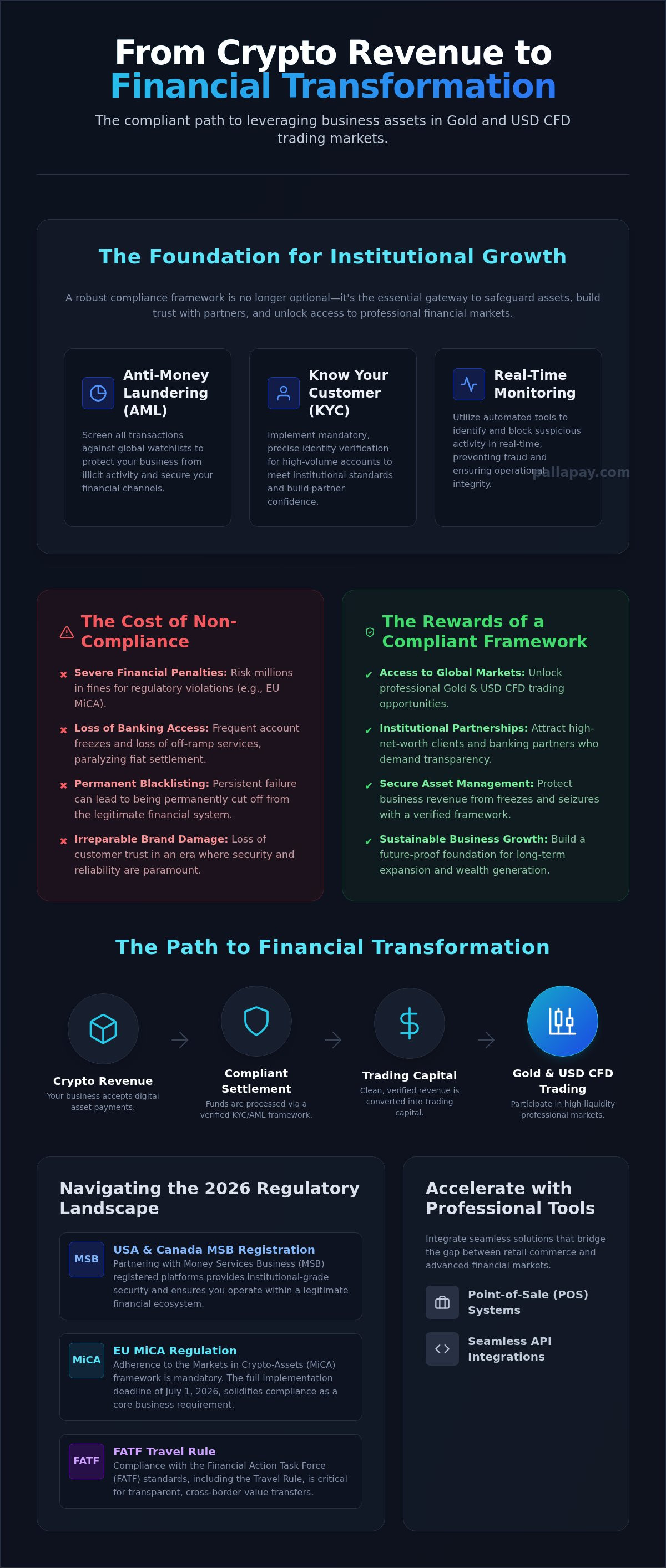
Effective compliance relies on a sophisticated, multi-layered approach to risk management. Anti-Money Laundering (AML) protocols ensure that every digital asset transaction is screened against global watchlists, protecting your business from inadvertent involvement in illicit activity. Know Your Customer (KYC) requirements are now mandatory for high-volume merchant accounts, necessitating precise identity verification to maintain institutional standards. Real-time transaction monitoring is a critical pillar in the global regulatory landscape for cryptocurrencies, helping businesses identify and block suspicious activity before it results in fraudulent chargebacks or legal scrutiny. These processes don’t just satisfy regulators; they build a secure environment where digital commerce thrives with the same reliability as traditional finance.
The Cost of Non-Compliance in 2026
Operating without a rigorous compliance program in 2026 carries severe financial and operational risks. Regulators now impose heavy penalties that can reach millions of euros for MiCA violations, and persistent failure often leads to permanent financial blacklisting. Non-compliant businesses frequently lose access to essential crypto off-ramp services and traditional banking partners, effectively paralyzing their ability to settle funds into fiat or pay suppliers. Beyond the legal fallout, the damage to brand reputation is often irreparable, as digital-age customers prioritize security and institutional-grade reliability. This loss of access also blocks the path to professional growth, as regulated brokers won’t accept funds from unverified or high-risk merchant sources.
Establishing a secure foundation isn’t just about following rules. It’s about opening doors to a new financial life. When your revenue is verified and your processes are transparent, you gain the freedom to explore advanced financial instruments. Professional Forex trading, particularly in high-liquidity pairs and gold CFDs, offers a path to significant financial transformation. By converting compliant payment revenue into trading capital, merchants can leverage their business success to participate in the world’s most lucrative commodity and currency markets.
Navigating the 2026 Regulatory Framework: MSB Registrations and Global Standards
The global financial shift of 2026 has transformed how businesses interact with digital assets. Crypto compliance for merchants is now anchored in the Money Services Business (MSB) designation, a status that separates professional financial partners from high-risk, unregulated entities. Partnering with platforms registered in the United States and Canada provides a layer of institutional security that is impossible to replicate with offshore gateways. These jurisdictions enforce rigorous standards that protect your capital and ensure your business remains part of the legitimate financial ecosystem. Standards like the EU MiCA regulation, which reached its full implementation deadline on July 1, 2026, have harmonized requirements across borders. This creates a unified environment where compliant merchants can operate with unprecedented speed and clarity.
Choosing an unregulated gateway poses a terminal risk to your operations. Without the oversight of major regulators, these providers lack the necessary protocols to prevent financial blacklisting. When your funds are processed through unverified channels, you risk losing access to your banking partners and the ability to convert crypto revenue into trading capital. A secure, compliant framework is the only way to protect your business while preparing for a transformative financial future. Integrating a professional payment API ensures your business remains on the right side of this global evolution.
The Role of FinCEN and International Regulators
In the United States, FinCEN requires financial institutions and exchanges to transmit key customer data for transfers that reach or exceed $3,000. This is part of a broader effort to align with OFAC sanctions compliance guidance, ensuring that digital assets aren’t used to bypass international restrictions. MSB status ensures your funds are handled by an entity that undergoes regular audits and maintains strict reporting standards. As state and provincial licensing evolves, having a partner that manages these complex background processes allows you to focus on growth. This regulatory alignment is what makes it possible to bridge the gap between retail revenue and advanced financial markets like Forex.
Evaluating Your Payment Provider’s Compliance Status
Verifying a provider’s credentials is a critical step in securing your financial infrastructure. You should always request specific registration numbers; for example, Pallapay maintains FinCEN MSB registration 31000315326622 and FINTRAC registration M23088601. Ask your provider about their audit history and their specific protocols for handling high-volume asset conversions. Utilizing a secure crypto exchange with institutional backing provides the stability needed to leverage your revenue for professional trading. Once your compliance foundation is verified, you can confidently use your business earnings to trade gold and USD CFDs, turning standard commerce into a vehicle for significant financial life change.
Implementing Institutional-Grade Compliance Tools: From KYC to Transaction Monitoring
Establishing a high-performance financial infrastructure requires more than just a basic gateway. It demands a suite of automated tools that handle the heavy lifting of crypto compliance for merchants. In the 2026 landscape, manual oversight is no longer sufficient to manage the volume and complexity of digital asset flows. Institutional-grade tools provide the technological answer to operational needs, ensuring that your business remains secure while you focus on strategic growth. By automating identity verification and transaction screening, you create a frictionless environment that satisfies both global regulators and high-value customers. This robust setup is the essential bridge that allows you to convert business revenue into professional capital for Gold and USD CFD trading.
Automated KYC vs. Manual Verification
Modern identity verification platforms offer a level of speed and accuracy that manual processes cannot match. Automated KYC systems verify customer identities in seconds, utilizing advanced biometrics and document analysis to minimize friction in the customer journey. This efficiency is vital for maintaining a positive user experience while adhering to strict regulatory requirements. These systems also perform real-time screening against PEP (Politically Exposed Persons) and global sanctions lists, providing immediate protection against high-risk individuals. By adopting these automated solutions, you ensure your merchant account remains in good standing with banking partners and professional brokerage firms.
Transaction Monitoring and Reporting
Securing your point of sale involves more than just verifying the sender; it requires constant vigilance over the assets themselves. Real-time wallet screening identifies and flags suspicious patterns before they become regulatory issues, preventing illicit funds from entering your ecosystem. Integrating sophisticated Payment APIs that include built-in compliance checks allows for seamless transaction monitoring without increasing the operational burden on your staff. These tools also facilitate automated SAR (Suspicious Activity Report) filing, ensuring that your business meets its legal obligations with precision. Maintaining these comprehensive audit trails is critical for tax safety and long-term financial stability.
A compliant foundation does more than just protect your current operations; it actively enables your future financial life. When your payment processes are backed by institutional-grade compliance, the revenue you generate becomes a verified asset class. This transparency is what professional brokers require before granting access to high-leverage markets. By mastering crypto compliance for merchants, you unlock the ability to participate in the transformative world of Gold (XAU) and USD CFD trading. This strategic shift allows you to leverage your daily business success into significant wealth generation within the most liquid commodity and currency markets on the planet.
The Strategic Shift: Leveraging Compliant Crypto for Gold and USD CFD Trading
Emphasizing Gold and USD CFD Trading
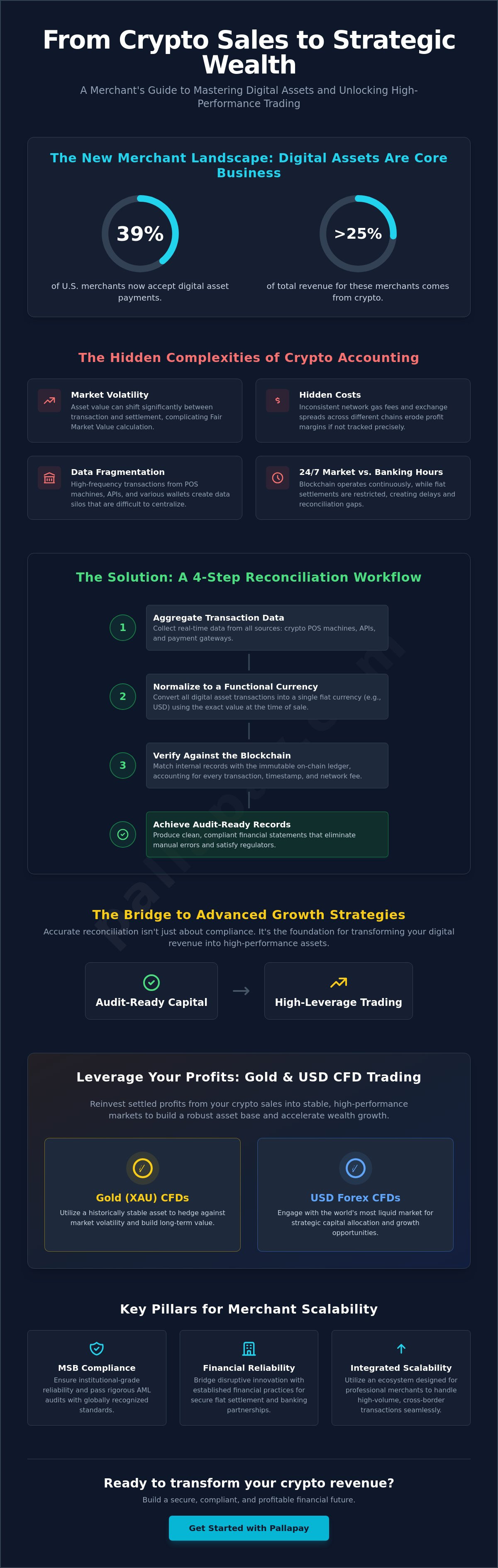
Gold remains the definitive hedge for digital asset merchants seeking stability. It’s the global standard for value preservation. Trading XAU/USD CFDs provides a sophisticated way to manage risk without the logistical burden of physical storage. You aren’t just holding assets; you’re actively protecting your merchant margins against market volatility. USD CFD trading allows you to capitalize on the strength of the world’s primary reserve currency. Leveraging crypto liquidity for these high-volume commodity trades is efficient and fast. It’s a fast-paced environment where a compliant infrastructure ensures your entry is always frictionless and secure.
Using CFDs to hedge against currency volatility is a professional necessity. It protects your business from the erratic movements often found in emerging markets. By taking positions in the USD or Gold markets, you create a financial buffer that stabilizes your bottom line. This psychological shift is profound. You stop seeing crypto as a volatile liability and start seeing it as the fuel for a sophisticated investment strategy. This approach transforms the very nature of your business operations, moving you toward institutional financial reliability.
The Transformative Power of Financial Trading
The transformative potential of trading is profound. It can redefine your entire financial life by accelerating wealth generation far beyond the limits of standard retail markups. Successful merchants use their verified revenue to build institutional-grade portfolios that bridge crypto, fiat, and commodities. This trajectory creates a level of financial independence that traditional commerce alone cannot provide. Effective fiat settlement is the critical link in this process. It ensures your trading accounts are funded with clean capital, meeting the rigorous standards of professional brokers.
A compliant foundation makes this entire transition possible. It provides the evidence of funds required to participate in advanced financial markets. By mastering crypto compliance for merchants, you’re not just following rules; you’re unlocking a new business trajectory. This evolution ensures you’re prepared for the inevitable global shift toward integrated digital and traditional finance. Start trading Gold and USD CFDs today to elevate your business into the professional financial tier.
Securing Your Financial Future with Pallapay’s Compliant Ecosystem
Pallapay stands as the definitive destination for businesses seeking to master crypto compliance for merchants while scaling their operations. By operating as a regulated MSB in both the United States and Canada, the platform provides the institutional financial reliability that modern commerce demands. This isn’t just about processing transactions; it’s about building a secure foundation that protects your business assets from regulatory friction. The ecosystem is designed to handle complex background processes, allowing you to focus on the strategic growth of your enterprise. You need a partner that bridges the gap between disruptive technology and established financial practices, ensuring every transaction serves your long-term goals.
Comprehensive Merchant Solutions
Whether your business operates through high-volume E-commerce platforms or physical storefronts, Pallapay provides the necessary technical infrastructure. Integrating Crypto POS Machines ensures that retail operations remain fully compliant with local and international standards. This hardware is more than a terminal; it’s a gateway to a broader financial ecosystem. Speed is a rhythmic anchor in this environment, with instant Off-ramp services enabling the immediate conversion of digital assets into fiat. This liquidity is essential for maintaining operational momentum and funding advanced investment strategies. Security remains the backbone of the offering, with institutional-grade protection for all digital asset holdings.
Your Path to Financial Growth
The ultimate utility of a compliant payment infrastructure is the access it grants to professional financial markets. Pallapay facilitates this transition, moving your business beyond retail settlement and into the realm of professional wealth generation. Through a trusted partner, you can leverage your business revenue to enter the global Forex and Gold CFD markets. Trading XAU/USD provides a path to significant financial transformation, allowing you to hedge against volatility while participating in the world’s most liquid commodity exchanges. This journey from a standard payment gateway to a sophisticated investment platform is supported by global OTC desks for high-volume conversions.
Starting your transformation begins with the decision to adopt an integrated, professional framework. By opening a professional merchant account, you align your business with a forward-thinking strategic partner that understands the practicalities of modern commerce. This move secures your financial future by providing a reliable bridge to advanced financial instruments. It’s the definitive step toward a financial life defined by stability, growth, and institutional trust. You don’t have to navigate these complexities alone when you have a partner dedicated to your accelerated progress.
The Definitive Bridge to Global Financial Transformation
Mastering crypto compliance for merchants isn’t just about following rules; it’s the definitive launchpad for your business evolution. By adhering to global standards and partnering with entities holding official US and Canada MSB registrations, you secure your revenue stream against regulatory friction. This foundation of trust is what allows you to move beyond simple payment processing into the professional financial tier. You’re not just accepting payments; you’re building a gateway to institutional stability.
Your verified revenue serves as the essential bridge to the transformative potential of advanced financial markets. Accessing Gold and USD CFD trading through a compliant framework can change your financial life, turning standard business success into institutional wealth generation. With a global POS and API infrastructure and regulated OTC trading desks at your disposal, the transition to becoming a sophisticated investor is seamless and secure.
Secure your merchant future with Pallapay’s compliant gateway and start your journey toward institutional financial reliability today. It’s time to unlock the full potential of your business and embrace the global evolution of finance.
Frequently Asked Questions
Is crypto compliance mandatory for all online merchants?
Crypto compliance for merchants is mandatory for any business operating within regulated jurisdictions like the United States, Canada, or the European Union. These regulations ensure that digital asset transactions meet the same Anti-Money Laundering (AML) standards as traditional finance. Failing to comply can result in immediate merchant account closures and significant legal penalties. Establishing a compliant framework is the only way to ensure long-term operational stability and access to global banking services.
What is an MSB registration and why should I look for it in a provider?
A Money Services Business (MSB) registration is a federal designation that subjects a provider to strict oversight by agencies like FinCEN in the US or FINTRAC in Canada. You should prioritize providers with these registrations because they’re legally required to maintain rigorous audit trails and security protocols. This status ensures your funds are handled by a legitimate entity that undergoes regular compliance reviews, protecting your business from the risks associated with unregulated financial intermediaries.
How does crypto compliance help me trade Gold and Forex CFDs?
A compliant foundation provides the verified revenue stream that professional brokers require before granting access to advanced financial markets. Without a clear audit trail, you can’t easily move capital from your merchant gateway into a trading account for Gold or USD CFDs. Compliance acts as the professional bridge that turns your retail earnings into legitimate investment capital, allowing you to participate in the transformative potential of global commodity and currency markets.
Can I accept crypto payments without a KYC process?
Accepting crypto payments without a Know Your Customer (KYC) process is generally not possible for professional merchants operating in regulated markets. Identity verification is a core component of the global regulatory framework designed to prevent illicit financial activity. While some unregulated gateways may offer anonymous services, they pose a terminal risk to your business. Using verified processes ensures your revenue remains clean and accessible for future financial growth and professional asset management.
What are the main risks of using an unregulated crypto gateway?
The primary risks include permanent financial blacklisting and the immediate freezing of your business assets by banking partners. Unregulated gateways lack the necessary AML and KYC protocols, making them targets for law enforcement and regulatory scrutiny. If your revenue is flagged as high-risk, you’ll lose access to essential fiat off-ramps and traditional banking services. This effectively paralyzes your ability to settle funds or leverage your capital for professional Gold and USD CFD trading.
How does a crypto POS machine handle real-time compliance?
What is the difference between crypto payments and CFD trading for merchants?
Crypto payments involve the direct acceptance of digital assets as settlement for goods or services rendered. In contrast, CFD trading is a strategic investment activity where you speculate on the price movements of assets like Gold or the USD without owning the underlying commodity. Merchants use compliant payment revenue as the capital base to enter CFD markets. While payments drive daily business operations, CFD trading offers the transformative potential to accelerate wealth generation and hedge against currency volatility.
How long does it take to implement a compliant crypto payment system?
Implementation can occur rapidly when utilizing API-driven solutions or pre-configured POS terminals from a regulated provider. While the initial KYC and merchant account approval process may take a few business days, technical integration is often completed in hours. The speed of deployment depends on your specific operational needs and the complexity of your existing infrastructure. Modern systems are designed for effortless business operations, allowing you to transition into a compliant, trading-ready ecosystem with minimal delay.
Disclaimer
The information provided on this website and blog is for general informational and educational purposes only and does not constitute financial, investment, legal, tax, or other professional advice.
Cryptocurrency and digital asset services may be subject to regulatory restrictions in certain jurisdictions. Users are solely responsible for ensuring compliance with applicable local laws and regulations before using any products or services mentioned on this website.
PallaPay does not guarantee the accuracy, completeness, or timeliness of any information published and accepts no liability for any loss or damages arising from reliance on the content. Any opinions expressed are those of the respective authors and may change without notice.
Certain services, features, or products referenced may be provided through third-party partners, licensed entities, or affiliated service providers subject to separate terms and regulatory approvals. Availability of services may vary by country or region.
This website may contain references to digital assets, virtual currencies, or blockchain-related services that are not available to residents of certain jurisdictions, including where prohibited by law. Nothing on this website constitutes an offer, solicitation, or recommendation to buy or sell any financial instrument or virtual asset.