

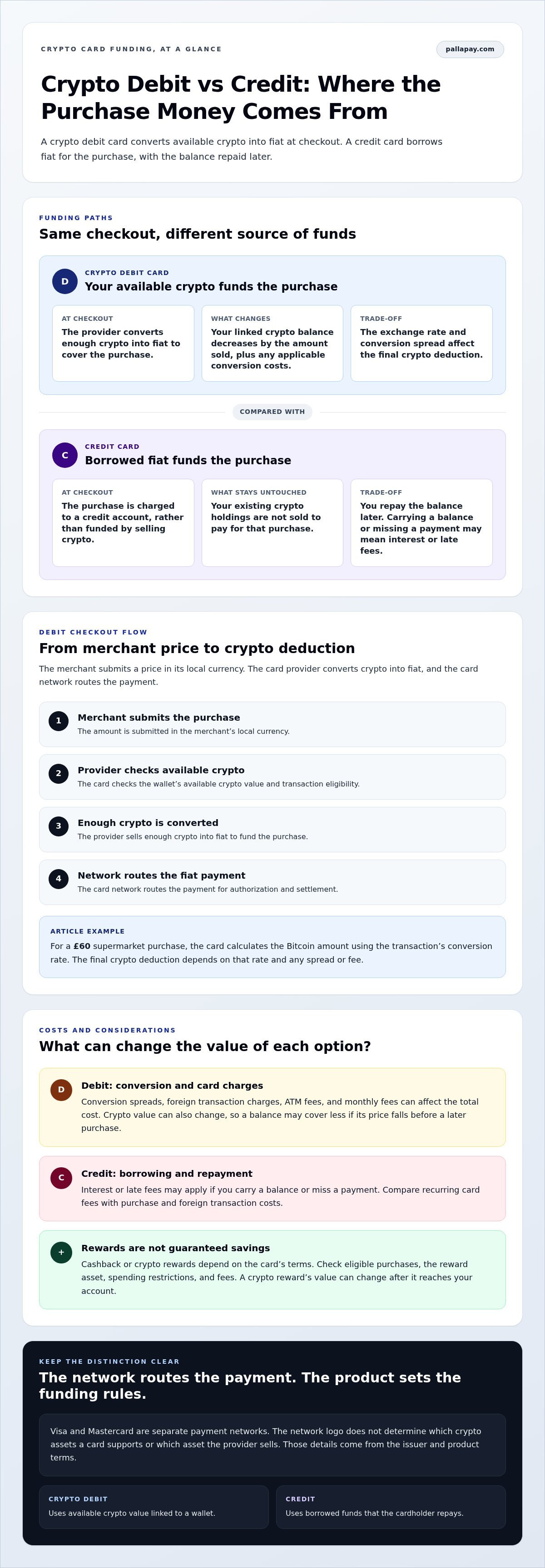
The more convenient way to spend crypto isn’t automatically the better-value card. In the crypto debit card vs credit card comparison, a debit card converts crypto from your available balance into fiat at checkout, while a credit card lets you borrow fiat and repay the balance later. The right fit depends on whether you prioritize spending only what you hold or keeping your crypto untouched while you use credit.
Both options can make everyday purchases easier, but they fund them differently and may have different costs. A crypto debit card may involve conversion spreads, foreign transaction charges, ATM fees, or a monthly fee. A credit card may charge interest or late fees if you carry a balance or miss a payment. Compare recurring card fees with purchase and foreign transaction costs to see which structure suits your spending. It also helps to understand how crypto is converted at checkout before using either card regularly.
Key Takeaways
- A crypto debit card spends from your available crypto balance, while a credit card lets you borrow and repay later.
- At checkout, a debit card converts the required crypto into fiat, so the exchange rate and conversion spread affect the total cost.
- Cashback and crypto rewards can add value, but compare the reward structure with the card’s fees and spending terms.
- Foreign transaction, ATM, conversion, monthly, and annual fees can change which card costs less for your routine.
- Consider spending limits, credit use, volatility, and potential tax implications before choosing how to pay.
What is a crypto debit card?
A crypto debit card connects card spending to cryptocurrency held in a linked wallet. When you pay, the provider can sell enough crypto to cover the purchase and settle it in fiat. For example, a wallet holding $500 worth of Bitcoin supports up to $500 in spending before fees or price changes affect its value. The card works through a payment network, while the crypto balance supplies the funds.
The crypto debit card vs credit card choice comes down to how purchases are funded. A debit card uses value available in a linked wallet, while a crypto rewards credit card may award cryptocurrency on eligible purchases. A credit-card purchase is charged to a credit account, rather than funded by selling your crypto at checkout. That can suit someone who wants crypto rewards while keeping existing holdings untouched during the purchase.
Rewards and cashback depend on each card’s terms. A card may award crypto rather than cash, so compare the reward asset, eligible purchases, and any spending restrictions. Crypto’s value can change after a reward reaches your account, so its later value may differ from its value when earned. Weigh fees and repayment terms against potential rewards instead of treating rewards as guaranteed savings.
Some crypto rewards credit cards award cryptocurrency for eligible purchases and deposit it into a wallet associated with the card provider. Before choosing one, review how rewards accrue, which transactions qualify, and how you can use the earned asset. The network logo identifies the payment network, such as Visa or Mastercard. It does not explain reward rules or make a credit product work like a debit card.
Crypto debit cards may operate on Visa or Mastercard networks, but network acceptance does not change how the card is funded. Providers typically hold customers’ crypto in custody, and protections vary by jurisdiction. The available spending value also depends on the wallet balance and conversion value, so a balance may cover less if the crypto price falls before a later purchase.
Protections for fraud, loss, and unauthorized transactions depend on the card type, provider, and jurisdiction. In the U.S., debit spending alone does not create credit or affect a user’s credit score simply through debit use.
A prepaid card is funded in advance with a stored balance, while a crypto debit card draws on crypto value linked to a wallet. This distinction matters when comparing how each product is funded, even if both make card-network payments. Check whether the card uses crypto, a prepaid balance, or borrowed funds, then compare its reward rules and spending terms with that funding model.
How crypto debit cards convert holdings into fiat at checkout
A crypto debit card links a payment card to a wallet containing cryptocurrency. At checkout, the issuer or card provider converts enough crypto into fiat to fund the purchase, then the card network routes the payment in the merchant’s currency. The merchant processes a standard card transaction, while the cardholder’s crypto balance decreases by the amount sold and any applicable conversion costs.
For a £60 supermarket purchase, the card calculates the Bitcoin amount using the conversion rate applied to that transaction. It sells that amount from the linked wallet and sends the payment through the network in pounds. The final crypto deduction depends on the rate and any spread or fee, so it can differ from an estimate made before checkout.
The payment flow has several connected stages:
- The merchant submits the purchase amount in its local currency.
- The card checks the wallet’s available crypto value and transaction eligibility.
- The provider converts enough crypto into fiat to fund the purchase.
- The card network routes the fiat payment for authorization and settlement.
Visa and Mastercard are separate payment networks. The logo on the card determines which network routes the transaction, while acceptance depends on the merchant and country. Neither network alone determines which crypto assets the card supports or which asset the provider sells. Those details come from the card issuer and product terms.
Regional availability also depends on the card issuer, the country where the card is issued, and whether the merchant accepts that network. A Visa card works where Visa is accepted, and a Mastercard where Mastercard is accepted. The network logo does not guarantee that every card product or feature is available in every country.
Settlement currency is a separate consideration. A merchant may charge in local currency while the card account or wallet uses another currency. The network processes the transaction under its currency-conversion arrangements, and the issuer’s terms determine any additional conversion handling. Some crypto Visa cards support euros and US dollars, but supported currencies depend on the product.
How do crypto debit cards work compared with traditional credit cards? A crypto debit card funds a purchase from available crypto value, while a traditional credit card draws on a borrowing limit that the cardholder repays. A credit-card purchase generally does not sell the user’s crypto at checkout.
Can crypto debit cards build credit, and do they require a credit check? Debit spending alone does not build credit because it does not involve borrowing. Identity verification may be part of account setup, while credit checks depend on whether the specific card product provides credit.
Challenges of spending cryptocurrency for everyday payments
Using Bitcoin or another crypto asset for everyday purchases turns a market balance into spending power. That value can change between purchases, so a balance that covers groceries today may have less purchasing power after a price decline. A crypto debit card can convert crypto at checkout, but the transaction sells the amount used. Those assets can no longer benefit from a later price rise once spent.
Asset selection matters, too. If a wallet holds Bitcoin, Ethereum, and a stablecoin, the card’s rules determine which asset funds a payment. Spending priority can affect which holdings remain available for future purchases or investment. Before relying on a card for routine bills, identify the eligible assets and the order in which the card uses them.
Volatility makes budgeting less predictable than with a fixed fiat balance. For example, Bitcoin’s value has been described as moving from approximately $38,000 to $44,000 in one week. A purchase amount in dollars or pounds stays fixed at the register, but the quantity of Bitcoin needed to fund it can change with the conversion value. Keep enough available value to cover the purchase and potential conversion costs.
Welcome bonuses and spending thresholds can also influence card use. A reward may require eligible purchases or a specified level of spending, so read the terms before changing everyday habits to pursue it. A bonus has limited practical value if reaching its threshold means buying things you otherwise would not, or spending assets you planned to hold. Compare the conditions with your normal payment pattern.
Tax treatment is another consideration. Spending crypto may count as a disposal and trigger a capital gains tax event, depending on the jurisdiction. Each card purchase may therefore require records of the asset spent, its value when acquired, and its value at the time of payment. Frequent purchases can create more recordkeeping than paying from a fiat bank balance.
For unauthorized payments, the protection difference is material. In the U.S., protections depend on the payment method and applicable rules. Do not assume a crypto payment receives the same treatment as a credit-card transaction.
If a transaction is declined, the payment will not complete. The cause may involve the available balance, conversion value, or card restrictions. If an issuer freezes an account, card access may be unavailable while the restriction remains; the timing and steps depend on the issuer’s process.
Before using crypto for regular bills, consider how a failed payment could affect the purchase. A declined grocery transaction can be handled with another payment method, but a recurring bill may carry separate late-payment consequences. Keep a fiat payment option available for essential expenses, and review card activity so unexpected crypto deductions do not disrupt your budget.
Foreign exchange and international transaction fees
International card spending can involve the merchant’s currency, the card account’s currency, and crypto conversion. A Visa card routes payment through Visa; a Mastercard routes it through Mastercard. Each network processes transactions under its own rules, while the card issuer sets product terms and may apply separate charges. The network name alone does not reveal the full cost of an overseas purchase.
Suppose a U.S.-based cardholder pays a merchant in euros. The transaction may involve conversion between euros and U.S. dollars, and a crypto-funded card may also convert crypto into fiat. The settlement currency and conversion path depend on the card product, issuer, and network processing. Review the transaction and account currencies to understand which conversions may apply.
Visa and Mastercard have separate acceptance networks, so acceptance can vary by merchant and country. A merchant that accepts Visa does not necessarily accept Mastercard, and network acceptance does not establish that every card issued on it is available in every region. The issuer’s country, product eligibility, and local acceptance all shape where a particular card works.
Crypto debit cards may advertise zero transaction fees, but an exchange spread can still affect the amount converted. Other possible charges include foreign exchange fees, ATM fees, and monthly account charges. For an overseas purchase funded by Bitcoin, consider both the crypto-to-fiat conversion and any currency conversion involved in paying the merchant. A zero-fee label may describe only one part of the process.
Visa and Mastercard cardholders should distinguish the network’s currency processing from the issuer’s fee policy. The network processes the payment in the merchant’s currency, while the card’s terms determine how the issuer handles the resulting amount. Crypto Visa cards may support currencies such as euros and U.S. dollars, but supported currencies and settlement handling vary by product.
Credit cards add borrowing costs to foreign transaction considerations. If the cardholder carries a balance or misses a due date, interest or late payment fees may apply under the repayment terms. A debit card instead limits spending to available value, so its main cost considerations include conversion spreads, foreign exchange charges, and any account or cash withdrawal fees.
For international use, compare the specific card product rather than relying only on a Visa or Mastercard logo. Check the countries where the issuer makes the card available, merchant network acceptance, supported account currencies, and how foreign purchases appear on statements. These details help estimate the full cost and avoid assuming network acceptance means identical currency handling.
Annual and monthly card fees
Annual and monthly charges are separate from the cost of each purchase. An annual fee is billed for keeping a card account through its yearly billing cycle; a monthly fee recurs each billing month. Even a crypto debit card with no recurring charge may have conversion spreads, foreign exchange fees, or ATM charges. Compare all fees, not just the account charge highlighted in a headline.
Build a realistic cost picture around your spending. List the card’s annual or monthly charge, conversion spread, foreign currency fees, ATM costs, and purchase-related charges. Then compare that list with how often you expect to use the card. A monthly fee can weigh more heavily for occasional users, while transaction costs accumulate with use.
“Zero transaction fees” does not necessarily mean a purchase costs nothing to process. The crypto conversion rate may include a spread, changing how much fiat a given amount of Bitcoin or Ethereum produces. Compare the quoted conversion rate with the rate used for the transaction, then include any separately listed charges. This reveals costs a simple fee label can miss.
Credit cards have a different cost structure. An annual fee may apply, while interest and late payment fees can add costs if you carry a balance or miss a due date. A traditional credit card usually gives cardholders around 30 days to pay before interest begins. The applicable period and charges depend on the card’s repayment terms, so assess those alongside recurring fees.
Include rewards and loyalty benefits in the calculation, but do not treat them as automatic savings. A card may tie benefits to eligible purchases or spending conditions. Estimate the rewards you would earn through your existing routine, then compare them with recurring fees and conversion costs. Spending more to qualify can outweigh the benefit, especially if it encourages purchases you would not otherwise make.
For a practical comparison, review these cost categories:
- Account charges: Identify annual and monthly fees, including when each one is billed.
- Purchase costs: Include crypto conversion spreads and foreign exchange charges.
- Cash access: Account for ATM fees if you expect to withdraw cash.
- Credit costs: Consider interest and late payment fees under the repayment terms.
- Benefits: Compare loyalty rewards with your normal purchases and spending pattern.
The clearest approach is to compare the total cost over the period you expect to keep and use each card. A crypto debit card’s lack of borrowing costs does not eliminate conversion or account fees; a credit card’s rewards do not automatically cancel interest. Review the fee schedule and repayment terms together before choosing.
Best Crypto Debit Cards 2026: Visa & Mastercard Compared: crypto debit card
Best Crypto Debit Cards 2026: Visa & Mastercard Compared is a natural next step if you’re weighing a crypto debit card for everyday spending. Use the comparison to consider how card networks and crypto funding fit your payment needs, then weigh those details against the fees, conversion process, and protections discussed above.
If you need to manage crypto beyond card purchases, related options include selling Bitcoin or Ethereum for cash and buying Ethereum with cash. These services meet different needs from card spending, so choose based on whether you want to pay with crypto or convert between digital assets and cash.
Explore Best Crypto Debit Cards 2026: Visa & Mastercard Compared, or visit pallapay.com, to consider the available options.
Choose a card that fits your next move
Your next step is to match the card’s role to how you want to use your money. If you want to pay directly from crypto, focus on the day-to-day experience and how the card fits your spending habits. If borrowing and repayment better suit your plans, compare credit terms before applying. The crypto debit card vs credit card decision is most useful when it reflects your routine, not just a rewards headline.
Best Crypto Debit Cards 2026: Visa & Mastercard Compared offers a crypto debit card, alongside options to sell Bitcoin for cash or sell USDT for cash. These choices serve different needs: card payments or converting specific digital assets to cash. Consider which action you want to take next, then explore the relevant option.
Explore Best Crypto Debit Cards 2026: Visa & Mastercard Compared and choose a practical next step for your crypto use. A clear decision now can make everyday money management more intentional.
Frequently Asked Questions
How do crypto cards work?
Crypto cards connect digital assets to familiar card payments. A debit version uses available crypto value to fund purchases, while a credit version draws on a borrowing facility and may award crypto rewards. The payment still passes through the card’s network, such as Visa or Mastercard. For an online purchase, enter the card details at checkout, then review the transaction record to see how the issuer processed it.
How do you use it?
Start by completing the card’s account setup and any required identity checks, then add or select a supported asset in the linked account. Use the card at a merchant that accepts it, online or in person, and review the transaction afterward. For example, use the card reader for a contactless purchase or enter the card details for an online order. Keep another payment method available in case a transaction is declined.
What’s the bottom line?
The crypto debit card vs credit card decision depends on whether you want to spend existing crypto or borrow and repay. Debit spending is tied to available value; credit can preserve crypto holdings during a purchase but creates repayment obligations. Compare the full fee schedule, reward rules, and account terms before choosing. The better fit matches your routine without encouraging unnecessary spending.
Why do people use them?
People use crypto cards to make digital assets usable for ordinary card purchases, without needing a merchant that accepts crypto directly. A traveler, for example, may prefer paying by card at a hotel or restaurant over arranging a separate crypto payment. Others value earning crypto rewards on credit-card purchases. Motivations vary, from convenient access to funds and rewards to connecting crypto holdings with existing payment habits.
What are the fees for crypto debit cards versus credit cards in the US?
There is no standard U.S. fee schedule across crypto debit and credit cards. Debit-card costs can include account charges, crypto conversion spreads, foreign exchange fees, and ATM fees. Credit cards may have annual fees, interest, or late-payment charges, depending on their terms. Compare each card’s current fee schedule and repayment rules, then consider how often you will use it and whether you expect to carry a balance.
Do crypto debit cards offer rewards, and how do rewards compare with credit card rewards?
Some crypto debit cards offer rewards, but the reward type and eligibility rules vary. Crypto credit cards may deposit cryptocurrency into a wallet linked to the card provider after eligible purchases. Compare whether rewards are paid in crypto or another form, which purchases qualify, and whether fees or repayment costs offset their value. Estimate rewards based on purchases you already make, not extra spending to meet a threshold.
How are crypto debit card purchases taxed in the United States?
Spending cryptocurrency can have tax consequences because a transaction may count as disposing of an asset. Keep records for each crypto-funded purchase, including the asset and amount spent, acquisition details, transaction date, and value at checkout. These records help determine whether a gain or loss arose. Tax outcomes depend on the transaction and applicable U.S. tax treatment, so do not assume every purchase has the same result.
What spending limits and supported cryptocurrencies do major crypto debit cards have?
Spending limits depend on the card issuer and account terms, while usable value also depends on the linked balance and its conversion value. Pallapay supports USDT, USDC, BTC, ETH, XRP, SOL, BNB, TRX, DAI, PALLA, DOGE, ADA, LTC, SHIB, and PEPE. USDT and USDC support specified blockchain networks. Review the individual card’s supported assets and account limits before relying on it for a planned payment.
Disclaimer
The information provided on this website and blog is for general informational and educational purposes only and does not constitute financial, investment, legal, tax, or other professional advice.
Cryptocurrency and digital asset services may be subject to regulatory restrictions in certain jurisdictions. Users are solely responsible for ensuring compliance with applicable local laws and regulations before using any products or services mentioned on this website.
PallaPay does not guarantee the accuracy, completeness, or timeliness of any information published and accepts no liability for any loss or damages arising from reliance on the content. Any opinions expressed are those of the respective authors and may change without notice.
Certain services, features, or products referenced may be provided through third-party partners, licensed entities, or affiliated service providers subject to separate terms and regulatory approvals. Availability of services may vary by country or region.
This website may contain references to digital assets, virtual currencies, or blockchain-related services that are not available to residents of certain jurisdictions, including where prohibited by law. Nothing on this website constitutes an offer, solicitation, or recommendation to buy or sell any financial instrument or virtual asset.