
Crypto debit card spending can create a tax bill even when it feels like an ordinary purchase. The answer to whether crypto debit cards are taxable is that spending cryptocurrency in the United States can trigger a capital gain or loss, based on its value when spent compared with its cost basis. The IRS treats cryptocurrency as property for U.S. tax purposes.
The tax effect depends on what you spend and how its value changed while you held it. A card may convert crypto into fiat currency at the point of purchase, but that conversion doesn’t remove the need to account for the disposal. Cashback and rewards may be treated differently from crypto you spend.
This guide explains how purchases, stablecoin spending, rewards, and reporting rules fit together, with examples of when a gain or loss may arise. It focuses on U.S. tax rules, which can differ from those in other countries. Recording each transaction helps you understand its potential tax impact before small purchases add up.
Key Takeaways
- Spending cryptocurrency through a debit card can count as disposing of an asset, so a purchase may create a capital gain or loss.
- Track the crypto’s cost basis and its value when spent to understand the tax result of each transaction.
- Distinguish spending crypto from receiving rewards or bonuses, since they can have different tax treatment.
- Use the appropriate tax forms to report digital asset dispositions and income, and keep supporting transaction records.
- Learn how losses may affect your taxable income and what details to review when reporting crypto activity.
Do You Pay Taxes on Bitcoin Debit Cards Purchases? Are Crypto Debit Cards Taxable?
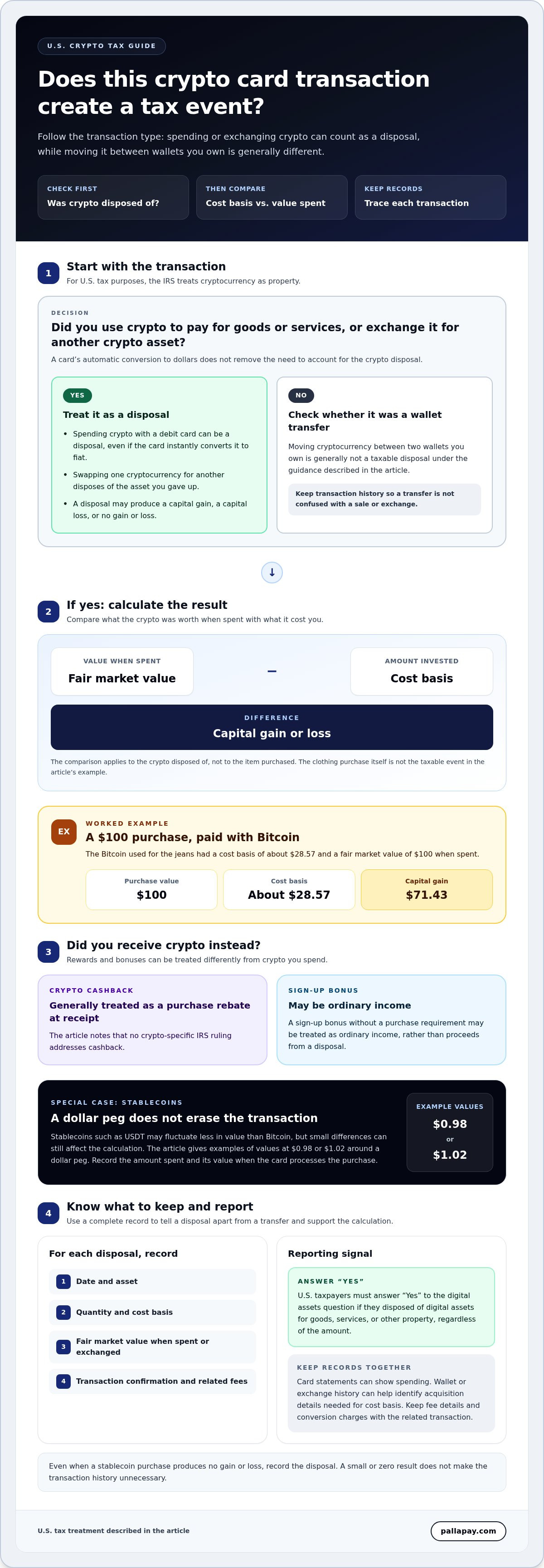
Yes. Spending cryptocurrency through a debit card counts as a taxable disposal in the United States, even when the card automatically converts it into dollars.
For each purchase, compare the crypto’s cost basis with its fair market value when spent. The difference determines whether the disposal produces a capital gain or loss.
Crypto as Property for Tax Purposes
The IRS treats cryptocurrency as property, not currency, for U.S. tax purposes. Spending Bitcoin can therefore trigger a capital gain or loss, much like selling another asset. A card’s dollar conversion makes payment convenient, but it doesn’t change the tax treatment of the cryptocurrency used. The relevant comparison is between its cost basis and its value when disposed of.
A crypto debit card typically converts the cryptocurrency used for a purchase into fiat currency. The merchant receives a conventional payment, while the cardholder disposes of crypto. The purchase’s dollar value helps establish its fair market value at that moment. Keep the card statement with the corresponding wallet or exchange records so you can match each disposal to how and when you acquired the crypto. For more on wallet control and payment mechanics, see this guide to a self-custodial crypto card for Web3.
For example, Mark bought jeans for $100 in January 2021, when Bitcoin was priced at $35,000. The purchase used 0.0028571428 BTC. In the example, that Bitcoin had a cost basis of about $28.57, so spending it for jeans worth $100 produced a $71.43 capital gain. The clothing purchase itself isn’t the taxable event; disposing of Bitcoin to pay for it is.
Spending as a Taxable Disposal
When a card uses crypto to pay for goods or services, that payment is a taxable disposal. The gain or loss is generally measured by subtracting the crypto’s cost basis from its fair market value when spent. This calculation matters even if the card settles the transaction instantly and you never manually sell Bitcoin for dollars.
The disposal produces a $20,000 taxable gain under the U.S. example. The amount spent, acquisition cost, and value at the transaction time determine the result.
Stablecoins such as USDT are pegged to the U.S. dollar, so their value may fluctuate less than Bitcoin’s. A small change can still affect the calculation: examples include values of $0.98 or $1.02 around a dollar peg. Record the amount spent and its value when the card processes the purchase. Cashback is separate: crypto cashback is generally treated as a purchase rebate at receipt, though no crypto-specific IRS ruling addresses it.
Digital asset transactions that require answering Yes on a tax return
U.S. taxpayers must answer “Yes” to the digital assets question on their tax return if they disposed of digital assets for goods, services, or other property, regardless of the amount. A card purchase, crypto sale, or exchange can count as a disposition. The key distinction is whether you disposed of crypto or simply transferred it.
Exchanging one cryptocurrency for another is a disposal of the asset given up. By contrast, transferring cryptocurrency between two wallets you own generally has no tax implications under the guidance described here. Keep the transaction history so you can distinguish a wallet transfer from a sale or exchange when organizing your records.
- Spending crypto: A debit card purchase uses digital assets to pay for goods or services, so report the disposal even if it creates no gain.
- Swapping assets: Trading Bitcoin for another token disposes of the Bitcoin, even when no dollars enter your bank account.
- Moving between personal wallets: A transfer between two wallets you own is different from a sale to another person.
- Receiving rewards: A sign-up bonus without a purchase requirement may be ordinary income, rather than proceeds from a disposal.
Fees also belong in your transaction records. Crypto debit card use may involve a fee for selling cryptocurrency at purchase or withdrawing cash from an ATM. Keep the card statement and fee details with the crypto transaction so the amount spent, conversion, and charges are traceable. Record any foreign exchange or currency conversion charges shown on your statement, too. A charge by itself doesn’t establish whether the crypto disposal created a capital gain.
For each disposal, retain the date, asset, quantity, cost basis, fair market value, and transaction confirmation. These details let you compare the asset’s basis with its value when spent or exchanged. Keep wallet, exchange, and card records together, since each may show a different part of the same transaction.
A stablecoin purchase still needs to be considered on a U.S. tax return, even if it produces no gain or loss. For example, spending a dollar-pegged asset at nearly the value at which you acquired it may result in no gain, but the disposal still belongs in your transaction history. Record the event accurately rather than omitting it because the result is small or zero.
Review transactions across your accounts, not just the card’s monthly activity. The card statement may show spending, while the exchange history provides acquisition details needed to calculate cost basis. Matching these records helps distinguish taxable disposals from wallet transfers and supports consistent reporting. For organizations managing complex transaction histories, professional financial firms like CTC Tax & Accounting can help maintain accurate bookkeeping and tax compliance.
IRS forms for reporting digital asset income and dispositions
Report crypto debit card disposals with the forms that match their tax treatment. U.S. taxpayers generally use Form 8949 to report digital asset transactions that are sales or other dispositions of capital assets, according to the Internal Revenue Service. Report ordinary digital asset income separately from gains or losses on disposals.
For a card purchase, calculate the proceeds using the crypto’s fair market value when spent, then compare that amount with its cost basis. Form 8949 records the asset, acquisition and disposal dates, proceeds, basis, and resulting gain or loss. Crypto capital gains are reported on Schedule D of Form 1040, and Form 8949 may need to be completed first.
Rewards depend on how you received them. Staking rewards are treated as ordinary income at fair market value when received under Revenue Ruling 2023-14. U.S. taxpayers report ordinary income from staking on Form 1040 Schedule 1. If those tokens are later sold, swapped, or spent, that separate disposal uses their value when received as cost basis.
A reward that remains in your wallet still needs its own income analysis. For example, a referral bonus of $50 in Bitcoin, received without a purchase requirement, is ordinary income at fair market value when credited. If you later sell that Bitcoin, calculate a separate capital gain or loss from its basis at receipt. Crypto cashback generally has a basis equal to its fair market value when credited.
Form 1099-DA adds broker-reported transaction information, but it doesn’t replace your own records. For 2025 digital asset transactions, the form reports gross proceeds. Starting with 2026 transactions, cost basis reporting is required for covered assets. Brokers must report gross proceeds for digital asset transactions effected on or after Jan. 1, 2025, and basis on certain transactions effected on or after Jan. 1, 2026.
- Form 8949: List sales and other dispositions of capital assets, including crypto spent for goods or services.
- Schedule D: Carry over capital gains and losses reported through Form 8949.
- Schedule 1: Report ordinary income from staking, mining, or digital asset forks.
- Form 1099-DA: Compare broker-reported proceeds and applicable basis with your wallet and exchange records.
For example, selling $5 of Bitcoin cashback for $8 creates a $3 capital gain reported on Form 8949. Keep the credit date, dollar value, sale proceeds, and wallet transaction details together. That record connects the original reward’s treatment to its later disposition, even when the transactions occur in different tax years.
Tax consequences of spending cryptocurrency
Yes. Converting crypto to fiat to complete a debit card purchase disposes of cryptocurrency and can create a taxable gain or loss. Calculate the result using the asset’s cost basis and market value when spent.
Tax Treatment of Card Conversions
A card conversion sells or exchanges the digital assets needed to fund a purchase. Its tax result matters even when the card handles the conversion automatically and the merchant receives dollars. The asset’s value at the time of the transaction provides the proceeds figure for calculating a capital gain or loss. The payment technology changes the process, not the tax calculation.
For U.S. tax purposes, the taxable event is the disposal of crypto, not the merchant’s later use of the dollars. Selling crypto for fiat through a card therefore follows the same basic calculation as spending crypto directly. Check the transaction record for the asset and quantity converted, then match it to your acquisition records. The card’s final dollar settlement may help establish the disposal value.
Calculating Gain or Loss on Spending
Calculate a capital gain or loss by subtracting the crypto’s cost basis from its market value when spent. A positive difference is a gain; a negative difference is a loss. Record the result for each disposal to understand how it affects your overall tax position.
Use this sequence for each purchase:
- Identify the digital asset and quantity the debit card used.
- Find the cost basis for those specific units from purchase or receipt records.
- Record the asset’s fair market value in dollars at the time of spending.
- Subtract basis from value, then retain the calculation with the transaction record.
The holding period also affects the tax treatment of a gain. In the United States, a Bitcoin sale less than 12 months after acquisition is treated as a short-term capital gain. The stated short-term capital gains tax rate range is 10% to 37%; the applicable rate depends on the taxpayer’s circumstances. The disposal date and acquisition date therefore matter alongside the gain amount.
A loss changes the calculation, but it doesn’t erase the disposal. Crypto capital losses may offset capital gains, and tax-loss harvesting uses losses to reduce gains. Record the loss for each transaction rather than informally netting card purchases.
Stablecoins can fluctuate less in price than Bitcoin, but a dollar peg doesn’t remove the need to calculate a disposal. For each card transaction, retain the conversion value, quantity spent, and cost basis. These records show whether selling or spending the asset created a gain, a loss, or no difference.
Reporting crypto gains on tax forms
Report each taxable crypto sale or card-funded disposal using the forms that match its tax treatment. U.S. taxpayers generally use Form 8949 for digital asset transactions that are sales or other dispositions of capital assets, according to the Internal Revenue Service. Capital gains and losses then flow to Schedule D of Form 1040.
For each Form 8949 entry, organize the asset, acquisition date, disposal date, proceeds, and cost basis. A crypto card purchase belongs in this calculation when the card converts crypto to pay for goods or services. Compare the transaction’s dollar value with the basis of the specific units used, then calculate the gain or loss. Keep the underlying transaction record with your tax workpapers.
For example, Mark acquired 1 Bitcoin for $10,000 in August 2020. If he later sells or spends that Bitcoin, the form entry needs the disposal proceeds and the $10,000 acquisition basis, adjusted for the amount of Bitcoin disposed of. The date and quantity matter: spending only part of the holding requires reporting that portion, not the full Bitcoin position.
- Form 8949: Enter each sale or other disposition and its proceeds, basis, and resulting gain or loss.
- Schedule D: Summarize capital gains and losses carried from Form 8949.
- Schedule 1: Report ordinary digital asset income, such as staking rewards, separately from capital gains.
- Form 1099-DA: Use broker-reported transaction information as a comparison record, not as a substitute for your own calculations.
Broker reporting has changed across tax years. For 2025 digital asset transactions, Form 1099-DA reports gross proceeds. Starting with 2026 transactions, cost basis reporting applies to covered assets. Compare the broker’s reported proceeds with your crypto card and wallet records, then investigate differences such as missing transfers or an incorrect basis before filing.
Ordinary income and later capital gains are separate events. If staking rewards are credited to a wallet, report their fair market value as income for the year received. If you later sell or spend those tokens, calculate a separate gain or loss using that reported value as the cost basis. This helps prevent the same value from being treated as income and again as a full capital gain.
Losses also belong on the return, even when they arose from spending rather than trading. According to the Internal Revenue Service, U.S. taxpayers may use allowable capital losses to offset capital gains and a limited amount of ordinary income. Keep records showing how each loss was calculated, and distinguish realized disposals from price declines on digital assets still held.
Best Crypto Debit Cards 2026: Visa & Mastercard Compared: crypto debit card
Best Crypto Debit Cards 2026: Visa & Mastercard Compared helps readers assess which payment network fits their card use. Pallapay’s crypto card is available as a virtual or physical card on either Visa or Mastercard, so the choice is between two distinct payment networks, not different crypto tax treatments.
| Option | Network | Card format | Crypto settlement |
|---|---|---|---|
| Visa card | Visa | Virtual or physical | Crypto converts to fiat for card spending |
| Mastercard | Mastercard | Virtual or physical | Crypto converts to fiat for card spending |
Visa and Mastercard process payments through their respective networks. The merchant’s accepted network and the card’s currency settlement determine how a purchase is routed and converted; neither network changes the tax calculation for crypto disposed of to fund spending. Review the crypto card options to explore which network and card format suit your payment needs.
Make Your Next Crypto Payment With Clarity
Each future card payment also requires recordkeeping. Before using digital assets for routine purchases, decide how you’ll track acquisition cost, disposal value, and any reward separately. A consistent process makes it easier to review activity at tax time and distinguish ordinary spending from transactions that change your investment position.
If you’re considering crypto debit cards for your own spending, focus on the transaction mechanics: which asset the card converts, when conversion occurs, and what cost basis applies to those units. Consider this alongside convenience, rewards, and how you prefer to hold or convert crypto. Choose a payment approach you can use confidently and document clearly.
For a practical next step, explore Best Crypto Debit Cards 2026: Visa & Mastercard Compared as you consider how card settlement and asset conversion fit your broader digital asset plans. A clear recordkeeping routine can help you manage everyday crypto use with greater confidence. Choose a payment approach that fits your needs and gives you a reliable basis for tracking activity.
Frequently Asked Questions
Do you have to pay taxes on crypto?
Tax may apply when crypto creates income or you dispose of it at a gain, but owning an asset that changes in value alone doesn’t establish a tax bill. For example, an employee paid $5,000 in Bitcoin has $5,000 of taxable income from that payment, regardless of later price changes. Separate the value received as income from any later transaction involving those coins.
How is crypto taxed?
U.S. tax treatment distinguishes ordinary income from capital gains or losses. The holding period and profit affect how a disposal is treated, while income is considered in the year it is received.
Are crypto debit card purchases taxable in the United States?
A card purchase may require reporting even if the calculation shows no tax due. The digital asset question covers disposals for goods, services, or property, so reporting a transaction and calculating a gain or loss are separate matters. For example, spending a stablecoin close to its dollar peg may produce little or no gain, but the transaction still belongs in your records.
What is the cost basis for cryptocurrency spent through a debit card?
Cost basis tracks the amount assigned to the particular crypto units used, so wallet-level records matter when assets are held in several places. Revenue Procedure 2024-28 provides transitional guidance for allocating unused basis among digital assets held in each wallet or account as of Jan. 1, 2025. Keep the allocation tied to the wallet or account holding those units.
Are crypto debit card rewards, cashback, or sign-up bonuses taxable?
A reward’s treatment depends on why it was issued. Purchase-linked cashback is generally viewed as a rebate when credited, while a referral or sign-up bonus received without a purchase requirement can be ordinary income. Review the terms and transaction history to distinguish purchase-linked rewards from incentives that don’t require spending, and retain the credit date and value.
Do crypto debit card providers report transactions to the IRS on Form 1099?
Digital asset brokers report certain activity on Form 1099-DA, while other payment reporting can use a different form and threshold. For payments made in 2026, the stated Form 1099-MISC reporting threshold is $2,000. A form’s presence or absence doesn’t replace your own transaction records, so compare any tax document received with your card and wallet activity.
What records should crypto debit card users keep for tax reporting?
Keep transaction-level records that connect the card purchase to the asset movement. Useful records include the card statement, wallet transaction ID, exchange trade confirmation, acquisition details, and any reward credit. If a transaction appears on several platforms, retain each record instead of relying on a single monthly summary. This can help you identify missing transfers or duplicate entries during tax preparation.
Do crypto debit card fees affect taxable gains or losses?
Track fees separately from the crypto’s value and the card purchase amount. Distinguish charges for converting or selling crypto from ATM withdrawal and currency conversion charges. Whether crypto debit cards are taxable depends on the disposal, but clear fee records help show each transaction’s components and support a consistent calculation when preparing your return.
Disclaimer
The information provided on this website and blog is for general informational and educational purposes only and does not constitute financial, investment, legal, tax, or other professional advice.
Cryptocurrency and digital asset services may be subject to regulatory restrictions in certain jurisdictions. Users are solely responsible for ensuring compliance with applicable local laws and regulations before using any products or services mentioned on this website.
PallaPay does not guarantee the accuracy, completeness, or timeliness of any information published and accepts no liability for any loss or damages arising from reliance on the content. Any opinions expressed are those of the respective authors and may change without notice.
Certain services, features, or products referenced may be provided through third-party partners, licensed entities, or affiliated service providers subject to separate terms and regulatory approvals. Availability of services may vary by country or region.
This website may contain references to digital assets, virtual currencies, or blockchain-related services that are not available to residents of certain jurisdictions, including where prohibited by law. Nothing on this website constitutes an offer, solicitation, or recommendation to buy or sell any financial instrument or virtual asset.